
Persistent sinus pressure or a sudden bout of vertigo can feel like an unsolvable puzzle, but what if the path to relief was entirely non-invasive? It’s natural to feel a sense of apprehension when scheduling a diagnostic ENT evaluation, especially if you’re worried about uncomfortable procedures or the possibility of surgery. Many patients in Al Nahda Dubai and Sharjah share these concerns. With chronic rhinosinusitis affecting nearly 15 percent of adults in the UAE, finding a clear answer is a common priority. Dr. Muddazir Ibrahim – ENT Specialist in Dubai and his dedicated team understand these worries. They prioritize a patient-centered approach that focuses on clinical certainty from the moment you arrive.
This article provides a comprehensive checklist to help you navigate your upcoming assessment with confidence. This guide simplifies the process. You’ll learn how to prepare your medical history, what happens during advanced visualization like diagnostic nasal endoscopy, and how we move from initial symptoms to an actionable treatment plan. By understanding the professional standards of otolaryngology in Dubai, you can replace health-related anxiety with a structured roadmap toward recovery and long-term wellness.
Key Takeaways
- Understand the purpose of a diagnostic ENT evaluation and how it uses advanced visualization to provide clinical certainty without the need for invasive surgery.
- Learn why most clinical procedures are minimally invasive, prioritizing patient comfort while addressing complex symptoms like vertigo or persistent sinus pressure.
- Use our pre-appointment checklist to organize your medical history and symptom records, helping Dr. Muddazir Ali Ibrahim build an accurate picture of your health.
- Recognize specific “red flag” symptoms, such as persistent voice changes or chronic pediatric ear pain, that indicate it’s time to schedule a professional assessment.
- Explore how specialized care at NMC Specialty Hospital Al Nahda 2 provides accessible, patient-centered solutions for residents across Al Nahda Dubai and Sharjah.
What is a Diagnostic ENT Evaluation?
A diagnostic ENT evaluation is more than a routine checkup. It is a highly specialized clinical assessment of the ear, nose, and throat, alongside the complex structures of the head and neck. While a general practitioner provides essential frontline care, a specialist evaluation focuses on identifying the biological root cause of persistent symptoms. Whether you’re dealing with unexplained hearing loss, chronic sinus pressure, or a voice that hasn’t returned to normal, this assessment replaces guesswork with evidence-based diagnosis. Dr. Muddazir Ali Ibrahim uses this time to integrate your personal medical history with a physical examination and advanced visualization to create a precise treatment roadmap. This process is the first step toward relief for patients across Dubai and Sharjah who require more than just symptomatic management.
The Scope of an ENT Assessment
The anatomy of the head and neck is intricate; many issues occur in areas that aren’t visible to the naked eye. During a diagnostic ENT evaluation, we look beyond the surface to understand how different structures interact. In the nasal passages, we check for structural obstructions, such as a deviated septum, or the presence of inflammatory polyps that might block airflow. This is particularly relevant in the UAE, where a 2026 study found the prevalence of chronic rhinosinusitis to be 14.9 percent among adults. For the ears, the focus shifts to the health of the middle and inner ear, assessing for signs of fluid, infection, or issues affecting your balance. Finally, the throat and larynx are examined to ensure the vocal cords are free from lesions or chronic inflammation. This methodical approach ensures that no symptom is viewed in isolation, allowing for a more comprehensive care plan at NMC Specialty Hospital Al Nahda 2.
Why Visualization Matters
Traditional methods, such as using small mirrors to glimpse the throat, often fall short of providing the detail needed for modern medicine. Today, we rely on high-definition endoscopes. These thin, flexible tools allow us to see “around the corner” within the narrow corridors of the nasal anatomy, providing a view that was previously impossible without surgery. This level of clarity is vital for accurate diagnosis and long-term success. For instance, diagnostic nasal endoscopy is a primary tool used to determine if a patient is a candidate for Functional Endoscopic Sinus Surgery (FESS). By seeing exactly where a blockage occurs or where inflammation is most severe, we can plan interventions that are minimally invasive and highly targeted. This precision is what defines our practice, ensuring that every patient in Dubai receives a diagnosis grounded in clinical reality rather than assumptions.
Common Diagnostic Procedures You May Encounter
A diagnostic ENT evaluation often involves procedures that sound complex but are remarkably straightforward and patient-friendly. Most assessments take place within the specialized clinic setting at NMC Specialty Hospital Al Nahda 2, Dubai. Dr. Muddazir Ibrahim utilizes advanced visualization tools to ensure clinical accuracy while keeping your comfort at the forefront. These modern interventions allow for a detailed view of the internal anatomy without the need for traditional surgical exploration. For many patients in Al Nahda Sharjah and surrounding areas, this initial assessment provides the first clear answers to long-standing discomfort or confusing symptoms.
Nasal and Sinus Assessment
One of the most common tools used during your visit is diagnostic nasal endoscopy. This involves a thin, flexible tube equipped with a high-definition camera that provides real-time images of the nasal passages. It’s essential for identifying structural issues like septal deviations or evaluating the presence of nasal polyps that might be obstructing your breathing. If you’re experiencing chronic sinusitis, this direct visualization is the first step in planning advanced interventions. For instance, any successful strategy for Functional Endoscopic Sinus Surgery (FESS) begins with this detailed mapping. By identifying the specific blockages within the sinuses, Dr. Muddazir Ibrahim can tailor a treatment plan that is both precise and effective. If you’ve been struggling with persistent congestion, you can consult with our specialist team to explore these diagnostic options.
Ear and Hearing Diagnostics
The ears require a different level of precision, often achieved through microscopic ear evaluation. This technique uses high-magnification scopes to assess the integrity of the eardrum and the health of the middle ear with far greater detail than a standard handheld otoscope. It’s particularly useful for diagnosing perforated eardrums or identifying the source of chronic infections. In pediatric cases, this evaluation helps determine if a child is a candidate for ear tubes surgery for kids. When fluid buildup becomes recurrent, seeing the middle ear under magnification allows for a definitive treatment plan. Additionally, if hearing loss is a concern, these diagnostics serve as the foundation for hearing restoration planning. This ensures that any intervention addresses the specific mechanical or neurological cause of the impairment, which is vital given that nearly 4 percent of people in the UAE suffer from some form of impaired hearing.
Your Pre-Appointment Checklist: How to Prepare
Entering a diagnostic ENT evaluation with the right preparation can significantly enhance the quality of your consultation. It allows Dr. Muddazir Ali Ibrahim to focus on the clinical nuances of your condition rather than spending time gathering basic data. For residents in the Al Nahda Dubai and Sharjah corridor who may have consulted various general practitioners, organizing your medical history is vital. A structured record prevents important details from being overlooked during the appointment. You should arrive at NMC Specialty Hospital Al Nahda 2 with your Emirates ID, valid insurance cards, and a comprehensive list of all current medications, including any supplements or herbal remedies.
Documenting Your Symptoms
Documenting your symptoms is the most helpful step you can take before your visit. We recommend keeping a 7-day diary where you record when symptoms occur, how long they last, and their severity. If you’re experiencing vertigo, sinus pressure, or snoring, note any specific triggers. In Dubai, environmental factors like dust or changes in air conditioning often play a role in respiratory health. Listing previous treatments is equally important. Mention any over-the-counter nasal sprays, antihistamines, or courses of antibiotics you’ve completed. This helps the surgeon understand what hasn’t worked and why a more specialized intervention might be appropriate for your situation.
Practical Day-of-Visit Tips
On the day of your visit, keep your routine simple to ensure an accurate assessment. Avoid wearing heavy perfumes or strong scents. These can sometimes irritate sensitive nasal passages or mask subtle inflammatory indicators that are clinically relevant. Choose comfortable clothing that allows easy access to your neck and ears. If you’re coming from Muhaisnah, Al Qusais, or Deira, allow enough travel time so you don’t arrive feeling rushed. If the appointment is for your child, prepare a list of questions about specific procedures like adenoid surgery for children. Having these questions written down ensures you leave the consultation with a clear understanding of the next steps and a sense of security regarding the proposed care plan.
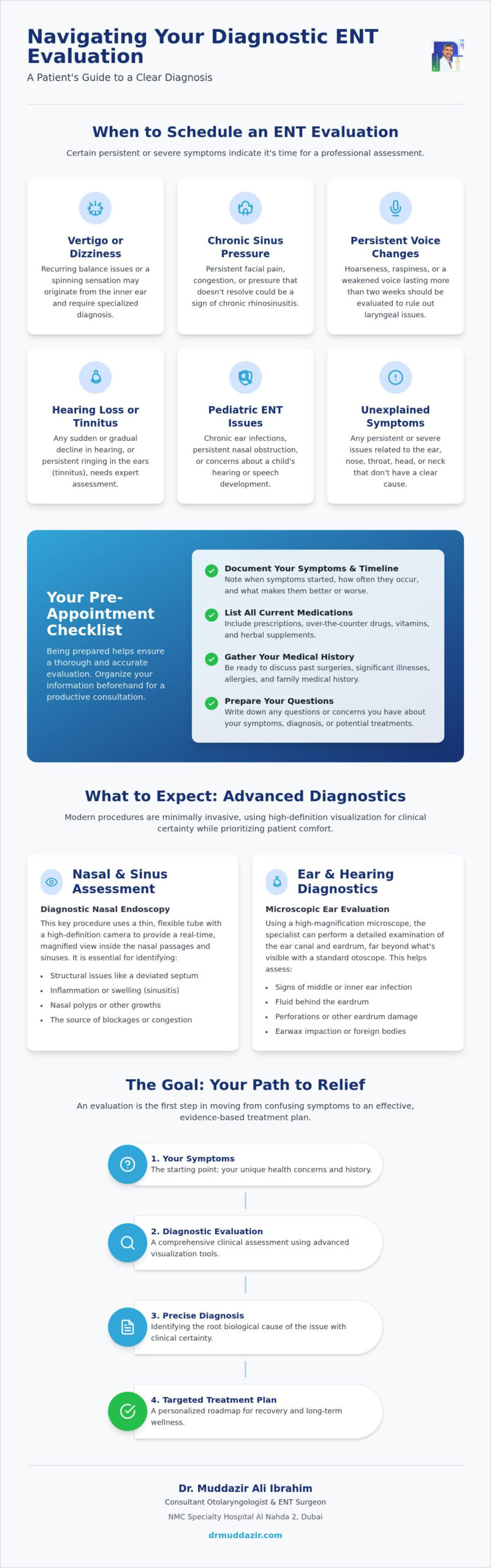
Red Flags: When to Schedule a Diagnostic ENT Evaluation
Recognizing when a minor irritation has become a clinical concern is the key to effective treatment. While many ear, nose, or throat issues resolve with rest, symptoms that persist beyond two weeks often indicate an underlying condition that requires specialized care. Scheduling a diagnostic ENT evaluation early can be the difference between a simple medical intervention and a more complex surgical requirement. For families in Al Nahda Sharjah and Dubai, monitoring recurrent pediatric infections is particularly important. Frequent episodes of tonsillitis or ear pain shouldn’t be accepted as a normal part of childhood; they often signal a need for professional assessment at NMC Specialty Hospital Al Nahda 2.
Nasal and Sinus Warning Signs
Chronic nasal obstruction does more than just make breathing difficult. It often disrupts sleep cycles and reduces overall quality of life. If you experience persistent facial pressure or a noticeably decreased sense of smell, these are clinical signs that the nasal passages may be compromised. Recurrent sinus infections that fail to respond to standard antibiotics are another major indicator. In these cases, direct visualization helps determine if structural issues or polyps are the cause. Early diagnosis in the clinic can often lead to conservative management plans, preventing the progression toward chronic disease.
Ear and Throat Warning Signs
Changes in your primary senses or basic functions like swallowing should never be ignored. Sudden hearing loss, even if it seems temporary, requires an immediate assessment. Similarly, progressive hearing loss in one ear can be a sign of middle ear pathology or nerve-related issues. In the throat, persistent hoarseness that lasts longer than two weeks warrants a detailed look at the larynx. For many patients, a “lump in the throat” sensation can be a sign of inflammation or lesions that need specialized attention. Additionally, witnessed pauses in breathing during sleep or chronic, heavy snoring are primary indicators for an Obstructive Sleep Apnea (OSA) evaluation. If you or a family member are experiencing these red flags, contact our specialist team in Dubai to ensure a thorough and accurate diagnosis.
Specialized ENT Care at NMC Specialty Hospital Al Nahda 2
Dr. Muddazir Ibrahim provides expert consultant-level care at NMC Specialty Hospital Al Nahda 2, Dubai. This facility serves as a primary healthcare hub for residents across the Dubai-Sharjah border, including those in Al Nahda Sharjah, Al Qusais, Muhaisnah, and Deira. The hospital is equipped with advanced diagnostic and surgical suites that cater to both adult and pediatric patients. By housing high-definition visualization tools and microscopic technology under one roof, we ensure that your diagnostic ENT evaluation is as thorough as it is efficient. This integration of technology and expertise allows for precise identification of conditions, leading to successful, patient-centered results grounded in clinical evidence.
A Patient-Centered Approach in Dubai
Understanding your health shouldn’t be a challenge. Dr. Muddazir Ibrahim focuses on a patient-centered approach where complex clinical findings are explained in plain English. This clarity helps reduce the anxiety often associated with medical consultations; you’re never left wondering what a specific term means for your recovery. We believe that an informed patient is a more confident one. Whether your symptoms require long-term medical management or a specific surgical intervention, the plan is always tailored to your unique anatomy and lifestyle. This is particularly vital in pediatric care, where a gentle and specialized touch is required. If your child suffers from recurrent throat infections, consulting a tonsillectomy specialist ensures that the path to recovery is managed with the highest professional standards.
Next Steps After Your Evaluation
After the diagnostic ENT evaluation is finalized, we take the time to review every image and finding with you. This collaborative discussion is where we map out the next steps. For some, this may involve discussing advanced procedures like endoscopic septoplasty or FESS to resolve structural breathing issues. For others, a conservative management strategy involving targeted medication or lifestyle adjustments might be the most appropriate route. We also establish clear follow-up care schedules to monitor your progress and ensure symptoms don’t return. Our goal is to provide a decisive solution that addresses the root cause of your discomfort rather than just the surface-level symptoms. You can Book your diagnostic ENT evaluation with Dr. Muddazir Ibrahim today to begin your journey toward clinical certainty.
Securing Your Path to Clinical Certainty
Navigating persistent ear, nose, or throat symptoms doesn’t have to be a process of trial and error. By following a structured checklist and preparing your medical history, you ensure that your diagnostic ENT evaluation is both thorough and productive. We’ve explored how advanced visualization tools like diagnostic nasal endoscopy replace guesswork with high-definition clarity, allowing for targeted treatment plans that prioritize your long-term health. Whether you’re managing chronic sinus pressure or recurrent pediatric infections, early intervention is the most effective way to secure a successful outcome.
Dr. Muddazir Ali Ibrahim, a Consultant ENT Surgeon with over 15 years of clinical experience, specializes in advanced diagnostic endoscopy and micro ear surgery. At NMC Specialty Hospital Al Nahda 2, Dubai, our team is dedicated to providing patient-focused results through evidence-based care. Don’t let unresolved symptoms disrupt your quality of life. You can Schedule Your Diagnostic ENT Evaluation with Dr. Muddazir Ibrahim today to receive a precise diagnosis and a clear roadmap to recovery. We’re here to guide you toward lasting relief and better health.
Frequently Asked Questions
Is a diagnostic ENT evaluation painful?
Most diagnostic ENT procedures are minimally invasive and designed to be comfortable. While you might feel a slight sensation of pressure during a diagnostic nasal endoscopy, it isn’t typically described as painful. Dr. Muddazir Ibrahim often uses a gentle topical decongestant or numbing spray to minimize any discomfort. This ensures the process is smooth and stress-free for both adults and children, allowing for an accurate clinical assessment without the need for sedation.
How long does a typical ENT consultation take?
A standard diagnostic ENT evaluation usually takes between 20 and 30 minutes. This timeframe allows Dr. Muddazir Ibrahim to conduct a thorough review of your medical history, perform a physical examination, and utilize specialized visualization tools if necessary. If your case is complex or requires additional in-office procedures like a microscopic ear evaluation, the duration might increase slightly. We aim to provide a decisive diagnosis while respecting your schedule at NMC Specialty Hospital Al Nahda 2.
Will I need an MRI or CT scan after my evaluation?
Advanced imaging like an MRI or CT scan isn’t always required. In many cases, the high-definition view provided by a diagnostic nasal endoscopy or microscopic ear evaluation offers enough clinical detail to form a treatment plan. However, if structural issues are deep within the sinuses or skull base, Dr. Muddazir Ibrahim might request imaging for precise surgical planning. The decision depends entirely on your specific symptoms and the findings from your initial physical assessment.
What is the difference between a screening and a diagnostic evaluation?
A screening is a preliminary check to identify potential issues, such as a basic school hearing test. In contrast, a diagnostic ENT evaluation is a comprehensive medical assessment intended to identify the specific root cause of a symptom. It involves specialized equipment and the expertise of a consultant like Dr. Muddazir Ibrahim to differentiate between various conditions. This level of detail is necessary to create a personalized medical or surgical treatment plan for long-term relief.
Can I return to work immediately after a diagnostic nasal endoscopy?
You can typically return to your normal activities, including work, immediately after a diagnostic nasal endoscopy. Since the procedure is performed in the clinic without general anesthesia, there’s no recovery period required. If a numbing spray was used, the sensation usually wears off within 30 to 60 minutes. It’s a quick and efficient way to gain clinical certainty about your nasal health without disrupting your daily routine in Al Nahda Dubai or Sharjah.
Does Dr. Muddazir Ibrahim see pediatric patients for evaluations?
Dr. Muddazir Ibrahim provides specialized care for pediatric patients at NMC Specialty Hospital Al Nahda 2. He focuses on common childhood issues like recurrent tonsillitis, enlarged adenoids, and middle ear fluid. The approach is gentle and patient-centered, ensuring that children feel secure during their assessment. Whether your child needs a hearing check or an evaluation for grommet insertion, we use age-appropriate tools to ensure the most accurate and comfortable diagnostic experience possible.
What should I bring to my first ENT appointment in Dubai?
You should bring your Emirates ID and a valid insurance card to your first appointment. It’s also helpful to have a list of current medications and any previous medical reports, such as past hearing tests or imaging results. Having these documents ready allows Dr. Muddazir Ibrahim to build a more accurate clinical picture. This preparation is especially useful for residents in Muhaisnah or Al Qusais who have seen multiple practitioners before seeking specialist ENT care.
Will my insurance cover the diagnostic ENT evaluation at NMC Specialty Hospital?
NMC Specialty Hospital Al Nahda 2 accepts a wide range of major insurance providers within the UAE. Coverage for a diagnostic ENT evaluation depends on your specific policy and network level. We recommend contacting your insurance provider or our hospital’s billing department to verify your coverage details before your visit. This step ensures you understand any co-payments or prior authorization requirements, allowing you to focus entirely on your consultation and subsequent treatment plan.