
What if the persistent facial pressure and loss of smell that dictate your daily life could be resolved without a single external incision? For many people in the UAE struggling with chronic sinus conditions, the cycle of temporary relief followed by recurring infections feels inescapable. You’ve likely experienced the frustration of nasal sprays and antibiotics that only provide a brief reprieve, leading many to consider endoscopic sinus surgery as a more permanent solution. The anxiety surrounding surgical invasiveness is common, yet modern techniques have transformed how we approach these persistent blockages.
Functional Endoscopic Sinus Surgery, or FESS, represents a significant shift from traditional methods by focusing on the precision-driven restoration of your natural nasal physiology. This minimally invasive intervention is designed for those who haven’t found success through medical management alone. By utilizing advanced fiberoptic technology, specialists can clear blockages and address nasal polyps with exceptional accuracy and no external scarring. In this guide, we’ll explain how this sophisticated procedure provides a path to clear breathing and freedom from facial pain, allowing for a swift recovery and a return to the quality of life you deserve.
Key Takeaways
- Learn how endoscopic sinus surgery utilizes high-definition visualization to address chronic blockages without the need for external incisions or visible scars.
- Understand the evolution from traditional methods to modern endonasal techniques, which significantly reduce recovery times from weeks to just a few days.
- Discover the essential steps in the patient journey, including the role of diagnostic CT imaging and necessary lifestyle adjustments for optimal healing.
- Explore the benefits of a precision-driven approach that focuses on restoring natural sinus drainage and improving long-term respiratory health.
- Gain insights into the specialized care provided by expert consultants who leverage advanced micro-surgical techniques to ensure patient safety and comfort.
What is Endoscopic Sinus Surgery (FESS)?
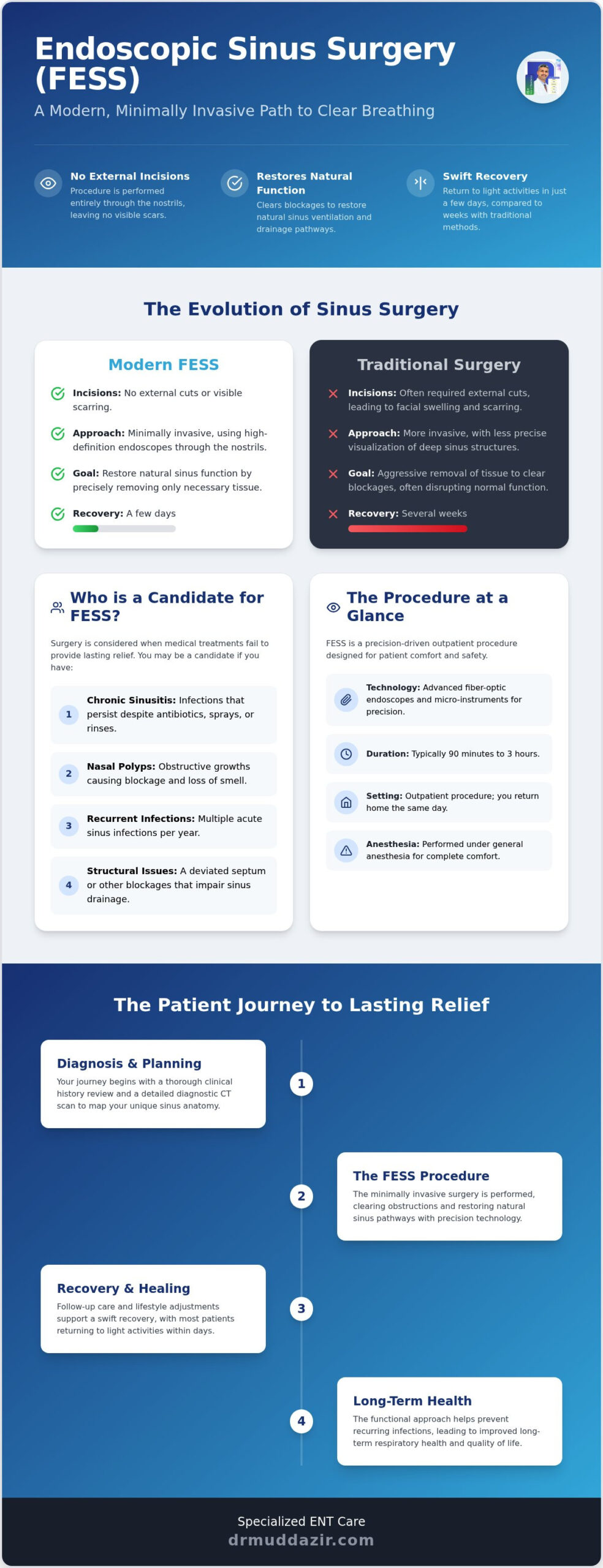
If you’ve spent months or even years dealing with the heavy, dull ache of sinus pressure, you know how much it can drain your energy. Functional endoscopic sinus surgery (FESS) has emerged as the modern gold standard for patients who need more than just temporary relief. It’s a specialized procedure that uses a thin, lighted tube called an endoscope to look directly into the nasal passages. This tool provides high-definition visualization, giving the surgeon a clear view of the intricate structures within your sinus cavities. Because the entire procedure is performed through the nostrils, it’s considered minimally invasive. There are no external incisions, which means no visible scars and a much more comfortable recovery process compared to traditional methods.
The primary goal of endoscopic sinus surgery is simple yet profound: to restore the natural ventilation and drainage pathways of your sinuses. Instead of just treating the symptoms, we’re addressing the physical blockages that cause the problem in the first place.
The “Functional” Difference in Modern ENT
The word “functional” in FESS reflects a major shift in how we approach nasal health. In earlier decades, surgery often involved the aggressive removal of tissue. Today, we prioritize the preservation of healthy, functioning mucosa. We focus our attention on the ostiomeatal complex. This is the critical “bottleneck” area where the maxillary, ethmoid, and frontal sinuses drain. If this area is blocked, the sinuses can’t breathe or clean themselves. By carefully removing only the specific obstructions, such as small pieces of bone or inflamed tissue, we restore the natural physiology of the nose. This precision-based approach is what helps prevent future recurring infections and long-term complications.
Who is a Candidate for Sinus Surgery?
Surgery is rarely the first step, but it becomes a vital option when medical management fails to provide a lasting solution. You might be a candidate for endoscopic sinus surgery if you’re experiencing:
- Chronic sinusitis that hasn’t improved after consistent use of antibiotics, saline rinses, or nasal steroids.
- Obstructive nasal polyps that physically block the airway, leading to a lost sense of smell and disrupted sleep.
- Recurrent acute sinusitis episodes that happen several times a year, causing frequent absences from work or school.
- Structural issues, such as a severely deviated septum, that contribute to sinus drainage failures.
At our practice, we use a patient-centered approach to determine if FESS is right for you. We look at your clinical history alongside detailed imaging to ensure that a surgical intervention will truly improve your daily life and breathing.
The Mechanism of FESS: How the Procedure is Performed
Modern Endoscopic Sinus Surgery is a meticulously planned procedure performed in a controlled hospital environment under general anesthesia. This ensures you’re completely comfortable and relaxed, which is essential for the surgeon to navigate the delicate nasal passages with millimeter-level precision. Most patients find it reassuring that FESS is almost always an outpatient procedure. You’ll typically arrive at the facility in the morning and be back in your own bed by the afternoon. The surgery itself generally lasts between 90 minutes and three hours, depending on whether we’re treating a single sinus or performing a more comprehensive clearance of all sinus cavities.
Advanced Visualization and Precision
The success of this intervention relies heavily on the integration of fiber-optic technology and high-definition imaging. By using endoscopes with varying angles, the surgeon can see into hidden recesses that were previously inaccessible without large external cuts. We use ultra-fine micro-instruments, such as microdebriders, to precisely shave away obstructive tissue or polyps. This level of control is vital because it allows us to leave healthy tissue untouched. When we preserve the natural lining of the nose, the body heals much faster. It’s the difference between a traditional surgery that requires weeks of recovery and a modern approach where you’re back to light activities in just a few days.
Navigating the Sinus Anatomy
Safety is our absolute priority during endoscopic sinus surgery. Because the sinuses are situated near the eyes and the brain, we often employ advanced image-guidance systems. This technology functions like a GPS, using your pre-operative CT scan to create a real-time 3D map of your internal structures. It allows the surgeon to confirm the exact position of their instruments at every second. We carefully open the drainage pathways of the ethmoid, maxillary, and frontal sinuses, ensuring that natural ventilation is restored. In many cases, we also address a deviated septum or enlarged turbinates during the same procedure to maximize the functional outcome. This comprehensive method ensures that every structural barrier to your breathing is resolved. If you’ve been struggling with chronic congestion, consulting with an ENT specialist can help determine if these advanced surgical tools are the right solution for your needs.
Modern FESS vs. Traditional Sinus Surgery
It’s natural to feel a sense of unease when discussing surgery, especially if you’ve heard stories about the “old way” of treating sinus issues. Traditional procedures, such as the Caldwell-Luc approach, often required incisions under the upper lip or through the facial skin to access the maxillary sinus. These methods were effective for their time but came with significant swelling, prolonged pain, and the risk of permanent numbness. Modern endoscopic sinus surgery has transformed this experience. By utilizing the nose’s natural openings, we’ve moved away from aggressive tissue stripping toward a philosophy of mucosal preservation. We’re no longer creating new holes; we’re simply restoring the ones you already have.
Why Minimally Invasive Matters
The transition to endonasal techniques offers more than just aesthetic benefits. It fundamentally changes the recovery experience. In the past, patients often faced days of discomfort due to extensive nasal packing that had to be manually removed. Today, the use of dissolvable, drug-eluting stents has made that process largely obsolete. These devices keep the passages open while slowly releasing medication to reduce inflammation. You’ll experience less post-operative bleeding and a much faster return to your daily productivity. While older surgeries might have sidelined you for weeks, most people now return to non-strenuous activities in about 7 to 10 days.
Long-term Outcomes and Success Rates
When we look at the results, the precision of endoscopic sinus surgery provides a clear advantage. Research indicates success rates for primary procedures range between 76% and 97.5%. This isn’t just about fewer infections; it’s about a complete restoration of your quality of life. Patients frequently report that their sense of smell returns and their sleep quality improves because they’re no longer struggling for air at night. Additionally, opening these pathways allows your prescribed nasal sprays to finally reach the deep tissues where they’re needed. This synergy between surgery and medical management creates a sustainable environment for healthy breathing. It’s a precise, evidence-based solution for those who haven’t found relief through traditional means.
The Patient Journey: Preparation and Recovery
Preparation is the foundation of a successful surgical outcome. Before we schedule your endoscopic sinus surgery, a high-resolution CT scan of the paranasal sinuses is essential. This scan provides a detailed roadmap of your unique anatomy, allowing us to plan the most precise approach possible. We also conduct standard blood tests to ensure your safety under general anesthesia. One of the most critical steps you can take is to stop smoking at least two weeks before your procedure. Nicotine constricts blood vessels and significantly impairs the healing of the nasal mucosa, which can affect your long-term results.
The first 24 hours after surgery are focused on comfort and stabilization. You’ll likely experience a sensation of heavy congestion, similar to a severe head cold. It’s important to keep your head elevated, even while sleeping, to minimize swelling. We provide a small gauze dressing under the nose to collect any minor oozing, which typically subsides within the first day. You won’t have to deal with the painful packing of the past; instead, we focus on gentle care and rest during this initial phase.
Healing doesn’t end when you leave the hospital. A series of follow-up visits, known as debridements, are scheduled over the first month. During these brief sessions, the surgeon carefully removes any crusting or old blood from the sinus openings. This step is vital because it prevents the formation of scar tissue that could block the newly opened pathways. Skipping these visits can compromise the functional success of the entire procedure.
What to Expect During Recovery
During the first week, you’ll feel “stuffy,” but you must resist the urge to blow your nose. Doing so can create internal pressure that interferes with the delicate surgical site. Saline rinses are your most important tool during this phase. They keep the nasal passages clean and moist, facilitating the natural drainage process. We also advise avoiding any heavy lifting or strenuous exercise for at least two weeks to prevent post-operative bleeding and ensure the tissues have adequate time to knit back together.
Long-term Maintenance of Sinus Health
Successful recovery is marked by the gradual return of your sense of smell and the disappearance of chronic facial pain. However, it’s important to remember that surgery doesn’t eliminate underlying allergies. In the UAE, managing environmental triggers like dust and indoor humidity remains a vital part of your health strategy. You’ll likely continue using prescribed nasal sprays, but you’ll find they’re much more effective now that the physical blockages are gone. If you’re ready to take the first step toward lasting relief, book a consultation with our ENT team to discuss your personalized treatment plan.
Specialized ENT Care with Dr. Muddazir Ibrahim
Choosing a surgeon is a deeply personal decision, especially when your quality of life and ability to breathe freely are at stake. Dr. Muddazir Ibrahim brings a sophisticated blend of clinical authority and patient-focused empathy to every consultation. With over 15 years of clinical experience, he has established himself as a seasoned guide for patients who’ve exhausted medical management for their sinus concerns. Practicing in state-of-the-art medical facilities, he utilizes the latest surgical advancements to ensure that every endoscopic sinus surgery is performed with the highest standards of safety and precision. These facilities provide access to high-definition imaging and specialized equipment that is essential for complex endonasal work.
The philosophy of our practice is grounded in the practical needs of the patient. We don’t just look at the symptoms; we look at the person behind the condition. This means your care plan is built on a foundation of trust and specialized expertise. We focus on functional improvement, ensuring that the drainage pathways are not only open but also capable of maintaining long-term health. Our commitment to successful, patient-centered results is what defines our reputation across the UAE.
The Expertise of a Specialist Surgeon
A successful outcome begins with a consultant-led surgical plan that respects your unique internal anatomy. Dr. Muddazir specializes in micro-surgical ENT interventions, focusing on restoring the natural function of the nose rather than just removing tissue. This precision-focused approach is equally vital for our youngest patients. Pediatric ENT surgery requires a delicate touch and a deep understanding of developing facial structures. Whether treating an adult with chronic nasal polyps or a child with recurring infections, the goal remains the same: achieving a life free from congestion without external scars. You’re not just a case number; you’re a patient receiving a plan tailored to your specific physiological needs and lifestyle goals.
Booking Your Consultation
How do you know if it’s time to move beyond nasal sprays and antibiotics? If you’re experiencing persistent facial pressure, a diminished sense of smell, or congestion that disrupts your sleep, a formal evaluation is the next logical step. The process begins with a thorough diagnostic ENT examination. During this visit, we’ll review your clinical history and any necessary imaging to determine if endoscopic sinus surgery is the most effective path forward. We understand that the prospect of surgery can cause anxiety, which is why we prioritize clear communication and a reassuring environment. Taking the first step toward clear breathing is about reclaiming your productivity and comfort. You can schedule your consultation today to begin your journey toward lasting relief and specialized care.
Reclaiming Your Respiratory Health
Chronic sinus conditions don’t have to define your daily life. Modern endoscopic sinus surgery offers a precise, minimally invasive path to relief that prioritizes the natural function of your nasal anatomy. By moving away from traditional, aggressive methods, this procedure ensures faster recovery times and the elimination of external scarring. Whether you’re dealing with obstructive nasal polyps or recurring infections, the shift toward high-definition visualization means you can breathe clearly again with minimal disruption to your routine.
Taking the next step involves a partnership with a specialist who understands the complexities of your condition. With over 15 years of surgical experience, Dr. Muddazir Ibrahim serves as a Consultant ENT Surgeon at NMC Specialty Hospital, specializing in advanced FESS techniques. You deserve a specialized care plan that addresses your physical discomfort with clinical precision and genuine care. Consult with Dr. Muddazir Ibrahim for Specialized Sinus Care and begin your journey toward a life free from sinus pressure. Lasting relief is within your reach.
Frequently Asked Questions
Is endoscopic sinus surgery painful?
Most patients describe the post-operative sensation as a feeling of heavy congestion or a dull head cold rather than intense pain. Because the procedure is performed under general anesthesia, you won’t feel anything during the surgery itself. Afterward, any discomfort is usually managed effectively with mild, prescribed analgesics. The minimally invasive nature of the technique significantly reduces the trauma to surrounding tissues, making the recovery much more comfortable than older, traditional sinus methods.
How long does the FESS procedure take?
A standard FESS procedure typically lasts between 90 minutes and 3 hours. The exact duration depends on the complexity of your sinus anatomy and whether the surgeon needs to address all the sinus cavities or just a specific area, like the maxillary or ethmoid sinuses. Since it’s usually performed as an outpatient surgery, you’ll spend a few hours in recovery before being discharged to go home the same day.
Will there be any visible scars after sinus surgery?
No, you won’t have any visible external scars following the procedure. Endoscopic sinus surgery is performed entirely through the nostrils using high-definition endoscopes and specialized micro-instruments. This endonasal approach allows the surgeon to access the internal sinus structures without making any incisions on the skin of the face or under the lip. This preserves your natural appearance while focusing entirely on the internal functional restoration of your breathing passages.
How soon can I return to work after FESS?
Most patients are ready to return to light office work or non-strenuous daily activities within 7 to 10 days. However, your body needs time to heal internally, so it’s vital to avoid heavy lifting, vigorous exercise, and blowing your nose for at least two weeks. Following this timeline helps prevent post-operative bleeding and ensures that the nasal mucosa heals correctly, allowing you to return to full productivity without complications.
Can FESS surgery treat nasal polyps permanently?
FESS is highly effective at removing nasal polyps and restoring the airway, but long-term success requires ongoing management. While the surgery physically clears the blockages, polyps can sometimes recur if the underlying inflammation isn’t controlled. This is why we combine the surgical intervention with a personalized medical plan, which may include medicated nasal rinses or allergy management, to maintain the health of your sinus lining and prevent future regrowth.
Will I need to have my nose packed after the surgery?
The traditional, uncomfortable nasal packing that many people fear is rarely used in modern practice. Instead, we often use dissolvable spacers or drug-eluting stents that keep the sinus passages open while releasing anti-inflammatory medication. These materials are naturally absorbed by the body or washed away during your saline rinses. This modern approach eliminates the need for a painful packing removal visit and significantly improves your comfort during the first week of recovery.
Is sinus surgery covered by medical insurance in the UAE?
Yes, endoscopic sinus surgery is generally covered by medical insurance providers across the UAE when it’s deemed medically necessary. Because FESS is a functional intervention designed to treat chronic disease and restore breathing, it’s classified as a medical necessity rather than an elective or aesthetic procedure. It’s always advisable to check with your insurance coordinator to ensure all pre-authorization steps and diagnostic requirements are completed before your scheduled surgery date.
What happens if chronic sinusitis is left untreated?
Leaving chronic sinusitis untreated can lead to a significant decline in your quality of life and potential health complications. Persistent inflammation can cause the development of nasal polyps, a permanent loss of the sense of smell, and chronic fatigue due to disrupted sleep. In rare cases, untreated infections can spread to the eyes or the brain. Seeking a specialized evaluation early helps prevent these structural issues and restores your ability to breathe and function normally.