
Did you know that recurrent ear infections account for nearly 30% of pediatric ENT consultations in the UAE? For many families in Dubai and Sharjah, the cycle of sleepless nights and repetitive antibiotic cycles feels never-ending. It’s exhausting to see your child in constant discomfort or to worry that muffled hearing might be delaying their first words. Understanding when to consider ear tubes surgery for kids is the first step toward reclaiming your child’s health and developmental progress.
You’ve likely spent hours researching grommet or ventilation tube insertion while weighing the anxiety of anesthesia against the benefits of clear hearing. We agree that your child’s safety and long-term wellbeing are the highest priorities. This guide provides the clinical clarity you need, detailing the expertise offered by Dr. Muddazir Ali Ibrahim at NMC Specialty Hospital Al Nahda 2. We’ll explain how the procedure works, what to expect during recovery, and how this specialized intervention helps your child meet their speech milestones with confidence.
Key Takeaways
- Identify the clinical criteria for ear tubes surgery for kids, including persistent middle ear fluid lasting over three months or recurrent infections.
- Understand the surgical process of grommet or ventilation tube insertion and why general anesthesia is used to ensure pediatric safety and comfort.
- Learn how this procedure restores hearing clarity and prevents potential delays in your child’s speech and language development.
- Gain insights into the recovery phase, including the specialized role of antibiotic ear drops in maintaining tube patency and preventing post-operative clogging.
- Discover the benefits of a comprehensive pediatric ENT evaluation with Dr. Muddazir Ali Ibrahim at NMC Specialty Hospital Al Nahda 2, Dubai.
What is Ear Tube Surgery for Kids?
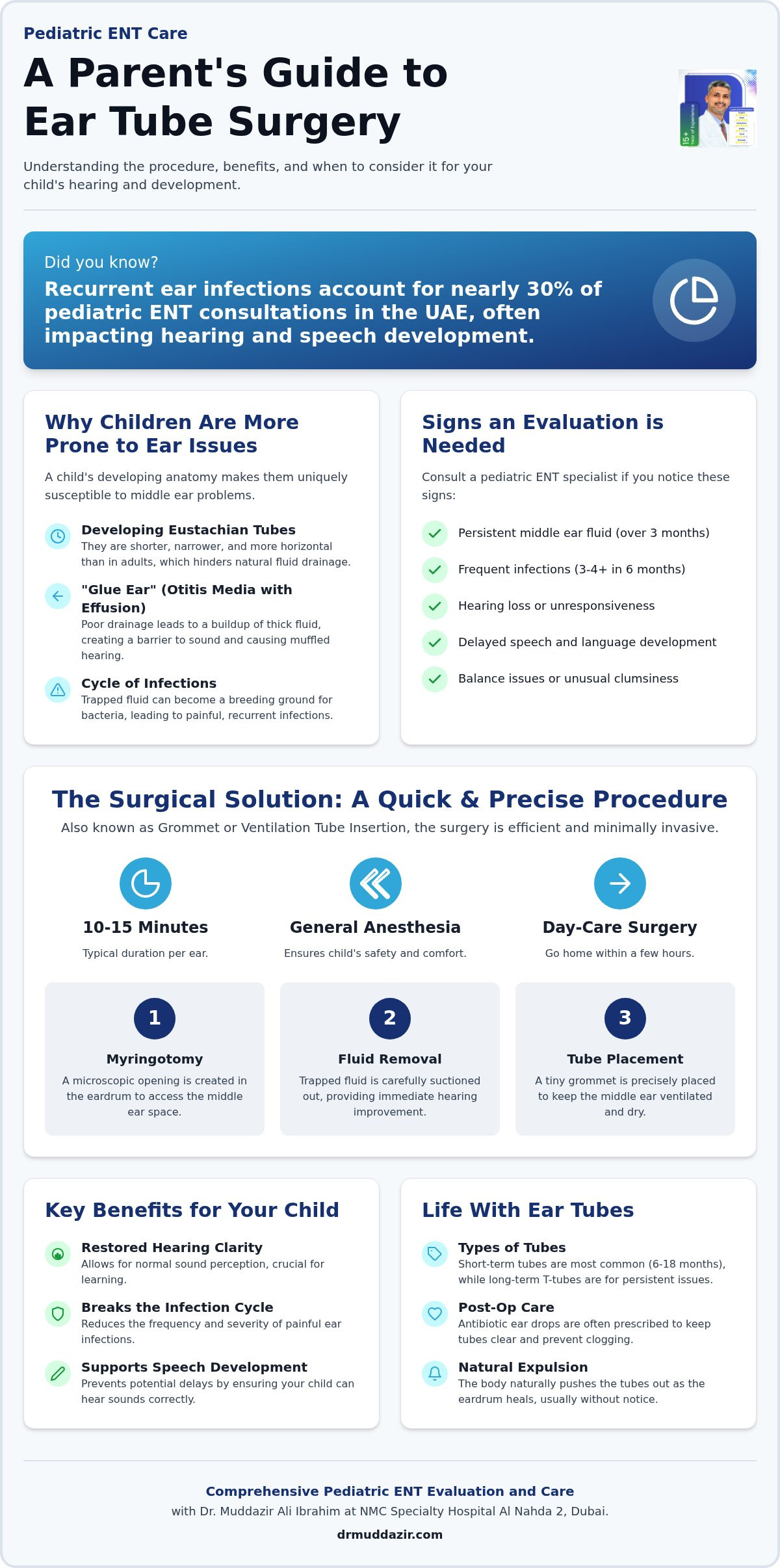
Ear tubes surgery for kids is a precise medical intervention designed to restore normal ventilation to the middle ear. The procedure involves the placement of a tiny, hollow cylinder, known clinically as a Tympanostomy tube, into the eardrum. These devices serve as a synthetic bypass for the Eustachian tube. When this natural tube fails to function, a vacuum effect occurs within the middle ear. This negative pressure pulls fluid into the space behind the eardrum, leading to muffled hearing and pain. In Al Nahda Dubai and Sharjah, environmental factors like dust and constant air conditioning often worsen these symptoms. Dr. Muddazir Ali Ibrahim at NMC Specialty Hospital Al Nahda 2 uses these tubes to equalize pressure and ensure the middle ear remains dry and healthy.
The Anatomy of a Middle Ear Infection
Children are uniquely susceptible to ear issues because their anatomy is still developing. Their Eustachian tubes are shorter, narrower, and more horizontal than an adult’s. This makes it incredibly easy for bacteria or fluid to become trapped. When fluid accumulates without an active infection, it’s called Otitis Media with Effusion, or “Glue Ear.” This thick fluid acts like a physical barrier to sound. If left untreated, it can lead to hearing loss and speech delays. Chronic infections occur when this trapped fluid becomes a breeding ground for bacteria. By opting for ear tubes surgery for kids, parents can break this cycle of infection and provide a clear path for sound to reach the inner ear.
Grommets vs. Ventilation Tubes: What is the Difference?
In UAE medical consultations, you’ll hear the terms “grommets” and “ventilation tubes” used interchangeably. They both refer to the same microscopic device. The choice of material often depends on the child’s specific needs. Most surgeons use fluoroplastic or silicone, though titanium is an option for certain cases. Short-term tubes are the most common choice. They typically remain in the eardrum for 6 to 18 months before the body naturally pushes them out. For children with persistent structural issues, a long-term “T-tube” might be necessary. These have larger flanges to keep them in place for several years. Dr. Muddazir Ali Ibrahim provides a comprehensive pediatric ENT evaluation to determine which tube type best suits your child’s recovery.
How Grommet or Ventilation Tube Insertion is Performed
Understanding the surgical process helps alleviate the natural anxiety parents feel when considering an operation for their child. For ear tubes surgery for kids, general anesthesia is essential to ensure the patient remains perfectly still and pain-free. This controlled environment allows the surgical team to work with the extreme precision required for microscopic ear structures. According to Johns Hopkins Medicine on ear tube insertion, this approach is standard to minimize risks and ensure a smooth experience. Our anesthesia team at NMC Specialty Hospital Al Nahda 2 specializes in pediatric care, focusing on a gentle transition into and out of sleep.
The surgical steps are methodical and focused on restoring health to the middle ear environment:
- Step 1: Myringotomy. The surgeon creates a microscopic opening in the eardrum to access the middle ear.
- Step 2: Fluid Removal. Any trapped, sticky fluid is carefully suctioned out, which often results in an immediate improvement in the child’s hearing clarity.
- Step 3: Tube Placement. The grommet is precisely positioned into the incision, where it stays in place to provide continuous ventilation.
Microscopic and Endoscopic Precision
Dr. Muddazir Ali Ibrahim utilizes advanced microscopic and endoscopic tools to visualize the ear canal and eardrum with high definition. In pediatric cases, the workspace is incredibly small, so using these specialized instruments ensures every movement is accurate and minimally invasive. Myringotomy is a precision incision made under a microscope to access the middle ear space. This level of detail is vital for successful outcomes in micro ear surgery and helps prevent trauma to the surrounding delicate tissues.
Duration and Immediate Post-Op
The entire procedure is remarkably efficient, typically taking only 10 to 15 minutes per ear. Once the tubes are securely in place, your child moves to a dedicated recovery room. Here, specialized nursing staff monitor them as the anesthesia wears off, ensuring they’re comfortable and hydrated. Since this is a day-care surgery, most children are ready to return home within a few hours of the procedure. Families living near the Dubai and Sharjah border appreciate this streamlined process, as it minimizes disruption to the child’s routine and allows for recovery in a familiar environment.
Signs Your Child Might Need Ear Tube Surgery
Determining if your child requires surgical intervention involves looking for specific clinical patterns that suggest the ears aren’t clearing fluid naturally. While a single ear infection is common, recurrent acute otitis media is a primary red flag. Clinically, this is defined as three or more distinct infections within a six-month period, or four infections within a single year. When infections occur this frequently, the middle ear rarely has time to heal completely between episodes. This constant state of inflammation often leads to persistent fluid buildup, known as Otitis Media with Effusion. If this fluid remains trapped for more than three months despite medical treatment, ear tubes surgery for kids is typically recommended to prevent structural damage to the eardrum.
The presence of fluid creates a physical barrier to sound, often described as hearing “underwater.” You might notice your child doesn’t respond when called from another room or frequently asks for the television volume to be increased. Because children learn to speak by mimicking the precise sounds they hear, even a temporary reduction in hearing clarity can lead to noticeable speech and language delays. Identifying these signs early is vital for families in Dubai and Sharjah to ensure their child’s developmental progress remains on track.
The Adenoid Connection
In many pediatric cases, ear issues don’t exist in isolation. The adenoids, which are lymphoid tissues located behind the nose, sit very close to the opening of the Eustachian tubes. When these tissues become enlarged or chronically infected, they physically block the tubes and prevent the middle ear from ventilating. You may notice symptoms like persistent mouth breathing, heavy snoring, or a nasally voice. In these instances, pediatric adenoid surgery is often performed alongside grommet insertion to address the underlying cause of the fluid accumulation.
Hearing Tests and Evaluations
Before confirming the need for surgery, a comprehensive diagnostic evaluation is essential. This includes an audiogram to measure hearing sensitivity and tympanometry, which measures how the eardrum moves in response to air pressure. A flat line on a tympanogram is a clear indicator of fluid behind the drum. Consulting a specialized pediatric ENT surgeon ensures these results are interpreted with clinical expertise. To understand what to expect and how to prepare for these assessments, reviewing a comprehensive checklist for your diagnostic ENT evaluation can help you arrive fully informed. Dr. Muddazir Ali Ibrahim at NMC Specialty Hospital Al Nahda 2 utilizes these objective tests to build a tailored treatment plan, ensuring ear tubes surgery for kids is utilized as a precise solution for long-term ear health.
Recovery and Life with Ear Tubes
Recovery from ear tubes surgery for kids is remarkably fast, with most children returning to their normal energy levels within hours. You can expect a significant improvement in your child’s hearing clarity within the first 24 hours as the sound-dampening fluid is finally gone. This sudden change sometimes makes children more sensitive to loud noises initially, but they quickly adjust to their restored hearing. To ensure the surgical site remains clear, we prescribe antibiotic ear drops for a few days. These drops play a critical role in preventing the microscopic tubes from becoming blocked by inflammatory debris or dried fluid during the initial healing phase.
Most children in Dubai and Sharjah return to their school or nursery the very next day. The grommets are designed to stay in the eardrum for roughly 6 to 18 months. This duration provides enough time for the middle ear mucosa to return to a healthy state and for the child’s Eustachian tube anatomy to mature. If you have concerns about your child’s recovery or want to ensure they are meeting their milestones, schedule a follow-up with Dr. Muddazir Ali Ibrahim at NMC Specialty Hospital Al Nahda 2.
Water Safety and Swimming
Modern clinical guidelines offer a more relaxed perspective on water protection than in previous decades. For surface swimming in chlorinated pools or the sea around Dubai and Sharjah, most children don’t require specialized earplugs. The surface tension of the water generally prevents it from entering the tiny opening of the tube. However, bath time requires more vigilance. Soapy water has a lower surface tension, which makes it easier for water to slip through the tube into the middle ear. We recommend keeping soapy water out of the ears during hair washing to prevent irritation or infection.
Long-term Monitoring
Regular surveillance is essential to ensure the tubes are functioning correctly and haven’t become displaced. We typically schedule follow-up appointments every six months to visualize the tubes and conduct a quick hearing screen. As the eardrum heals from the inside out, it naturally migrates the tube toward the ear canal. Most tubes fall out on their own and are often found on the child’s pillow or in a piece of earwax. If a tube remains in place for longer than two or three years, a brief procedure might be necessary to remove it and prevent a permanent opening in the eardrum.
Specialized Pediatric ENT Care in Dubai and Sharjah
Choosing a surgical provider for your child is a significant decision that requires a balance of clinical expertise and a compassionate approach. Dr. Muddazir Ali Ibrahim, a Consultant ENT Surgeon at NMC Specialty Hospital Al Nahda 2, Dubai, focuses on a comprehensive evaluation of pediatric ear health. He understands that ear tubes surgery for kids isn’t just a routine procedure; it’s a vital intervention to protect a child’s developmental milestones. By centering care around the patient’s specific needs, he ensures that families feel secure and informed throughout the entire surgical journey.
The hospital’s strategic location serves as a convenient healthcare hub for families residing across Al Nahda Dubai, Al Nahda Sharjah, Al Qusais, and Muhaisnah. This geographic accessibility is particularly beneficial for the post-operative monitoring and follow-up appointments necessary for grommet or ventilation tube insertion. The clinical team adopts an integrated approach, looking at the relationship between the ear, nose, and throat to ensure total pediatric wellness. This ensures that underlying issues, such as chronic nasal allergies or adenoid concerns common in the UAE, are managed alongside ear health.
A Patient-Centered Surgical Experience
Reducing parental anxiety is a cornerstone of the care provided at NMC Specialty Hospital Al Nahda 2. Dr. Muddazir prioritizes clear communication, providing detailed pre-operative education so parents know exactly what to expect. With over 15 years of clinical experience in microscopic and endoscopic ear surgery, he brings a high level of precision to every pediatric case. The focus remains on hearing restoration as a means to support your child’s academic and social growth. When a child’s hearing is clear, they can engage more fully with their environment, leading to better confidence in both school and play.
Booking a Consultation
If you’ve noticed signs of hearing loss or if your child suffers from frequent infections, a specialized evaluation is the best way to determine the right course of action. For your first appointment, it’s helpful to bring a record of previous infections, any courses of antibiotics, and previous hearing test results if available. This clinical history allows for a more accurate assessment and a tailored treatment plan. A professional consultation ensures that ear tubes surgery for kids is only recommended when it is the most effective solution for your child’s long-term health.
Schedule a pediatric ENT consultation with Dr. Muddazir to explore how specialized care can help your child overcome ear-related challenges and thrive.
Restoring Your Child’s Hearing and Confidence
Identifying the signs of chronic fluid buildup is the first step toward breaking the cycle of recurring infections. Whether your child is experiencing speech delays or persistent discomfort, understanding the role of ear tubes surgery for kids allows you to make an informed decision for their future. This procedure is a brief, highly effective intervention that restores hearing clarity and supports vital developmental milestones. Recovery is typically rapid, allowing children to return to their routines with improved focus and auditory perception.
Dr. Muddazir Ali Ibrahim, a Consultant ENT Surgeon at NMC Specialty Hospital Al Nahda 2, Dubai, specializes in grommet or ventilation tube insertion. He provides advanced pediatric care for families across Al Nahda, Sharjah, and nearby communities. If you’re ready to seek expert guidance for your child’s ear health, you can Book a Pediatric ENT Consultation at NMC Specialty Hospital Al Nahda 2. Taking this proactive step ensures your child can navigate their world with healthy ears and clear communication.
Frequently Asked Questions
Is general anesthesia safe for my child during ear tube surgery?
General anesthesia is very safe for ear tubes surgery for kids and is administered by specialized pediatric anesthesiologists at NMC Specialty Hospital Al Nahda 2. Because the procedure is brief, typically lasting only 10 to 15 minutes, the amount of medication used is minimal. This ensures your child remains perfectly still during the microscopic work. Most children wake up quickly and are ready to return home within a few hours of the surgery.
Will my child be in pain after the grommets are inserted?
Most children experience very little pain after grommet or ventilation tube insertion. In many cases, they feel immediate relief because the pressure from trapped fluid is gone. If there’s any minor soreness, it’s typically managed with standard over the counter pediatric pain relief. Most children are back to their usual activities, playing and eating normally, by the evening of the surgery day. It’s a remarkably smooth recovery process.
Can my child swim with ear tubes in place?
Children can typically swim in chlorinated pools or the sea around Dubai and Sharjah without specialized earplugs. The opening in the tube is so small that surface tension prevents water from entering the middle ear during surface swimming. However, you should take precautions during bath time, as soapy water enters the tubes more easily. If your child enjoys deep diving, Dr. Muddazir Ali Ibrahim may recommend custom earplugs for added protection.
How long do the tubes stay in, and do they need to be surgically removed?
The tubes generally stay in place for 6 to 18 months. They’re designed to fall out on their own as the eardrum heals and naturally pushes them into the ear canal. You might eventually find the tiny tube on your child’s pillow or in their earwax. Surgical removal is only necessary in the small percentage of cases where a tube remains in the eardrum for longer than two or three years.
Will ear tubes affect my child’s hearing in the long run?
Ear tubes surgery for kids actually protects long term hearing by preventing chronic fluid buildup that can damage middle ear structures. The procedure resolves the muffled hearing sensation immediately. While a tiny scar may form on the eardrum where the tube was placed, this rarely has any measurable impact on hearing levels. The primary goal is to ensure your child meets their speech and language milestones without any auditory interference.
What happens if the ear tubes fall out too early?
If a tube falls out sooner than expected, we monitor the ear closely for the return of fluid or infections. If the Eustachian tube has matured enough to function on its own, no further treatment is needed. However, if the child continues to experience recurrent infections, Dr. Muddazir Ali Ibrahim might recommend a second set of tubes or evaluate if an adenoidectomy is necessary to resolve the underlying blockage at NMC Specialty Hospital Al Nahda 2.
Are there any risks or side effects associated with ear tube surgery?
Grommet insertion is a common and safe procedure, though minor risks exist. These include persistent ear drainage or a small amount of scarring on the eardrum called tympanosclerosis. In rare instances, the small hole where the tube was placed may not close completely after the tube falls out, which might require a minor repair later. Dr. Muddazir discusses these specific factors during your consultation to ensure you feel fully informed and secure.
Does my child need ear tubes if they only have fluid but no pain?
Yes, surgery is often recommended for Glue Ear, which is fluid without active infection or pain. Even without pain, persistent fluid acts as a physical barrier that muffles sound and causes temporary hearing loss. This can lead to significant delays in speech development and academic performance. If fluid remains for more than three months, ear tubes are a clinical solution to restore hearing and prevent these developmental setbacks.