
Imagine standing over your child’s bed at midnight, listening to the heavy, labored sound of their breathing and wondering why the last three rounds of antibiotics failed to stop the snoring or the recurring ear infections. It’s a deeply unsettling experience for any parent to witness their child struggle with poor sleep and depleted energy levels. You likely feel a mix of frustration with temporary fixes and a natural anxiety regarding the safety of general anesthesia. These concerns are valid, and you aren’t alone in seeking a permanent solution like adenoid surgery for children to safeguard your child’s long-term health and developmental trajectory.
This guide provides expert clinical insight into when surgical intervention becomes the most effective path forward for restoring vital nasal airflow. We’ll examine how the procedure works in 2026, using modern techniques to minimize discomfort and maximize surgical precision. You’ll learn exactly what to expect during the process, from the initial consultation with a specialized ENT consultant to the final stages of a smooth recovery. By understanding the link between clear airways and improved growth, you can move toward a decision that brings quiet nights and vibrant energy back to your home.
Key Takeaways
- Understand how adenoid tissue functions within the pediatric immune system and why its enlargement impacts long-term growth and energy.
- Discover why modern adenoid surgery for children is now performed as a precise day-case procedure using advanced surgical technology.
- Identify the specific clinical milestones that indicate when conservative management is no longer sufficient for your child’s health.
- Access a structured recovery framework, including a day-by-day timeline to ensure your child returns to their normal activities quickly.
- Learn how to navigate complex surgical decisions by prioritizing specialized pediatric ENT experience and patient-focused care.
Understanding Adenoids: Why They Matter for Your Child’s Health
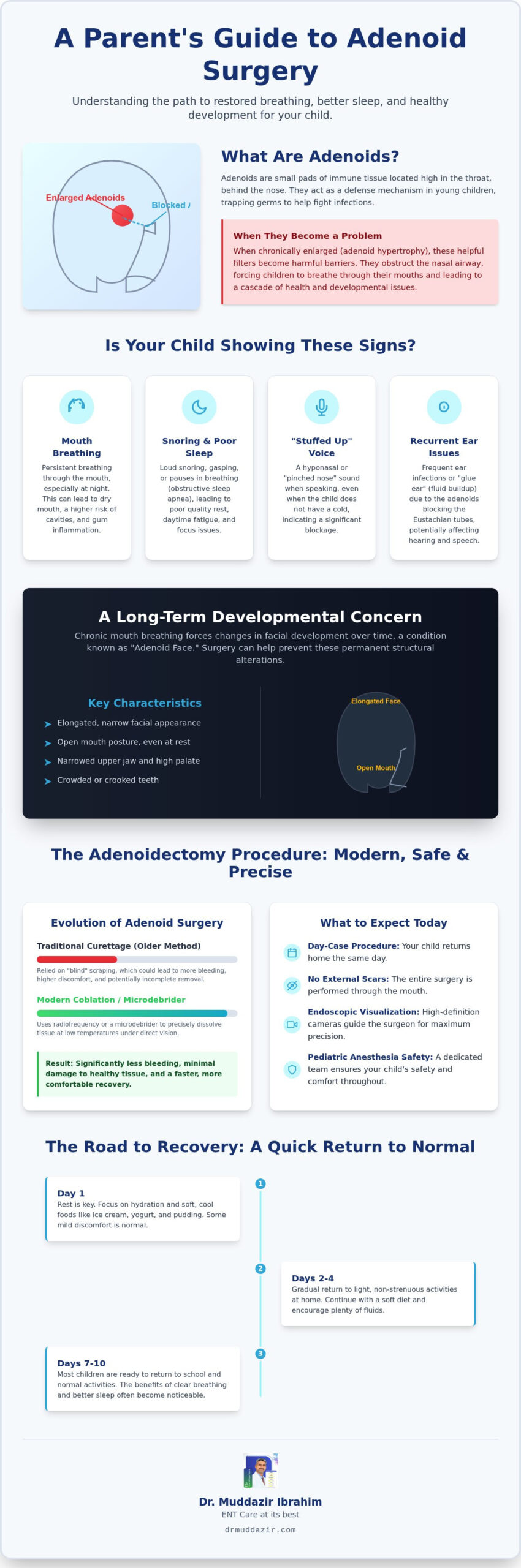
Adenoids are small pads of specialized lymphoid tissue situated high in the nasopharynx, tucked away behind the soft palate. During infancy and early childhood, these tissues function as a primary defense mechanism, trapping inhaled pathogens to help the immune system recognize and fight infections. However, their strategic location means that when they become chronically inflamed or enlarged, a condition known as adenoid hypertrophy, they transform from helpful filters into mechanical barriers. This obstruction forces a child to bypass their natural nasal filtration, leading to significant physiological and developmental shifts.
When hypertrophy persists, it can alter the physical structure of a growing child’s face. This phenomenon, often referred to as “adenoid face,” occurs because the child must keep their mouth open constantly to breathe. Over time, this can lead to a narrowed upper jaw, crowded teeth, and an elongated facial appearance. Understanding What is an adenoidectomy? helps parents see how removing this obstructive tissue can halt these structural changes. For many families, adenoid surgery for children is the clinical intervention that allows the facial skeleton to develop correctly and naturally.
Symptoms of Enlarged Adenoids in Children
Persistent mouth breathing is more than a simple habit; it’s a symptom that impacts dental health by drying out protective saliva, which increases the risk of cavities and gum inflammation. You might also observe chronic snoring or gasping during the night. These are hallmarks of pediatric obstructive sleep apnea (OSA). These sleep disruptions prevent the deep, restorative rest necessary for growth and daily focus. Additionally, pay attention to your child’s voice. A “stuffed up” or hyponasal sound, as if they’re speaking through a pinched nose even when they aren’t sick, suggests the nasal airway is significantly narrowed.
The Link Between Adenoids and Ear Health
The adenoids sit directly adjacent to the openings of the Eustachian tubes, which are the narrow channels responsible for ventilating the middle ear. When adenoids are enlarged, they physically block these tubes or serve as a reservoir for bacteria. This leads to recurrent infections or “glue ear,” medically known as otitis media with effusion. This fluid buildup can muffle hearing and potentially delay speech development. In these cases, a consultant ENT surgeon may recommend adenoid removal alongside grommet or ventilation tube insertion to restore hearing and prevent future ear complications.
The Adenoidectomy Procedure: Modern Surgical Techniques and Safety
Modern medical advancements have transformed the way we approach adenoidectomy, moving it from a traditional hospital stay to a streamlined, day-case procedure. This means your child can return to the comfort of their own home just hours after the surgery. When considering adenoid surgery for children, the primary goal is a safe, effective removal of the obstructive tissue with the shortest possible recovery time. By utilizing specialized instruments, surgeons today achieve a level of precision that was previously unattainable, significantly reducing post-operative discomfort.
The shift toward advanced tools like coblation and microdebriders has revolutionized the patient experience. Unlike older methods that relied on traditional curettage, coblation uses radiofrequency energy to dissolve tissue at lower temperatures. This technique minimizes damage to the surrounding healthy mucosa and results in substantially less bleeding. Understanding the technical aspects of the Adenoid Removal Procedure can demystify the experience for parents, providing the clinical reassurance needed to move forward with confidence.
What Happens During the Surgery?
The procedure is performed entirely through the mouth, which means there are no external incisions or visible scars. Using an endoscope for high-definition visualization, the surgeon carefully reaches the nasopharynx to remove the enlarged adenoids. This direct line of sight allows for meticulous removal while ensuring the surrounding structures remain intact. Throughout the entire process, a dedicated surgical team monitors your child’s vital signs with sophisticated equipment, maintaining a stable and controlled environment from start to finish.
Anesthesia Safety for Pediatric Patients
The most common source of parental anxiety is the use of general anesthesia. It’s important to know that pediatric anesthesia has become exceptionally safe due to rigorous pre-operative assessments and the development of short-acting anesthetic agents. These modern medications are designed for rapid onset and quick clearance, which helps children wake up gently with minimal grogginess or nausea. For families seeking this level of specialized care, consulting an expert in pediatric ENT surgery ensures that every safety protocol is followed with precision.
A vital component of this safety net is the presence of a dedicated pediatric anesthesiologist. This specialist focuses exclusively on the unique physiological needs of children, tailoring the dosage and monitoring to the child’s specific age and weight. This personalized approach ensures that the “watchful waiting” period transitions into a decisive, safe intervention that finally resolves the child’s breathing struggles.
Clinical Indicators: When is Adenoid Surgery the Right Choice?
Deciding whether to proceed with surgical intervention is a process rooted in careful observation and clinical data. Most families begin with a period of “Watchful Waiting,” where we monitor the child’s symptoms over three to six months. During this phase, conservative treatments like saline rinses or nasal corticosteroids are often prioritized to see if the inflammation subsides naturally. If these interventions fail to restore clear nasal breathing or improve sleep quality, adenoid surgery for children moves from a possibility to a necessary recommendation to protect the child’s developmental health.
Diagnostic accuracy remains the cornerstone of this decision. We utilize flexible nasal endoscopy to provide a high-definition view of the nasopharynx, ensuring the degree of obstruction is precisely measured. While some practitioners rely solely on physical symptoms, our approach integrates objective data from endoscopy or diagnostic imaging to confirm that the adenoid tissue is the true cause of the child’s distress. This methodical progression ensures that surgery is only suggested when a clear mechanical blockage is identified.
Absolute vs. Relative Indications
Clinical guidelines categorize the need for surgery into two distinct groups. Absolute indications include severe obstructive sleep apnea, where the child stops breathing during sleep, or rare cases of suspected malignancy. Relative indications are more frequent and involve persistent conditions like chronic sinusitis, recurrent glue ear, or significant speech muffling. We evaluate how these symptoms impact the child’s daily energy and school performance. If a child is consistently fatigued or falling behind due to hearing loss, the benefits of removal far outweigh the risks of continued observation. A consultant with over 15 years of experience can help you weigh these factors for your child’s specific case.
When Surgery Might Be Delayed
Age is a primary consideration in our surgical planning. Unless the situation is urgent, we typically wait until a child is at least two years old. This allows the airway structures to develop further and ensures the child is physically robust enough for anesthesia. Additionally, we will postpone a scheduled procedure if the child has an active infection, such as a high fever or heavy cough, to maintain the highest safety standards. Many parents express concern about weakening the immune system; however, the body has hundreds of other lymph nodes that readily take over the role of the adenoids once they are removed. Adenoid surgery for children doesn’t compromise long-term immunity; it simply removes a source of chronic obstruction.
The Road to Recovery: Preparing Your Child and Managing Post-Op Care
The success of adenoid surgery for children depends heavily on the care provided in the days following the procedure. While the surgical precision of the ENT consultant sets the stage, your role in managing the recovery environment ensures a smooth transition back to health. Preparation begins well before you arrive at the hospital. By establishing a calm, structured plan for the first week, you can significantly reduce both your child’s anxiety and your own.
Preparing Your Child Emotionally
Explaining the hospital visit requires a balance of honesty and simplicity. For younger children, describing the anesthesia as a “special nap” helps normalize the experience without using frightening terminology. Encourage your child to bring a favorite stuffed animal or blanket into the surgical suite; these familiar items provide a vital sense of security during the induction of anesthesia. Your presence is the most powerful tool for comfort. Maintaining a composed, reassuring demeanor helps your child feel safe, as they often mirror their parents’ emotional state during stressful transitions.
Post-Operative Care and Nutrition
The first 48 hours are the most critical for comfort and hydration. Most children experience a mild sore throat or a sensation of fullness in the nose. This is a normal part of the healing process as the tissue in the nasopharynx recovers.
- Hydration: Offer small, frequent sips of cool liquids like water, apple juice, or electrolyte drinks. Avoid citrus or carbonated beverages which may irritate the throat.
- Pain Management: Don’t wait for your child to complain of pain. Follow the prescribed medication schedule precisely for the first three days to maintain a consistent level of comfort.
- Dietary Transition: Start with soft foods such as yogurt, pudding, or lukewarm soup before slowly reintroducing solid textures as tolerated.
Physical activity should be restricted for the first week to prevent post-operative bleeding. Most children are ready to return to school after 7 to 10 days, provided they aren’t participating in vigorous playground activities or contact sports. If you have specific questions about your child’s readiness or need to discuss a customized timeline, you can consult with a pediatric ENT specialist to receive a personalized recovery plan.
Recognizing Recovery Red Flags
While complications are rare, parents should monitor for specific “red flags” that require immediate clinical attention. Contact your ENT specialist if you observe bright red blood from the nose or mouth, a fever exceeding 38.5°C that doesn’t respond to medication, or signs of dehydration such as decreased urination and a dry mouth. Most children recover quickly. By day five, you’ll likely notice the first signs of improved nasal breathing and increased energy levels, confirming the benefits of adenoid surgery for children.
Expert Pediatric ENT Care: Navigating Surgical Decisions with Confidence
Choosing to proceed with adenoid surgery for children involves more than just a clinical diagnosis; it requires a partnership between the family and a trusted medical expert. Dr. Muddazir Ibrahim brings over 15 years of clinical experience to every consultation, ensuring that each surgical plan is as unique as the child receiving it. This level of specialization is vital because pediatric anatomy requires a delicate, micro-surgical approach that differs significantly from adult procedures. By prioritizing a patient-centered philosophy, we ensure that you feel heard and supported throughout the entire surgical journey.
Operating within the NMC Specialty Hospital network provides parents with the security of a world-class facility that adheres to the highest safety standards in the UAE. These hospitals are equipped with the latest diagnostic and surgical technology, allowing for the precise interventions mentioned in previous sections. Beyond the surgery itself, our commitment extends to long-term follow-up care. We monitor your child’s developmental progress post-surgery to ensure that their breathing, sleep, and energy levels continue to improve as they grow.
Consulting a Specialist
During the initial consultation, you should expect a comprehensive evaluation that goes beyond a simple physical exam. The surgeon will review your child’s history of ear infections, sleep patterns, and previous antibiotic use to build a complete clinical picture. This is the time to address any anxieties you have regarding anesthesia or the recovery timeline. Understanding why choosing the best pediatric ENT surgeon is a critical first step helps you move from a state of worry to a state of informed action. Clear, transparent communication ensures that the family and the surgical team are aligned on the desired health outcomes.
A Commitment to Pediatric Excellence
Specialized care for pediatric ENT conditions isn’t just about the procedure itself; it’s about the long-term impact on your child’s growth. Precise surgical interventions can prevent the facial developmental changes and chronic fatigue discussed earlier in this guide. Our focus remains on achieving successful, patient-centered results that allow your child to reach their full potential without the burden of obstructive breathing. If your child is struggling with persistent snoring or recurring infections, the next step is scheduling a thorough evaluation to discuss their breathing health and determine if adenoid surgery for children is the right path forward.
Restoring Your Child’s Natural Vitality and Growth
Identifying the moment when “watchful waiting” ends and decisive action begins is the first step toward your child’s recovery. We’ve explored how adenoid surgery for children provides a permanent solution to obstructive sleep apnea and chronic ear infections, using advanced techniques that prioritize safety and comfort. By removing these physical barriers, you’re not just improving their sleep; you’re safeguarding their facial development and long-term energy levels. Modern procedures are now more precise than ever, ensuring that your child returns to their normal routine with minimal disruption.
Navigating these medical decisions is significantly easier when you have a seasoned, authoritative expert as your guide. Dr. Muddazir Ibrahim brings over 15 years of surgical expertise as a Consultant ENT Surgeon, specializing in the unique needs of pediatric patients. You don’t have to manage these health-related anxieties alone. Consult with a pediatric ENT specialist today to discuss your child’s health and gain the expert clinical insight needed for a successful outcome. Your child deserves to breathe clearly, sleep soundly, and thrive with renewed vitality.
Frequently Asked Questions
How long does adenoid surgery take for a child?
The actual surgical removal of the adenoids typically takes between 20 and 30 minutes. While the entire hospital visit lasts several hours to accommodate pre-operative preparation and post-anesthesia monitoring, the procedure itself is highly efficient. Surgeons use advanced tools like coblation to ensure the tissue is removed precisely. This short duration helps minimize the time your child spends under anesthesia, contributing to a safer clinical experience.
Is adenoidectomy a major surgery?
Adenoidectomy is considered a routine, low-risk procedure rather than a major surgery. It’s performed as a day-case, meaning most children return home the same afternoon. While all surgical interventions carry some level of risk, modern techniques and specialized pediatric monitoring make it exceptionally safe. When performing adenoid surgery for children, the focus is on precision and rapid recovery, allowing them to resume normal activities quickly.
Will my child’s voice change after adenoid removal?
You may notice a subtle shift in your child’s vocal quality as the nasal obstruction is cleared. Before surgery, many children have a hyponasal voice, sounding as if they have a permanent cold. Once the airway opens, the voice often sounds clearer and more resonant. This change is generally viewed as a positive restoration of their natural tone rather than an artificial alteration of their vocal cords or speech.
Can adenoids grow back after they are removed?
It is rare for adenoids to grow back, though it can occasionally happen if the surgery is performed on a very young child, typically under age two. In these instances, a small amount of residual lymphoid tissue may regenerate over time. However, for the vast majority of patients, a single procedure provides a permanent solution to breathing and ear health issues. Choosing a consultant with extensive clinical experience ensures the removal is thorough.
What is the best age for a child to have adenoid surgery?
Most surgeons prefer to wait until a child is at least two or three years old before recommending adenoid surgery for children. By this age, the airway has developed more fully, and the child’s immune system is more robust. However, if severe obstructive sleep apnea or significant hearing loss is present, the procedure can be performed earlier. The ideal timing is always determined by the severity of symptoms and their impact.
How soon can my child eat normally after the procedure?
Most children can begin eating soft, cool foods like yogurt or chilled soup within a few hours of waking up. It’s best to avoid crunchy, spicy, or highly acidic foods for the first few days to prevent irritation. By the end of the first week, most patients comfortably transition back to their regular diet. Maintaining consistent hydration with water and cool, electrolyte-rich fluids is the priority during this initial recovery.
Will removing adenoids weaken my child’s immune system?
Removing the adenoids does not weaken a child’s overall immune system. While adenoids play a role in trapping pathogens during infancy, the body contains hundreds of other lymph nodes that perform the same function. Once the adenoids become a source of chronic infection or obstruction, they are no longer beneficial. Clinical evidence confirms that children who undergo this procedure don’t experience an increase in future illnesses or a decrease in immune response.
What are the risks of leaving enlarged adenoids untreated?
Leaving severe adenoid hypertrophy untreated can lead to long-term developmental complications. Chronic mouth breathing often causes permanent changes to the facial structure and dental alignment. Additionally, persistent sleep apnea deprives the brain of restorative rest, which can lead to behavioral issues and poor school performance. Untreated obstruction also increases the risk of hearing damage due to recurrent fluid buildup in the middle ear, potentially delaying speech development.