
Did you know that for a child to meet the clinical standard for a tonsillectomy in 2026, they typically need to have documented at least seven episodes of throat infections in a single year? This high bar ensures that surgery is only recommended when it’s truly necessary for long-term health. Finding the right tonsillectomy specialist involves more than just booking a consultation; it requires understanding the rigorous criteria used to protect patients from unnecessary intervention.
It’s completely natural to feel a sense of hesitation when considering surgery for yourself or your child. Whether you’re worried about the risks of general anesthesia or the potential for post-operative bleeding, these concerns deserve to be addressed with clinical precision and genuine care. You want to feel certain that your surgical team is using the most advanced methods available to ensure a smooth recovery and minimal discomfort.
This expert-led checklist will teach you how to identify a qualified ENT surgeon and navigate the entire process with confidence. We’ll explore how Dr. Muddazir Ibrahim at NMC Specialty Hospital Al Nahda 2 utilizes advanced techniques like Coblation to reduce recovery time. You’ll gain a clear framework to evaluate your options, understand the recovery timeline, and approach your procedure with the clinical clarity you deserve.
Key Takeaways
- Understand the gold standard clinical indicators, such as the Paradise Criteria, to determine if surgery is the right path for your health.
- Learn how to evaluate a tonsillectomy specialist by verifying surgical experience and specific expertise in both pediatric and adult cases.
- Compare the benefits of advanced radiofrequency technology like Coblation against traditional methods for minimizing tissue damage and pain.
- Identify the critical pre-operative steps, from fasting protocols to medical clearance, required for a safe and successful surgical outcome.
- Gain a clear roadmap for post-operative recovery, focusing on hydration strategies and gradual dietary changes to ensure a smooth healing process.
Identifying a Tonsillectomy Specialist: Clinical Indicators for Surgery
A specialized ENT surgeon serves as more than just a technician; they act as a clinical gatekeeper. When you consult a tonsillectomy specialist, their primary goal is to determine if surgical intervention will truly improve your quality of life. This involves a meticulous evaluation of chronic throat disorders, moving beyond simple symptom management to identify underlying structural issues. This tonsillectomy overview highlights how the procedure has evolved into a targeted solution for specific clinical triggers rather than a routine childhood rite of passage.
Distinguishing between acute tonsillitis and chronic obstructive hyperplasia is a critical part of this process. While acute infections are temporary, hyperplasia involves a permanent enlargement of the tissue that can compromise the airway. A thorough specialist doesn’t just look at the throat in isolation. They evaluate the entire upper respiratory tract, including the adenoids and nasal passages, to ensure that the patient’s breathing difficulties aren’t being caused by a combination of factors.
When is Medical Management No Longer Enough?
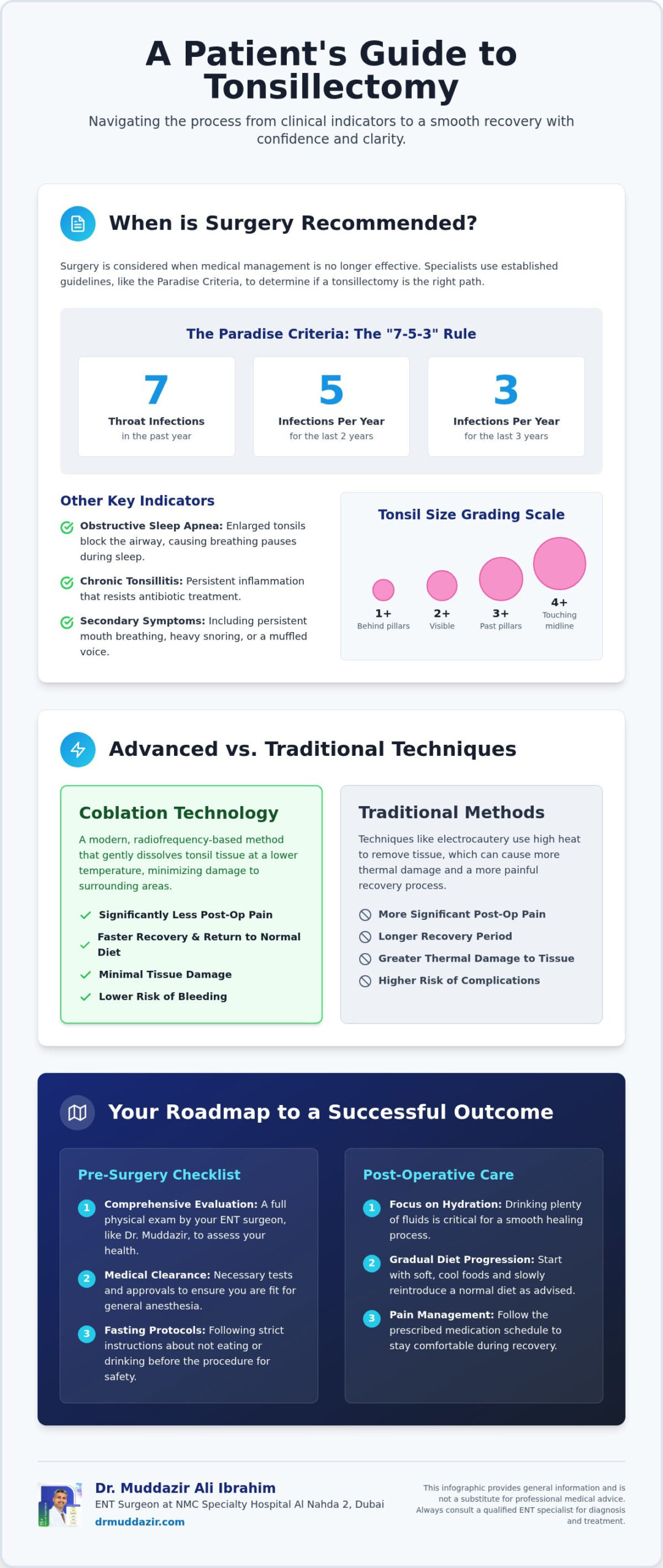
Medical guidelines, specifically the Paradise Criteria, provide a clear roadmap for surgery. The “7-5-3 rule” is the recognized standard: seven documented infections in the past year, five per year for the last two years, or three per year for the last three years. Beyond the frequency of illness, a tonsillectomy specialist assesses how tonsillar hypertrophy impacts sleep and physical growth. If enlarged tissue causes obstructive sleep apnea, it can lead to daytime fatigue and developmental delays in children. Chronic tonsillitis is a persistent inflammation of the tonsils that often resists standard antibiotic therapy, leading to recurrent infections and biofilm formation.
The Specialist’s Diagnostic Checklist
During a consultation at NMC Specialty Hospital Al Nahda 2, Dr. Muddazir Ali Ibrahim performs a comprehensive physical examination. This includes grading tonsil size on a scale from 1+ to 4+. A grade of 1+ indicates the tonsils are tucked behind the pillars, while 4+ means they’re touching in the midline. However, size is only one piece of the puzzle. The diagnostic process also involves:
- Evaluating secondary symptoms: Checking for persistent mouth breathing, heavy snoring, or a muffled “hot potato” voice.
- Reviewing patient history: Analyzing the severity of past fevers and the specific response to previous antibiotic cycles.
- Assessing school and work impact: Documenting the number of days lost to illness to understand the condition’s burden on daily life.
For families in Al Nahda Dubai and Sharjah, this methodical approach ensures that surgery is a calculated decision based on clinical evidence. It provides a sense of security, knowing that every alternative has been considered before proceeding with Paediatric Adenoid and tonsils surgery or adult interventions.
Checklist for Evaluating an ENT Surgeon’s Expertise
Selecting the right tonsillectomy specialist is a decision that balances clinical credentials with practical experience. You shouldn’t settle for a generalist when your health or your child’s safety is at stake. Focus on board certifications and the specific number of years a surgeon has spent in the operating room. High surgical volume is a key indicator of safety. It means the surgeon has encountered a wide variety of anatomical variations and managed them successfully.
Specialist Qualifications to Look For
Look for a consultant who has undergone post-graduate training in globally recognized healthcare systems, such as the British or International standards. Membership in recognized ENT surgical societies often indicates a commitment to staying current with the latest medical advancements. When preparing for a tonsillectomy, it’s vital to ensure your surgeon has deep experience in both adult cases and complex pediatric airway obstructions.
Hospital affiliation matters. Dr. Muddazir Ali Ibrahim operates at NMC Specialty Hospital Al Nahda 2, providing patients from Dubai and Sharjah with access to advanced surgical facilities. This environment is crucial for managing both routine cases and any rare post-operative complications with clinical precision. A reputable hospital provides the infrastructure necessary for safe general anaesthesia and specialized nursing care.
Questions to Ask During Your Consultation
A consultation is your opportunity to gauge a surgeon’s communication style. They should explain risks and recovery without using cold medical jargon. Don’t hesitate to ask direct questions. How many of these procedures do you perform each year? What is your protocol for managing post-operative pain? A transparent specialist will provide clear, evidence-based answers. They’ll also discuss alternative treatments before recommending surgery.
If you are a parent, you might find more specific guidance in this resource on choosing the best pediatric ENT surgeon. For residents in Al Nahda Dubai and Sharjah, having a trusted guide nearby makes the process much less stressful. You can schedule a consultation with Dr. Muddazir to discuss your specific needs and receive a tailored assessment. Understanding the surgeon’s approach to Paediatric Adenoid and tonsils surgery will help you feel more secure in your decision.
Advanced Surgical Techniques: Coblation vs. Traditional Methods
Modern medicine offers various paths for removing tonsillar tissue. A skilled tonsillectomy specialist selects a technique based on the patient’s specific clinical needs, whether they’re a child with obstructive sleep apnea or an adult with recurrent infections. While traditional methods remain the gold standard for many, technological advancements have introduced options that prioritize faster recovery and reduced discomfort. Understanding these tools helps you participate more effectively in your treatment plan.
Why Technique Selection Matters for Recovery
Traditional cold steel dissection involves using surgical instruments to physically remove the tonsils. It’s a reliable method for complete removal but may require more active management of bleeding during the procedure. In contrast, thermal techniques like electrocautery use high heat to cut and seal vessels simultaneously. While efficient, the high temperatures can lead to more post-operative pain due to thermal injury to the surrounding muscles. Coblation operates at significantly lower temperatures (45 to 85°C) compared to the high heat (400 to 600°C) of traditional electrocautery, preserving the integrity of surrounding throat tissue.
Precision in the operating room directly impacts how the surgical site heals. For instance, Mayo Clinic’s Guide to Tonsillectomy notes that understanding the risks and recovery of each method helps patients prepare mentally for the healing phase. At NMC Specialty Hospital Al Nahda 2, Dr. Muddazir Ali Ibrahim evaluates whether an intracapsular (partial) or extracapsular (total) approach is most appropriate. Intracapsular removal, often favored in pediatric cases, leaves a thin layer of tissue to protect the throat muscles. This can significantly lower pain levels and help children return to their normal diet faster.
Managing the Risk of Post-Operative Hemorrhage
One of the primary concerns for any patient is the risk of bleeding after surgery. A tonsillectomy specialist ensures meticulous intra-operative hemostasis, which means they carefully seal every vessel before the patient leaves the operating room. This is achieved through specialized equipment designed to maintain a dry surgical field. Despite a perfect surgery, patients must remain vigilant during the “danger zone” between Days 5 and 10 of recovery.
This period is when the surgical scabs naturally begin to dissolve and fall away. If the underlying tissue isn’t sufficiently healed, secondary hemorrhage can occur. For residents in Al Nahda Dubai and Sharjah, having access to a consultant who provides clear instructions on monitoring this phase is essential. Dr. Muddazir emphasizes that while advanced tools like Coblation reduce intra-operative blood loss, the patient’s adherence to hydration and dietary protocols remains the final piece of the safety puzzle. Maintaining a moist surgical site through constant fluid intake is the most effective way to prevent scab-related complications.
Pre-Surgery Checklist: Preparing for a Successful Outcome
A successful surgical outcome begins weeks before you enter the operating room. While the technical skill of your surgeon is paramount, your adherence to pre-operative protocols significantly reduces the risk of complications. Your tonsillectomy specialist will require a series of baseline investigations, typically including a Complete Blood Count (CBC) and a coagulation profile. These tests ensure your body is prepared for the procedure and that your blood’s clotting ability is within a safe clinical range. Medical clearance may also be necessary from a general practitioner or pediatrician, especially if there are underlying health conditions like asthma or heart murmurs.
Medication management is a critical part of this preparation phase. You must stop taking any blood-thinning medications, including aspirin and certain non-steroidal anti-inflammatory drugs (NSAIDs), at least seven to ten days before surgery. It’s equally important to disclose all herbal supplements you’re taking. Supplements like ginger, garlic, and ginkgo biloba can inadvertently increase the risk of bleeding. Preparing your home environment is the final step; ensure you have a quiet space for a 10 to 14 day recovery period and stock up on soft foods and hydration essentials to support the healing process.
The Night Before and Morning of Surgery
Strict adherence to fasting protocols, often referred to as NPO (Nil Per Os), is non-negotiable for safe general anaesthesia. This means no solid foods or liquids for a specific number of hours before your scheduled arrival at NMC Specialty Hospital Al Nahda 2. Even a small amount of water or a light snack can lead to the postponement of your surgery for safety reasons. When packing for the hospital, bring comfortable clothing and any specific comfort items for children. In many cases, this procedure is combined with adenoid surgery for children to fully address obstructive breathing issues.
Mental Preparation for Pediatric Patients
For parents in Dubai and Sharjah, managing a child’s anxiety is often the most challenging part of the process. Use age-appropriate language to explain that the doctor is going to “fix” their throat so they don’t get sick as often. Avoid using scary words like “cut” or “sharp”; instead, focus on the “sleepy medicine” they will receive. A specialized pediatric surgical team, led by Dr. Muddazir Ali Ibrahim, prioritizes a gentle approach to make the experience as stress-free as possible.
The anaesthetist plays a vital role in this reassurance, meeting with you and your child before the procedure to explain how they will monitor every breath and heartbeat. This clinical partnership ensures that both the physical and emotional needs of the patient are met. If you have specific concerns about the surgical process, you can schedule a pre-operative consultation to discuss your child’s tailored care plan in detail.
Specialized Post-Operative Care with Dr. Muddazir Ibrahim
The recovery phase is where the expertise of a tonsillectomy specialist truly shines. While the surgical procedure itself is relatively brief, the subsequent 10 to 14 days are vital for ensuring a successful long-term outcome. Dr. Ibrahim’s post-operative protocol is built around the “Hydration First” rule. Dehydration is the primary cause of increased pain after throat surgery. When the surgical site becomes dry, the throat muscles stiffen, making swallowing significantly more uncomfortable. Patients are encouraged to take small, frequent sips of cool liquids throughout the day to keep the tissues supple and facilitate healing.
Dietary progression follows a structured path designed to protect the surgical site. Initially, the focus remains on soft, non-acidic foods like lukewarm soups, yogurts, and mashed vegetables. As healing progresses, typically around day seven or eight, patients can gradually reintroduce normal textures. It’s essential to avoid sharp or crunchy foods, such as crisps or crusty bread, until the specialist confirms that the surgical site has fully healed. This prevents premature irritation of the healing tissue and reduces the risk of late-stage bleeding.
Pain management has also evolved to prioritize patient comfort. Instead of waiting for pain to become severe before taking medication, Dr. Muddazir Ibrahim often recommends a scheduled protocol. By taking prescribed analgesics at fixed intervals, patients maintain a consistent level of comfort, which makes it much easier to stay hydrated. You should contact your specialist immediately if you experience red flags such as bright red bleeding, a persistent fever over 38.5°C, or a total inability to swallow liquids despite following the pain medication schedule.
The Dr. Muddazir Approach to Patient Recovery
Dr. Muddazir prioritizes direct communication and accessibility. If you have concerns during your recovery at home in Dubai or Sharjah, our dedicated surgical team provides the necessary support to address your questions. These evidence-based protocols are designed to reduce the risk of secondary infection and ensure that the primary goals of the surgery are met. Most patients report a significant improvement in sleep quality and a dramatic reduction in annual infection rates once the recovery period is complete.
Scheduling Your Consultation
Beginning the evaluation process for chronic throat issues is a straightforward step toward better health. During your first diagnostic visit, Dr. Muddazir will review your clinical history and perform a detailed examination of the upper airway. This consultation is an opportunity to discuss whether medical management or a specialized procedure is the most appropriate path for your specific needs. For residents in Al Nahda Dubai and Sharjah, expert care is conveniently located nearby. You can Consult with Dr. Muddazir Ibrahim for specialized tonsillectomy care to start your journey toward lasting relief.
Securing Your Path to Long-Term Health
Navigating the decision for surgery requires a balance of clinical evidence and personal reassurance. By following the 7-5-3 rule and understanding the benefits of advanced tools like Coblation, you can move forward with confidence. A qualified tonsillectomy specialist doesn’t just perform a procedure; they provide a comprehensive framework for your recovery, from the initial diagnostic grading to the final stages of post-operative healing. This methodical approach ensures that every intervention is necessary and targeted for the best possible outcome.
Dr. Muddazir Ali Ibrahim, a Consultant ENT Surgeon at NMC Specialty Hospital Al Nahda 2, offers over 15 years of clinical experience in both pediatric and adult care. His expertise in modern techniques ensures that patients from Dubai and Sharjah receive a high standard of specialized care tailored to their unique needs. You can book a consultation with Dr. Muddazir Ibrahim to discuss specialized throat surgery options and gain the clarity you need for your health journey.
Taking this step means prioritizing a future free from the burden of chronic infections and sleep disruptions. With the right surgical team by your side, a smoother recovery and a healthier life are well within your reach.
Frequently Asked Questions
How do I know if my child needs a tonsillectomy specialist or just a general ENT?
A tonsillectomy specialist is often preferred when dealing with complex pediatric cases or chronic obstructive sleep apnea. While general ENT surgeons handle basic cases, a specialist like Dr. Muddazir Ibrahim at NMC Specialty Hospital Al Nahda 2 focuses on advanced techniques like Coblation. This ensures that the specific anatomical needs of the patient are met with precision. Families in Al Nahda Dubai and Sharjah benefit from this specialized focus when managing recurrent infections that resist standard medical management.
What is the ideal age for a child to undergo a tonsillectomy?
There is no single ideal age, as the decision is based on clinical necessity rather than a specific birthday. Most pediatric tonsillectomies are performed between ages three and seven, which is when tonsillar tissue often reaches its maximum size relative to the airway. However, surgery is only recommended if the child meets specific criteria, such as the Paradise Criteria for infections or documented sleep apnea. Dr. Muddazir evaluates each case individually to ensure surgery is timed for the safest outcome.
How long is the recovery period for an adult versus a child?
Children typically recover faster than adults, often returning to normal activities within seven to ten days. Adults generally experience more intense post-operative pain and may require a full 14 days for a complete recovery. This difference is due to the increased vascularity and denser scar tissue often found in adult tonsils. Regardless of age, following the “Hydration First” rule at NMC Specialty Hospital Al Nahda 2 is essential for managing discomfort and preventing complications during the healing phase.
Will my child’s voice change after the tonsils are removed?
A child’s voice may sound slightly different immediately after surgery, but this is usually temporary. The removal of large tonsils creates more space in the back of the throat, which can change the resonance of the voice. Some parents describe it as a higher pitch or a less muffled sound. These changes typically settle as the throat muscles heal and the child adjusts to the new airway space. Permanent changes to the vocal cords are extremely rare in these procedures.
What are the most common risks associated with tonsillectomy in 2026?
The primary risks remain post-operative hemorrhage and dehydration-related pain. While advanced tools like Coblation have reduced intra-operative blood loss, the risk of secondary bleeding between days five and ten persists as the surgical scabs dissolve. Reactions to general anesthesia are another concern, though modern monitoring at NMC Specialty Hospital Al Nahda 2 makes this very safe. A tonsillectomy specialist will discuss these risks in detail during your consultation to ensure you’re fully prepared for the recovery period.
Can tonsils grow back after they have been surgically removed?
It is rare for tonsils to grow back completely, but small amounts of lymphoid tissue can sometimes regenerate. This is more common if the surgery was performed at a very young age or if an intracapsular technique was used. While this tissue might be visible during an exam, it rarely causes a return of the original symptoms like snoring or chronic infections. If you notice new growth, a follow-up with your ENT surgeon in Dubai or Sharjah is recommended for a clinical assessment.
Is it possible to perform a tonsillectomy and adenoidectomy at the same time?
Performing a tonsillectomy and adenoidectomy together, known as an adenotonsillectomy, is a very common clinical practice. Since both sets of tissue are part of the same immune system ring, they often become enlarged or infected simultaneously. Combining the procedures means the patient only undergoes general anesthesia once and has a single recovery period. Dr. Muddazir often recommends this combined approach for children in Al Nahda who suffer from both recurrent throat infections and obstructive mouth breathing.
How much time should I take off work or school for recovery?
Most children require seven to ten days off school to ensure they’re eating and drinking well before returning to a busy environment. Adults should plan for a full two weeks away from work, especially if their job involves physical exertion or significant speaking. It’s important to avoid strenuous exercise for at least 14 days to prevent the risk of bleeding. Residents in Dubai and Sharjah should follow their specialist’s specific timeline to ensure the surgical site is fully stabilized before resuming normal routines.