
Most people think of snoring as a harmless nighttime nuisance, but when it’s loud or constant, it can point to a real breathing problem. Chief among these is obstructive sleep apnea (OSA), a condition that disrupts sleep and can chip away at daytime energy, focus, and overall health.
Knowing the difference between ordinary snoring and sleep apnea matters for getting the right diagnosis and care. If you or someone in your family snores loudly, has noticeable pauses in breathing at night, or feels excessively tired during the day, it’s worth having an ENT specialist take a look.
Dr. Muddazir Ali Ibrahim, an ENT specialist at NMC Specialty Hospital, evaluates and treats patients dealing with snoring, nasal obstruction, sleep-related breathing difficulties, and related ENT conditions.
What Is Snoring?
Snoring happens when airflow through the nose and throat gets partially blocked during sleep. As air pushes through narrowed or relaxed tissue, the soft tissue in the throat vibrates that’s the sound you hear.
Occasional snoring can come from tiredness, a stuffy nose, sleeping position, or a passing respiratory issue. But when it’s frequent and loud, it’s worth a closer look especially if it comes with choking or gasping during sleep, witnessed breathing pauses, morning headaches, or heavy daytime sleepiness.
What Is Sleep Apnea?
Sleep apnea is a condition where breathing repeatedly stops or drops off significantly during sleep. The most common form, obstructive sleep apnea, happens when the upper airway blocks or collapses while someone is asleep.
Each of these interruptions can lower the oxygen reaching the body and trigger brief awakenings often ones the person never even remembers. The result is sleep that feels broken and unrestorative, even without any memory of waking up.
Left untreated, sleep apnea can affect alertness, concentration, and mood, and in some patients, it’s linked to higher cardiovascular and metabolic risk.
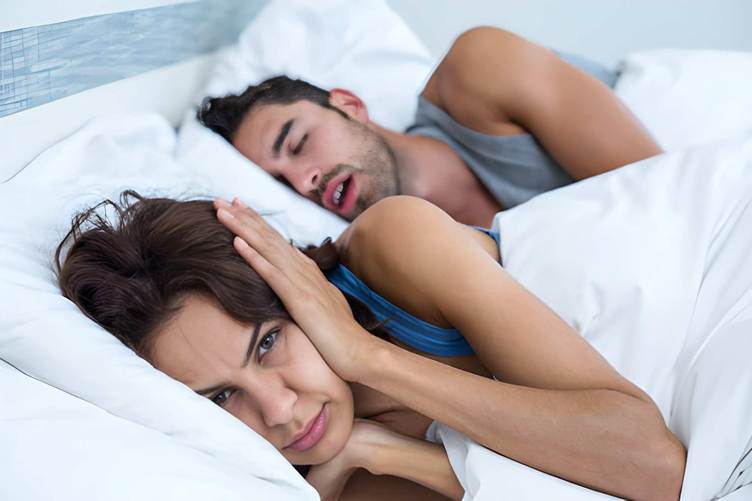
Common Symptoms of Snoring and Sleep Apnea
- Loud or persistent snoring
- Pauses in breathing during sleep
- Gasping, choking, or coughing at night
- Frequent nighttime waking
- Dry mouth or sore throat in the morning
- Morning headaches
- Excessive daytime sleepiness
- Difficulty concentrating
- Irritability or mood changes
- Low energy during the day
- Restless sleep
- Waking up feeling unrefreshed
Sleep-disordered breathing can look different in children mouth breathing, restless sleep, behavioural changes, trouble concentrating, bedwetting, or poor sleep quality. If a child snores persistently, it’s worth getting checked rather than assuming it’s normal.
What Causes Snoring and Sleep Apnea?
1. Nasal blockage. A stuffy or congested nose makes it hard to breathe comfortably, and this can come from allergies, sinus issues, enlarged nasal tissue, or a deviated septum.
2. Enlarged tonsils or adenoids. These can narrow the upper airway, a factor that shows up often in children with snoring or obstructive sleep apnea.
3. Deviated nasal septum. A shifted septum restricts airflow through one or both sides of the nose. Depending on severity, this might call for medical management or surgical correction.
4. Relaxed throat tissue. Muscles and soft tissue in the airway naturally relax during sleep. In some people, that relaxation or an underlying narrowing is enough to cause vibration or obstruction.
5. Sleep position. Sleeping on your back tends to make airway obstruction more likely for some people. Side sleeping can ease snoring, though it won’t fix an underlying sleep disorder.
6. Weight and lifestyle. Extra body weight raises the odds of airway narrowing during sleep, and alcohol or sedating medications can make airway relaxation worse in people already prone to it.
How Is Sleep Apnea Diagnosed?
Diagnosis starts with a detailed ENT evaluation. Dr. Muddazir Ali Ibrahim reviews symptoms, medical history, nasal breathing, throat anatomy, tonsils, and other possible sources of airway obstruction.
Depending on what that evaluation turns up, a sleep study may be recommended to confirm whether sleep apnea is present and how severe it is.
This thorough approach matters because loud snoring doesn’t always mean sleep apnea and some people with sleep apnea don’t snore especially loudly at all.
Treatment Options for Snoring and Sleep Apnea
Treatment depends on what’s causing the problem and how severe it is, and often combines more than one approach.
- Lifestyle and sleep changes
For some patients, losing weight, cutting back on alcohol before bed, improving sleep habits, or changing sleep position can ease symptoms.
- Treating nasal problems
When nasal obstruction is a factor, treatment might target allergies, chronic inflammation, sinus issues, or structural problems.
- CPAP therapy
Continuous positive airway pressure (CPAP) is a standard treatment for obstructive sleep apnea, delivering steady airflow through a mask to keep the airway open overnight.
- Oral appliances
Some patients do well with custom oral devices that reposition the jaw or tongue to keep the airway open. A healthcare professional should determine whether this fits a given case.
- Surgery
When anatomy is the main driver of obstruction, surgical options can address nasal blockages, enlarged tonsils or adenoids, or other structural issues. Septoplasty may help patients with a significantly deviated septum, while tonsillectomy or adenoidectomy may be appropriate for children with enlarged tonsils or adenoids causing sleep-disordered breathing.
The goal isn’t just quieter nights; it’s fixing what’s actually causing the airway to be blocked.
When Should You See an ENT Specialist?
If snoring is frequent, loud, getting worse, or disrupting your sleep or your family’s, it’s time for an ENT evaluation, particularly if there are witnessed breathing pauses, nighttime gasping or choking, ongoing nasal obstruction, or heavy daytime sleepiness.
Catching it early makes it easier to tell simple snoring apart from a more serious sleep-related breathing disorder.
Snoring and Sleep Apnea Care in Dubai
Persistent snoring isn’t something to brush off as just part of sleeping. Pinpointing whether nasal, throat, or anatomical factors are involved helps guide the right treatment.
Dr. Muddazir Ali Ibrahim at NMC Specialty Hospital evaluates snoring, nasal obstruction, sleep-related breathing problems, and related ear, nose, and throat conditions, with treatment based on each patient’s symptoms and clinical findings.
If you or your child deals with persistent snoring, breathing pauses, or poor sleep quality, it may be time to book an ENT consultation.
Frequently Asked Questions
Q1. Is snoring always a sign of sleep apnea?
No. Plenty of people snore without having sleep apnea. But loud, persistent snoring paired with breathing pauses, gasping, or excessive daytime sleepiness should be checked out.
Q2. Can a deviated septum cause snoring?
Yes, it can contribute to nasal obstruction and make snoring more likely. An ENT evaluation can confirm whether the septum is playing a role.
Q3. Can children have sleep apnea?
Yes, enlarged tonsils or adenoids are a common cause of obstructive sleep-disordered breathing in kids. Persistent snoring in children is worth discussing with a doctor.
Q4. Is sleep apnea treatable?
Yes. Depending on the cause and severity, treatment can involve lifestyle changes, CPAP, oral appliances, nasal treatment, or surgery.
Q5. When should I seek medical help for snoring?
If snoring is frequent or loud, you notice breathing pauses, you wake up gasping or choking, or you’re excessively tired during the day, it’s time to get evaluated.
Book an ENT Consultation
Persistent snoring can sometimes signal an underlying airway or sleep-related breathing problem. A timely ENT assessment can pinpoint the cause and point you toward the right treatment.
For snoring and sleep apnea evaluation in Dubai, consult Dr. Muddazir Ali Ibrahim at NMC Specialty Hospital.