
You might expect the hardest part of a septoplasty to be the surgery itself, but for most patients, the true challenge lies in the quiet, congested days that follow. Understanding your septoplasty recovery timeline is essential when you’re dealing with the frustrating reality of mouth-breathing and heavy nasal pressure. It’s completely normal to feel a surge of anxiety about post-operative pain or uncertainty regarding when you can finally return to your morning jog or gym routine without restriction.
By following a professional medical roadmap, you can replace that uncertainty with a sense of control as you move from the first 24 hours to full respiratory restoration. We’ve designed this guide to help you master your journey toward clear breathing, ensuring you recognize every predictable healing milestone along the way. We’ll examine the immediate post-surgical phase, the critical window for splint removal, and the eventual resumption of physical activity, providing the clinical clarity you need for a confident and successful recovery.
Key Takeaways
- Understand the critical first 24 hours and the full septoplasty recovery timeline to manage expectations for congestion and initial healing.
- Identify the specific window for internal splint removal, typically occurring between days five and seven, which marks the first major improvement in airflow.
- Distinguish between normal post-operative drainage and symptoms that require a specialist’s consultation to ensure your healing remains on track.
- Master the essential saline irrigation techniques and tiered activity restrictions necessary to protect your surgical results and prevent complications.
- Learn how functional nasal surgery improves long-term sleep quality and exercise tolerance by restoring permanent respiratory efficiency.
The Immediate Post-Operative Phase: The First 24 Hours
The first 24 hours of your septoplasty recovery timeline are often the most physically taxing, primarily due to the lingering effects of anesthesia and the sudden transition to mouth-breathing. When you first wake up in the recovery suite, you’ll likely feel a sense of grogginess and a heavy, dull pressure in the center of your face. This sensation is entirely normal. It’s the result of surgical manipulation and the presence of internal supports designed to keep your airway straight while the tissues begin to knit back together.
During the procedure, your surgeon may place nasal packing or internal plastic splints to support the repositioned cartilage. These devices act as internal scaffolding, ensuring the septum remains in its new, corrected position. Because this is a functional Septoplasty rather than an aesthetic procedure, the focus is entirely on internal stabilization. You’ll be discharged once you’re stable, but you must have a dedicated caregiver present to drive you home and assist you during these first critical hours, as your coordination and judgment will be temporarily impaired by the sedative medications.
Initial Sensations and Discomfort
It’s vital to distinguish between surgical pressure and acute pain. Most patients describe the feeling as a “heavy cold” or intense sinus congestion rather than sharp, stabbing pain. One significant advantage of a functional septoplasty is that external bruising and “black eyes” are quite rare since the nasal bones are usually not broken or reshaped. You should expect some minor oozing from the nostrils, which is managed by a “drip pad” or mustache dressing secured under the nose. This gauze should be changed as it becomes saturated, typically every few hours during the first day.
The First Night at Home
Your primary goal during the first night is managing the inflammatory response. Head elevation is non-negotiable; you should sleep with your head propped up at a 30 to 45 degree angle using extra pillows or a recliner. This simple step uses gravity to reduce swelling and minimize the throbbing sensation in your nose. Since your nasal passages are blocked, mouth-breathing will cause significant dryness. Keep a glass of water or ice chips by your bedside to maintain hydration. Following your prescribed medication schedule is essential for consistent comfort. Don’t wait for discomfort to become severe before taking your scheduled doses, as staying ahead of the “pain curve” ensures a much smoother start to your septoplasty recovery timeline.
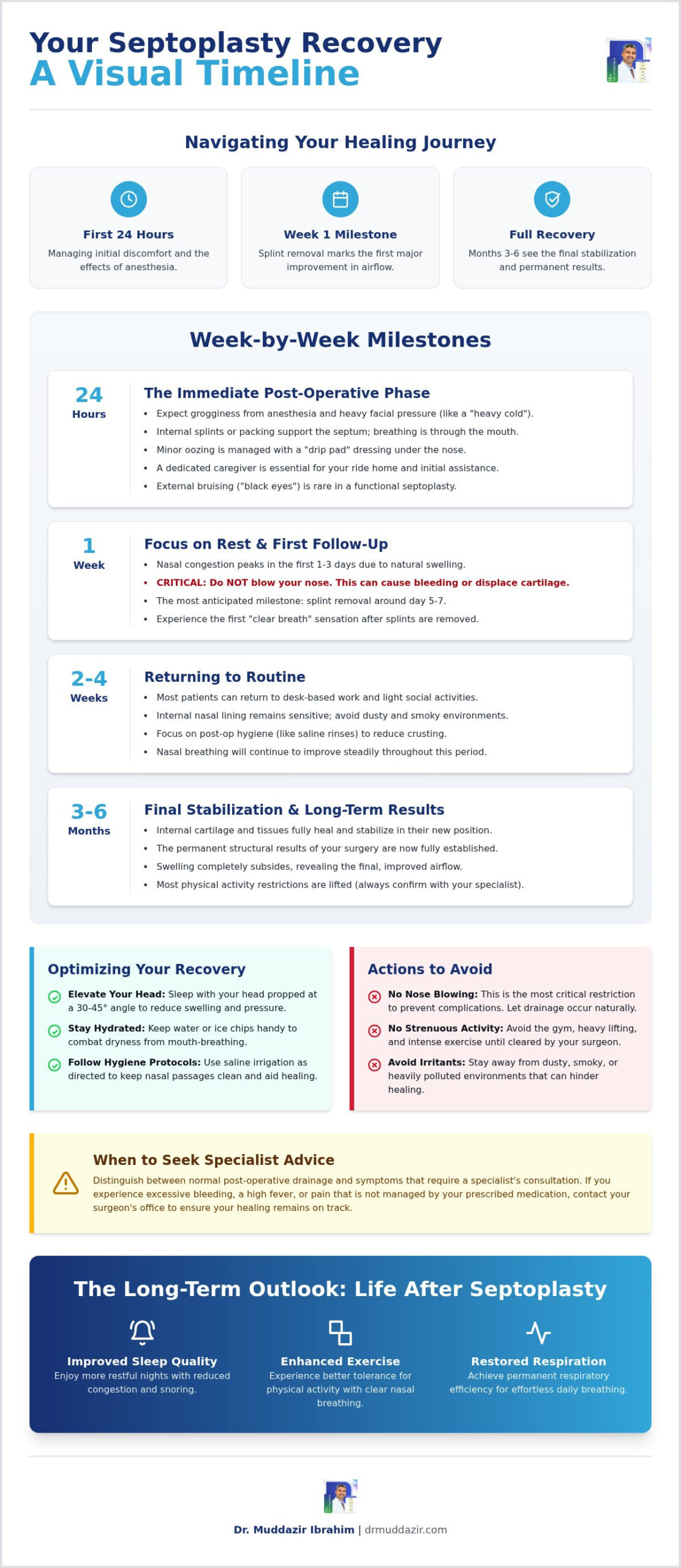
Septoplasty Recovery Timeline: Week-by-Week Milestones
The transition from immediate post-operative care into the first week marks a shift from managing anesthesia to navigating the body’s inflammatory response. During days one through three, you’ll experience the peak of nasal congestion. This is a natural physiological reaction; the internal tissues are swollen as they begin the repair process. While this phase can be frustrating, it’s a temporary stage in the septoplasty recovery timeline that typically begins to improve after the 72-hour mark.
By day five or seven, most patients return for their first follow-up. This is often the most anticipated milestone, as it’s when internal splints are removed. The sensation of that first “clear breath” is frequently described as life-changing, though some residual swelling will still fluctuate throughout the day. By weeks two through four, the focus shifts to internal hygiene and the gradual reduction of crusting. The final stabilization of the nasal cartilage occurs much later, usually between months three and six, when the permanent structural results are fully established.
The First Week: Focus on Rest
During these initial seven days, your primary directive is to avoid any internal pressure. You must not blow your nose, even if it feels blocked. Doing so can displace the newly positioned cartilage or cause bleeding. Instead, use a gentle “sniff back” technique or let secretions drain onto the drip pad. You’ll know the swelling is subsiding when the pressure in your forehead and ears starts to lift. If you have questions about specific symptoms during this delicate phase, consulting a specialist like Dr. Muddazir Ibrahim can provide the reassurance needed to stay on track.
Weeks Two Through Four: Returning to Routine
Most patients find it safe to return to desk-based work and light social activities by the start of the second week. However, your internal mucosa remains sensitive. It’s vital to avoid dusty or smoky environments, which can irritate the healing tissues and increase crusting. As the congestion clears, you’ll notice a steady reintroduction of nasal breathing. While you might feel ready to resume your full lifestyle, remember that the internal healing is still ongoing. Stick to light walks and avoid heavy lifting or high-impact cardio until your surgeon provides clearance at your one-month review. Consistency during this stage of the septoplasty recovery timeline ensures that the functional improvements to your breathing are preserved for the long term.
Managing Symptoms: When to Seek Specialist Advice
While the initial days of your septoplasty recovery timeline involve a predictable amount of swelling, distinguishing between standard healing and potential complications is vital for your peace of mind. During the first week, it’s common to see a pinkish, watery discharge known as serosanguinous fluid. This is a sign that your body is effectively clearing the surgical site. However, if you experience a steady flow of bright red blood that saturates your nasal dressing in less than fifteen minutes, this constitutes a hemorrhage and requires immediate clinical attention.
Many patients also report a peculiar sensation of “fullness” or pressure in the ears and forehead. This occurs because the internal swelling temporarily disrupts the natural drainage of the Eustachian tubes and sinuses. Similarly, you might notice a strange numbness in your upper teeth or gums. This happens because the nerves responsible for sensation in the roof of the mouth are located near the septum. This lack of feeling is almost always temporary and typically resolves as the internal inflammation subsides over several weeks. Consistent follow-up with your ENT surgeon is non-negotiable during this period, as it allows for the professional removal of debris and the monitoring of your structural alignment.
Common Post-Surgical Side Effects
Temporary nasal crusting is a natural part of the mucosal healing process. As the lining of your nose repairs itself, secretions can harden, leading to a feeling of obstruction. You should never attempt to pick or forcefully remove these crusts; instead, rely on the irrigation protocols discussed with your care team. Minor headaches and sinus pressure are also frequent, usually peaking when the inflammatory response is at its highest. To minimize the risk of post-operative infection, your surgeon will likely prescribe a short course of prophylactic antibiotics. Completing this entire course is essential to ensure a sterile healing environment.
Red Flags and Urgent Indicators
Identifying when a symptom transitions from an inconvenience to a medical priority is crucial for a safe septoplasty recovery timeline. You must contact your surgical team immediately if you develop a fever over 38.5°C or notice a persistent, foul odor emanating from the nose, as these are primary indicators of a bacterial infection. While extremely rare in functional septoplasty, any sudden changes in your vision, such as double vision or significant blurring, demand an emergency evaluation. Severe, unmanageable pain that does not respond to your prescribed medication should also be reported promptly to ensure there are no underlying issues with the surgical site or internal splints.
Optimizing Your Results: Practical Post-Op Hygiene
Successful healing is a collaborative effort between the surgeon’s technique and your post-operative discipline. While the surgery corrects the structural deviation, your daily hygiene routine prevents the formation of excessive scar tissue or internal adhesions. During the first 48 hours, focus on soft foods that require minimal chewing, such as yogurts or blended soups, to avoid unnecessary movement of the nasal base. Hydration is equally critical; aim for 2 to 3 liters of water daily to keep the mucosal linings moist. In the climate of the United Arab Emirates, where air conditioning can strip moisture from the air, using a humidifier in your bedroom is a vital environmental adjustment to prevent the nasal passages from becoming painfully dry.
The Nasal Irrigation Masterclass
Nasal irrigation is the cornerstone of a smooth septoplasty recovery timeline. To perform this correctly, lean over a sink, tilt your head forward, and breathe through your mouth. Gently apply the saline solution into one nostril, allowing it to flow out the other. You must use distilled, sterile, or previously boiled and cooled water to eliminate the risk of rare but serious bacterial infections. Perform these rinses three to five times a day. This frequency ensures that the surgical site remains clear of obstructive crusting and promotes faster mucosal regeneration without increasing internal pressure.
The Athlete’s Roadmap to Recovery
For active individuals, returning to the gym requires a disciplined, tiered approach to prevent blood pressure spikes that could trigger a late-stage hemorrhage. During weeks one and two, limit yourself to slow walks on level ground. You must avoid any activity that requires bending over or straining, as this significantly increases cranial pressure. Between weeks three and four, you can reintroduce light cardio, such as a stationary bike, provided your heart rate remains moderate and you experience no throbbing in the nose. Only after the six-week mark should you resume heavy lifting or high-intensity interval training. If you are unsure about your progress at any stage of the septoplasty recovery timeline, you can consult with Dr. Muddazir Ibrahim to receive a personalized assessment of your functional healing status.
The Long-Term Outlook: Life After Septoplasty
As you reach the final stages of your septoplasty recovery timeline, the focus shifts from active healing to enjoying the long-term functional benefits. By the three to six-month mark, the nasal cartilage has typically reached its final stabilized position. Unlike cosmetic procedures, a septoplasty is designed strictly to improve the internal airway. It’s essential to understand that this surgery doesn’t change the external appearance or shape of your nose. Instead, it provides a permanent solution for structural obstructions that previously forced you to rely on mouth-breathing. Closing the loop on your surgical journey involves a final assessment with your specialist to confirm the septum’s structural integrity and ensure that the internal mucosa has fully regenerated.
Functional Improvements You Can Expect
The most immediate change patients report is a significant increase in sleep quality. By correcting the deviated septum, you’re often able to reduce chronic snoring and better manage symptoms of obstructive sleep apnea. This restoration of nasal airflow also translates to better physical performance. You’ll likely find that your exercise tolerance increases because you can finally achieve deep, rhythmic nasal breathing during cardiovascular activities. Additionally, because the nasal passages are now correctly aligned, the drainage of your sinuses improves. This often leads to a lower frequency of secondary sinus infections and a reduction in the “heavy” feeling often associated with chronic congestion. For patients who also experience persistent sinus blockages alongside a deviated septum, endoscopic sinus surgery may be recommended as a complementary procedure to fully restore nasal and sinus function. Those who have struggled with recurring inflammation despite surgical intervention may also benefit from exploring advanced sinus relief options that go beyond standard care, including biologic therapies and other long-term solutions.
Selecting an Expert ENT Surgeon
The success of your long-term outcome is deeply rooted in the precision of the initial procedure. Choosing a surgeon with over 15 years of specialized experience ensures that the delicate anatomy of the nasal vault is handled with mastery. Clinical expertise in functional nasal surgery is critical to avoid the minor cartilage shifts that can sometimes occur over time if the initial correction wasn’t meticulously executed. A seasoned practitioner understands the nuances of nasal airflow and the importance of preserving structural support while maximizing the airway.
When you’re ready to take the final step toward permanent respiratory relief, you can schedule a consultation with Dr. Muddazir Ibrahim. As a Consultant ENT Surgeon at NMC Specialty Hospital, Dr. Ibrahim provides the specialized care and clinical authority necessary to ensure your septoplasty recovery timeline results in lasting success. His focus on functional outcomes ensures that every patient receives a roadmap tailored to their specific respiratory needs, backed by a commitment to patient-centered results.
Achieving Lasting Respiratory Freedom
Navigating your septoplasty recovery timeline requires patience and a commitment to clinical hygiene, but the reward is a life defined by clear, unobstructed breathing. By mastering the immediate 24-hour transition and adhering to a strict saline irrigation protocol, you ensure that your internal healing progresses without complication. You’ve learned that while the first week presents challenges like mouth-breathing and pressure, the removal of splints marks a turning point toward restored sleep quality and enhanced physical stamina.
Functional nasal surgery is a specialized field where precision determines the success of your long-term results. If you’re ready to address a deviated septum with a practitioner who prioritizes your respiratory health, it’s time to take the next step. You can consult with a specialized ENT surgeon for your septoplasty needs to benefit from over 15 years of clinical expertise. As a Consultant at NMC Specialty Hospital, Dr. Muddazir Ibrahim specializes in advanced nasal and sinus interventions designed to return you to your active lifestyle. Your journey toward effortless breathing is well within reach.
Frequently Asked Questions
How painful is recovery after septoplasty surgery?
Most patients describe the sensation as a deep pressure or a heavy cold rather than sharp, acute pain. This discomfort is primarily caused by internal swelling and the presence of splints. While the first 48 hours are the most intense, prescribed medication effectively manages these symptoms. You’ll likely feel a dull ache in your nose and forehead, but this typically transitions into a manageable congestion within the first few days of healing.
When can I return to work after my nasal septum correction?
Most individuals return to desk-based professional duties within seven to ten days. If your role involves significant physical exertion or heavy lifting, you should plan for at least two weeks of rest. This ensures your blood pressure remains stable, which is critical for preventing late-stage bleeding. Your surgeon will provide a specific clearance based on your unique healing progress during your first post-operative follow-up appointment after your surgery.
Is it normal to have a blocked nose after septoplasty?
Nasal obstruction is a standard and expected part of the septoplasty recovery timeline. This blockage is caused by internal swelling, mucosal secretions, and the internal splints used to support your corrected septum. You’ll likely rely on mouth-breathing for the first five to seven days. Once your surgeon removes the internal supports during your follow-up, you’ll experience a significant and immediate improvement in your ability to breathe through your nose.
How long do I need to sleep with my head elevated?
You should sleep with your head elevated at a 30 to 45 degree angle for at least the first week. This position uses gravity to drain fluid away from the surgical site, which significantly reduces facial swelling and throbbing. Many patients find that using a recliner or stacking three firm pillows provides the necessary support. Maintaining this elevation helps you stay comfortable and speeds up the resolution of initial inflammation during the early stages.
Can I wear glasses immediately after septoplasty?
You should avoid resting glasses directly on the bridge of your nose for at least two weeks. The weight of the frames can apply unwanted pressure to the healing cartilage and potentially affect the structural outcome. If you must wear them, use medical tape to secure the bridge of the glasses to your forehead. This ensures the frames hover above the nose without making contact, protecting the stability of your newly corrected septum.
When can I resume heavy lifting or gym workouts?
Strenuous physical activity and heavy lifting must be avoided for four to six weeks. During the first fortnight, you’re limited to light walking to maintain circulation. High-intensity workouts or contact sports increase the risk of nasal trauma and internal bleeding due to elevated heart rates. Resuming your full fitness routine should only happen after a clinical evaluation confirms that your internal tissues have regained their structural strength and resilience.
What happens if I accidentally sneeze after surgery?
If you feel a sneeze coming on, you must sneeze with your mouth wide open. This technique allows the pressure to escape through the oral cavity rather than forcing it through your sensitive nasal passages. Accidental sneezing with a closed mouth can cause sudden pain or trigger a nosebleed by disturbing the surgical site. While it’s impossible to prevent every sneeze, being mindful of this open-mouth method protects your internal sutures and supports during the septoplasty recovery timeline.
Will septoplasty improve my snoring or sleep apnea?
Septoplasty is highly effective at improving nasal airflow, which can significantly reduce snoring caused by structural obstruction. For patients with obstructive sleep apnea, correcting a deviated septum often makes other treatments, such as CPAP therapy, much more comfortable and effective. While it may not be a standalone cure for every case of apnea, restoring a functional airway is a foundational step in managing long-term sleep health and improving your overall respiratory efficiency.