
What if the “chronic” in your sinus condition isn’t a life sentence, but a sign that you’ve simply reached the limit of over-the-counter solutions? You’re likely exhausted by the relentless cycle of temporary relief from sprays and pills that fail to touch the root of your facial pressure or restore your quality of sleep. It’s a common frustration to feel like you’re merely managing symptoms rather than resolving a deep-seated health issue. When persistent congestion begins to dictate your productivity and peace of mind, the need for a more decisive clinical approach becomes clear.
This guide explores the specialized medical and surgical pathways to advanced sinus relief, moving beyond standard care to address the structural and biological causes of inflammation. We’ll examine sophisticated interventions such as functional endoscopic sinus surgery and the latest biologic therapies that offer a permanent shift toward clear breathing. By understanding these modern innovations, you can transition from temporary fixes to a long-term management plan that restores your sense of smell and eliminates chronic pain. We will look at how precision techniques and expert guidance provide the lasting results that standard treatments often cannot achieve.
Key Takeaways
- Understand why chronic inflammation lasting longer than 12 weeks often requires a transition from over-the-counter management to specialized clinical care.
- Learn how advanced diagnostic pathways and internal visualization identify the structural root causes that standard physical examinations may overlook.
- Discover how precision surgical interventions like Functional Endoscopic Sinus Surgery (FESS) and septoplasty provide advanced sinus relief by restoring natural drainage.
- Gain clarity on the modern recovery process, including the use of dissolvable spacers that eliminate the discomfort traditionally associated with nasal packing.
- Identify the importance of selecting a specialized ENT surgeon who utilizes modern endoscopic techniques to create a personalized, long-term management plan.
Beyond Over-the-Counter: Why Standard Sinus Remedies Often Fail
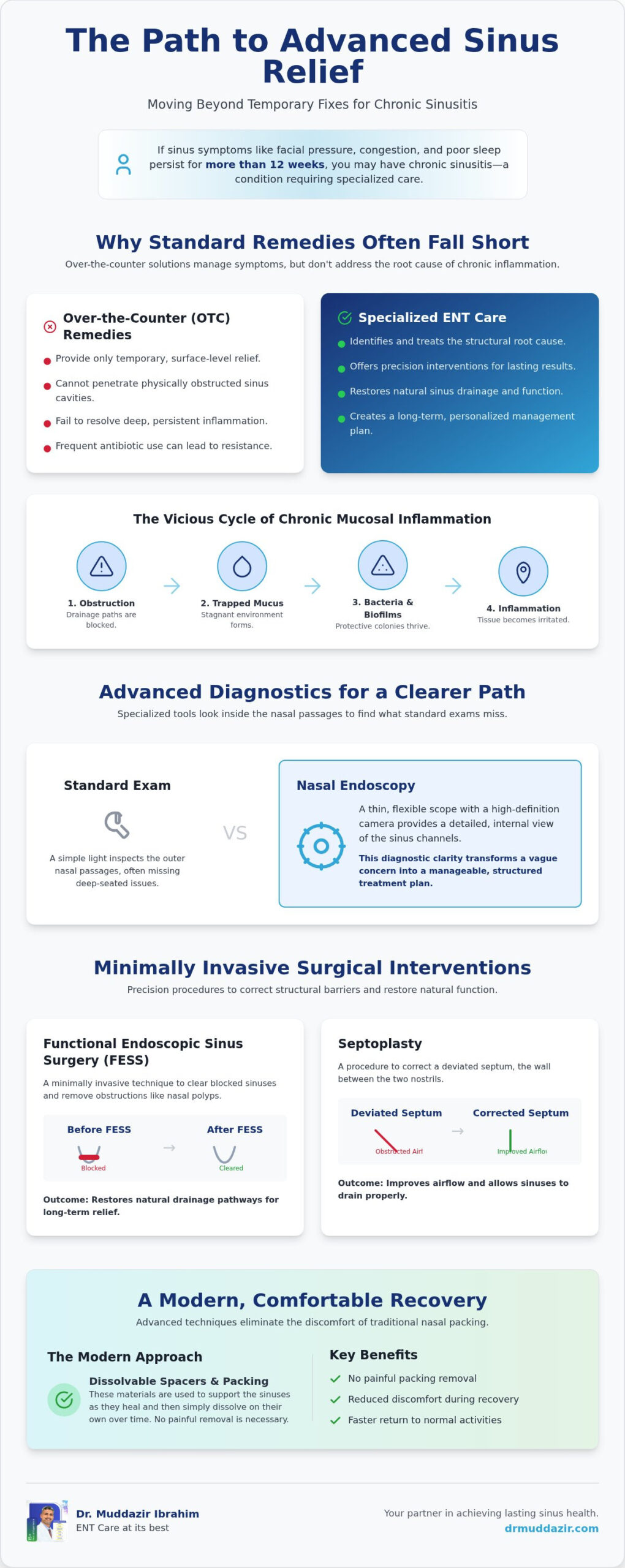
Have you spent months cycling through different nasal sprays only to find your symptoms return the moment you stop? If your facial pressure and congestion have persisted for longer than 12 weeks, you’re likely dealing with chronic sinusitis. At this stage, the condition is no longer a simple infection but a state of persistent inflammation. While over-the-counter remedies provide a brief reprieve, they often fail to provide advanced sinus relief because they don’t reach the deep, narrow channels where the inflammation is rooted. Steroid sprays and saline rinses are effective for surface-level irritation, but they can’t penetrate a sinus cavity that’s already physically obstructed.
Many patients also find themselves trapped in a cycle of repetitive antibiotic use. While these medications target active bacteria, they don’t address the underlying reason why the bacteria became trapped in the first place. Over time, frequent use can lead to antibiotic resistance, leaving you with the same symptoms and fewer treatment options. The transition point from primary care to specialized ENT intervention usually occurs when you’ve completed multiple rounds of medication without lasting improvement. It’s at this stage that a more precise, clinical evaluation is required to identify the structural or biological barriers preventing your recovery.
The Cycle of Chronic Mucosal Inflammation
When sinus drainage pathways become permanently obstructed, the environment inside the cavities changes. Mucus becomes trapped, creating a stagnant pool where bacteria can thrive. These bacteria often form bio-films, which are sophisticated colonies that create a protective barrier against your immune system and standard medications. This is why “relief” feels so fleeting; you might clear the surface infection, but the biological triggers remain embedded in the tissue. Breaking this cycle requires more than just suppressing symptoms; it demands a strategy that clears the obstruction and restores the natural health of the mucosal lining.
Structural Barriers to Airflow
In many cases, the failure of medical management isn’t due to the medication itself, but rather a physical blockage that no pill can resolve. A deviated septum or nasal polyps can act as literal dams, preventing the natural flow of air and mucus. Additionally, turbinate hypertrophy, where the small structures inside the nose become chronically swollen, can make breathing feel like a constant struggle. Structural obstruction represents a mechanical failure of the nasal passage. To resolve these issues, procedures like Functional endoscopic sinus surgery (FESS) are often necessary. By correcting the internal framework, we can achieve the advanced sinus relief that allows your body to heal and function as it was designed to.
Advanced Diagnostic Pathways for Precision Sinus Relief
Why do some sinus conditions persist despite multiple rounds of treatment? The answer often lies in what remains hidden during a standard physical examination. While a primary care physician may use a simple light to inspect the nasal passages, a specialized clinical examination by an ENT consultant involves much more sophisticated visualization. Moving beyond external symptoms to internal visualization is the only way to identify the specific biological and structural drivers of your discomfort. This level of precision is fundamental to achieving advanced sinus relief, as it allows your specialist to determine whether your condition requires aggressive medical management or a surgical correction.
Advanced diagnostic pathways offer more than just technical data; they provide a sense of security. For many patients, the anxiety of “not knowing” why they can’t breathe or why their head feels heavy is as debilitating as the physical symptoms themselves. When you can see the source of the blockage on a screen, the path forward becomes clear. This diagnostic clarity transforms a vague health concern into a manageable, structured treatment plan tailored to your specific anatomy.
Nasal Endoscopy: A Direct Look at the Source
During a standard consultation, a specialist may perform a nasal endoscopy. This involves the use of a thin, flexible endoscope equipped with a high-definition camera to provide a detailed view of the sinus ostia, the natural drainage ports of the sinuses. It’s a painless procedure that allows the surgeon to identify polyps, persistent pus, or anatomical narrowness in real-time. Because the endoscope can navigate the complex contours of the nasal cavity, it reveals issues that are invisible to the naked eye. This immediate feedback is vital for a consultant ENT surgeon to make an accurate, on-the-spot assessment of your mucosal health.
High-Resolution CT Imaging and Sinus Mapping
To supplement the endoscopic view, high-resolution CT imaging is often utilized to create a 3D road map of your unique sinus architecture. This mapping is essential for identifying “silent” sinus cavities that standard exams might miss, ensuring no area of infection is left untreated. More importantly, these scans are a critical safety measure. By mapping the exact proximity of the sinuses to the eyes and brain, your surgeon can plan a procedure with extreme precision. This detailed anatomical knowledge ensures that any intervention is as safe as it is effective, paving the way for long-term recovery and restored respiratory function.
Minimally Invasive Surgical Interventions: FESS and Septoplasty
When medical management and advanced diagnostic pathways reveal a persistent structural blockage, surgery often becomes the most reliable route to advanced sinus relief. Modern techniques have shifted away from aggressive tissue removal toward precision-based interventions that prioritize the body’s natural healing mechanisms. Today, the focus is on functional restoration. We aim to clear the path for air and mucus without disrupting the delicate internal ecosystem of the nose. It’s a precise science. By utilizing the patient’s own anatomical mapping, we can navigate the complex labyrinth of the sinuses with sub-millimeter accuracy, ensuring that only obstructive elements are addressed.
The shift toward tissue-preserving techniques has significantly improved the patient experience. Older methods often involved external incisions and longer hospital stays. Current protocols focus on maintaining the integrity of the nasal structures, which leads to faster healing and less postoperative discomfort. We don’t just remove tissue; we restore the natural physiological flow that chronic inflammation has interrupted.
Functional Endoscopic Sinus Surgery (FESS) Explained
Endoscopic sinus surgery has revolutionized the treatment of chronic sinusitis by allowing surgeons to operate through the nostrils without any external incisions. Using high-definition endoscopes and specialized micro-instruments, we can precisely remove polyps and obstructive tissue that clog the sinus ostia. This procedure is considered the gold standard because it is minimally invasive and highly targeted. The primary objective of FESS is to preserve the integrity of the healthy mucosa while restoring the ventilation necessary for the sinuses to clear themselves naturally. Patients often experience a dramatic reduction in facial pressure and a significant improvement in their ability to breathe clearly almost immediately after the inflammation subsides.
Septoplasty for Nasal Obstruction
While FESS addresses the sinus cavities, a septoplasty focuses on the internal framework of the nose. A deviated septum occurs when the thin wall of cartilage and bone between your nostrils is displaced to one side, making one nasal passage smaller than the other. This isn’t just an inconvenience; it’s a mechanical failure that can lead to chronic congestion and sleep disturbances. It’s important to understand that septoplasty differs significantly from aesthetic rhinoplasty. While rhinoplasty focuses on the external appearance, septoplasty is a purely functional procedure designed to balance airflow between both nostrils.
In many cases, we combine septoplasty with endoscopic sinus surgery to provide a comprehensive solution for advanced sinus relief. By straightening the midline cartilage and clearing the sinus pathways in a single session, we address both the structural airway and the drainage system. This dual approach ensures that the entire upper respiratory tract is optimized for long-term health, preventing the recurrence of the infections that often plague patients with anatomical irregularities.
Recovery and Long-Term Outcomes of Advanced Procedures
The journey toward advanced sinus relief doesn’t end in the operating room. Understanding the recovery phase is essential for managing expectations and ensuring the longevity of your results. Many patients hesitate to pursue surgical options because of outdated stories regarding painful recoveries and extensive nasal packing. Modern ENT surgery has evolved significantly. Today, the focus is on patient comfort and rapid functional restoration. During the first 48 hours post-intervention, you can expect some mild congestion and light drainage, similar to the end of a common cold, rather than the intense pain often associated with older techniques.
One of the most significant advancements in post-operative care is the replacement of traditional gauze packing with modern dissolvable spacers. These specialized materials support the internal structures and deliver localized medication without the need for a painful removal process. Most patients find that they can return to non-strenuous work within five to seven days. While heavy physical activity should be avoided for approximately two weeks to prevent bleeding, the transition back to daily life is typically smooth and predictable. This structured timeline allows you to plan your recovery with confidence and minimal disruption to your routine.
The Modern Post-Operative Experience
Managing your comfort after surgery is straightforward. Most patients find that mild discomfort is easily controlled with standard analgesics, avoiding the need for heavy sedation. A critical component of your healing will be regular nasal douching. Using a buffered saline solution helps clear debris and prevents the buildup of crusting that can block the newly opened pathways. This simple habit keeps the mucosa hydrated and promotes faster cellular repair. Additionally, follow-up visits for endoscopic cleaning are vital. During these appointments, your surgeon can remove any persistent debris under direct visualization, which is a key step in preventing the formation of scar tissue that could compromise your results.
Expected Long-Term Results
The true value of advanced sinus relief becomes apparent in the months following your procedure. Patients typically report a dramatic reduction in the frequency and severity of sinus infections, often moving from monthly episodes to none at all. Because the structural barriers have been addressed, your sleep quality often improves. Better airflow through the nose reduces the tendency for mouth breathing and snoring, leading to higher energy levels during the day. If you’re ready to move beyond temporary fixes and secure a future of clear breathing, you can book a consultation with Dr. Muddazir Ibrahim to discuss a personalized surgical plan.
Navigating Your Treatment Journey with a Specialized ENT Surgeon
The decision to pursue surgery is often the result of years of frustration with temporary fixes. It’s a significant step toward reclaiming your quality of life, which is why choosing a surgeon with extensive experience in endoscopic techniques is paramount. A specialist who has spent over 15 years refining their craft, such as Dr. Muddazir Ibrahim, understands that no two sinus cavities are identical. This level of mastery allows for a nuanced approach to advanced sinus relief, ensuring that the unique contours of your anatomy are respected during every stage of the procedure. When you work with a seasoned expert, the focus shifts from general symptom management to a precise, anatomical correction.
Operating within the sophisticated NMC Specialty Hospital infrastructure provides access to the high-resolution imaging and precision instruments necessary for modern interventions. This environment is designed specifically to support complex ENT cases with the highest standards of patient safety. A consultant-led approach offers a level of reassurance that general care cannot match. You’re guided by an expert who is at the forefront of modern medical advancements but remains grounded in your practical needs. It’s about more than just a successful surgery; it’s about a patient-centered journey toward lasting respiratory health.
A Patient-Focused Approach to Surgical Care
Transitioning from a diagnosis to a collaborative treatment plan is a vital part of the clinical process. We don’t just present a technical solution; we invite you into the decision-making. If you have concerns regarding anesthesia or specific surgical outcomes, these are addressed with transparency and clinical authority. This commitment to successful, long-term results is built on a foundation of meticulous surgical execution. By focusing on the root cause of your chronic nasal obstruction, we ensure the results are as durable as they are life-changing. Every step is designed to instill a sense of security and clarity.
Consulting an Expert ENT Surgeon
Preparing for your initial consultation is an opportunity to take control of your health. It’s helpful to document the timeline of your symptoms and the specific medications that have failed to provide relief in the past. For those who have lived with chronic sinus disease for years, a second opinion from a specialist can provide the clarity that has been missing. This expert perspective is often the catalyst for a total restoration of your sense of smell and breathing capacity. If you’re ready to explore a permanent solution and achieve advanced sinus relief, you can Schedule a specialist consultation for advanced sinus relief to begin your journey toward clear breathing and lasting comfort.
Reclaim Your Quality of Life and Clear Breathing
Living with chronic facial pain and congestion doesn’t have to be your permanent reality. You’ve learned that when standard sprays and antibiotics fail, it’s often because they can’t address the underlying structural blockages or biological biofilms within your sinuses. By utilizing advanced diagnostic pathways and precision surgical techniques like FESS or septoplasty, you can finally move past temporary fixes toward a life of clear breathing and restored energy. These modern interventions prioritize functional restoration, ensuring that your body’s natural drainage systems are optimized for the long term.
Dr. Muddazir Ibrahim combines over 15 years of specialized ENT surgical experience with a mastery of FESS and septoplasty within the NMC Specialty Hospital network. This consultant-led care ensures your treatment is precise, safe, and tailored to your unique anatomy. If you’re ready to break the cycle of recurring infections and achieve advanced sinus relief, now is the time to take the next step. You deserve a future where every breath is effortless and your well-being is no longer dictated by sinus pressure. Consult Dr. Muddazir Ibrahim for Advanced Sinus Relief and begin your journey toward lasting comfort today.
Frequently Asked Questions
What qualifies as “advanced” sinus relief compared to standard treatments?
Advanced sinus relief refers to specialized clinical and surgical interventions that address the root cause of chronic inflammation rather than just suppressing symptoms. While standard treatments rely on over-the-counter sprays and temporary medications, advanced care utilizes high-definition visualization and minimally invasive surgery to restore natural drainage. This approach is typically recommended for patients whose symptoms have persisted for over 12 weeks despite consistent primary medical management.
Is endoscopic sinus surgery painful during the recovery period?
Modern endoscopic techniques have significantly reduced post-operative discomfort for most patients. You’ll likely describe the recovery as feeling like a dull pressure or a head cold rather than intense pain. The use of dissolvable spacers instead of traditional gauze packing has eliminated the most distressing part of the healing process. Mild discomfort is typically managed with standard analgesics, and most individuals find they can return to their daily routines within a week.
How do I know if I need a septoplasty or sinus surgery?
A specialized ENT consultation is the only way to determine which procedure is appropriate for your specific condition. If you experience persistent blockage in one nostril regardless of infection, a septoplasty may be required to straighten a deviated septum. If your primary symptoms are facial pressure and recurring infections, endoscopic sinus surgery is often the solution. In many cases, both procedures are performed together to achieve a comprehensive restoration of nasal function.
Can chronic sinus issues be cured permanently without surgery?
While some cases of chronic sinusitis respond to aggressive medical management, structural obstructions like a deviated septum or nasal polyps usually require surgical intervention for a permanent resolution. Medications can reduce inflammation, but they can’t physically alter the anatomical framework of the nose. For many patients, an advanced sinus relief strategy provides the definitive clearance needed to allow long-term medical therapies to finally work effectively, preventing the cycle of recurring infections.
What are the risks associated with advanced endoscopic sinus procedures?
Advanced endoscopic procedures are considered very safe, especially when performed by a surgeon with over 15 years of clinical experience. Potential risks include minor bleeding, temporary bruising, or localized infection, though these are uncommon in modern practice. Because surgeons use high-resolution CT mapping to navigate near delicate structures like the eyes and brain, the precision of modern surgery is exceptionally high. Your consultant will review your specific anatomical risks during the planning phase.
How long does the effect of a FESS procedure typically last?
For the majority of patients, the structural improvements from a FESS procedure are permanent. By opening the natural drainage ports, the surgery allows the sinuses to clear themselves as they were designed to do. However, maintaining these results requires consistent post-operative care, such as saline douching, to manage any underlying allergies or mucosal sensitivities. Most individuals experience a significant, long-term reduction in the frequency and severity of their chronic sinus symptoms.
Will my insurance cover advanced surgical sinus interventions?
Most insurance providers cover procedures like septoplasty and endoscopic sinus surgery when they’re deemed medically necessary to resolve chronic obstruction or recurring infections. It’s important to note that these are functional surgeries rather than cosmetic ones. While aesthetic rhinoplasty isn’t covered, the clinical treatments required to restore your breathing and sinus health are generally accepted. You should check with your specific provider to confirm the details of your coverage and pre-approval requirements.
How soon can I return to exercise after sinus surgery?
You can typically resume light walking within a few days of your procedure, but heavy exercise should be avoided for approximately two weeks. Strenuous activities, heavy lifting, or bending over can increase the blood pressure in your head, which might lead to post-operative bleeding. Gradually reintroducing physical activity ensures that the delicate nasal tissues have adequate time to heal. Your surgeon will provide a specific timeline based on the complexity of your surgical intervention.