
Why does it feel like you’re breathing through a narrow straw even when you aren’t sick? For many residents in Dubai, chronic nasal congestion isn’t just a seasonal allergy; it’s often a structural issue that impacts every hour of the day and night. If you’ve struggled with persistent blockage that refuses to clear, you might have considered septoplasty surgery to finally address the underlying cause. This functional procedure corrects a deviated septum, the internal wall of cartilage and bone that divides your nostrils, to restore natural airflow.
It’s exhausting to wake up feeling depleted because your airway restricted your oxygen intake all night. You’ve likely tried various sprays or strips with little success, and it’s common to feel confused about whether you need a functional fix or a cosmetic change. This guide provides a clear path forward. You’ll learn how expert surgical insights can resolve chronic obstruction, leading to better sleep and renewed energy.
We’ll examine the endoscopic surgical process used by Dr. Muddazir Ali Ibrahim and explain the recovery journey at NMC Specialty Hospital Al Nahda 2, Dubai. From the initial evaluation to post-operative care, this 2026 guide offers the clarity patients in Al Nahda, Sharjah, and Deira need to breathe freely again.
Key Takeaways
- Understand why chronic nasal obstruction may be a structural issue rather than a simple allergy, indicating a potential need for functional correction.
- Discover the advantages of modern endoscopic septoplasty surgery, which offers enhanced precision through high-definition visualization compared to traditional methods.
- Learn the specific evaluation criteria to use when choosing an ENT specialist in Dubai, ensuring your care is led by a Consultant surgeon.
- Navigate the full clinical process at NMC Specialty Hospital Al Nahda 2, including pre-surgical requirements and what to expect on the day of your procedure.
- Recognize how improved nasal airflow can lead to better sleep and increased energy for patients living in Al Nahda, Sharjah, and Deira.
Identifying the Need for Septoplasty Surgery
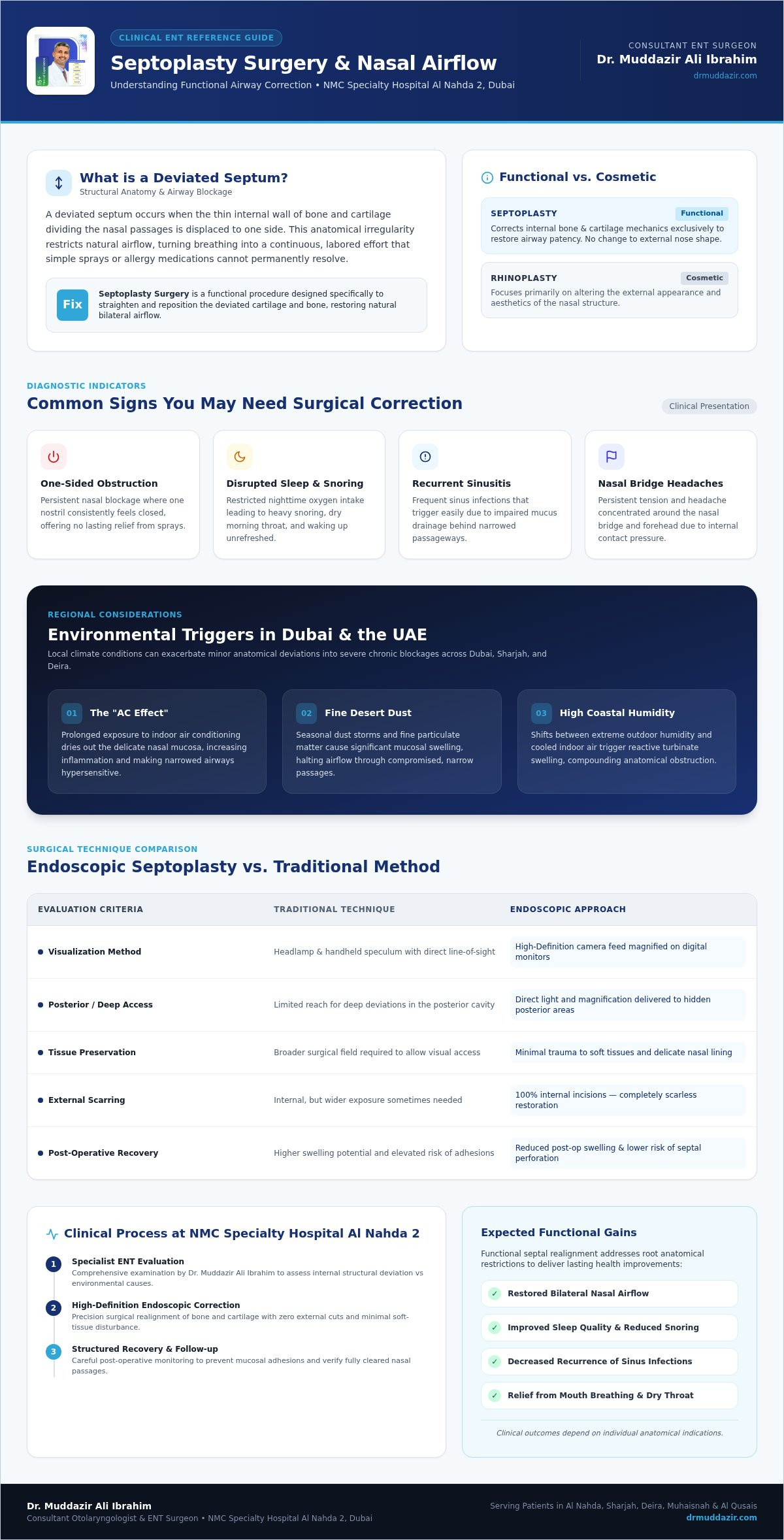
A deviated septum occurs when the thin wall between your nasal passages is displaced to one side. This anatomical irregularity can restrict airflow through one or both nostrils, making every breath feel labored. To correct this, a surgeon performs septoplasty surgery, a functional procedure designed to straighten the bone and cartilage. It’s vital to distinguish this from aesthetic rhinoplasty. While a “nose job” changes the external appearance, septoplasty focuses entirely on internal mechanics to restore clear breathing. For a deeper look at the clinical indications, you can review this septoplasty surgical overview.
Common Signs You May Need Surgical Intervention
Chronic congestion is the most frequent complaint, but a deviated septum often manifests in more complex ways. If you find that one side of your nose is always blocked or that nasal sprays offer no lasting relief, the issue is likely structural. Restoring airflow through septoplasty surgery is often the most effective way to address these persistent symptoms. Other indicators include recurrent sinus infections that seem to trigger easily or persistent headaches concentrated around the bridge of the nose. Mouth breathing at night is another red flag. It often leads to a dry throat and poor sleep quality. You might also notice snoring or disrupted breathing patterns during rest.
Environmental Triggers in the UAE
In Dubai, environmental factors often turn a minor anatomical deviation into a significant health concern. The high humidity and fine desert dust common in Al Nahda and Deira can cause the nasal lining to swell. When this swelling occurs in an already narrowed passage, airflow stops almost completely. The “AC Effect” is another unique challenge for residents. Spending long hours in air-conditioned environments can dry out the nasal mucosa, making it more sensitive and prone to inflammation. For many, what starts as nasal obstruction after a cold never truly resolves because the baseline anatomy is compromised. If your breathing difficulties worsen when you’re indoors or during seasonal dust storms, an ENT evaluation at NMC Specialty Hospital Al Nahda 2, Dubai, can help determine if the cause is environmental or structural.
Endoscopic Septoplasty vs. Traditional Techniques
Choosing the right surgical method is a pivotal step in your journey toward clear breathing. For decades, traditional septoplasty was the standard. Surgeons relied on a headlamp and a handheld speculum to see inside the nose. While effective for some, this method limited visibility to the front portions of the nasal cavity. Modern septoplasty surgery has transitioned toward a more precise, endoscopic approach. By using a specialized high-definition camera, surgeons can now view the entire internal structure on a large monitor. This shift from peering through the nostrils to viewing a magnified digital feed has revolutionized surgical outcomes.
One of the primary benefits of this technology is the ability to perform scarless surgery. All incisions are made internally, ensuring no visible marks or changes to the external shape of your nose. This focus on functional restoration means you can recover without the aesthetic concerns often associated with older techniques. As noted in the MedlinePlus guide to septoplasty, the procedure typically involves a careful repositioning of the cartilage and bone that divides your nostrils. Using an endoscope ensures this repositioning is done with minimal disruption to the delicate nasal lining.
The Advantages of the Endoscopic Approach
Precision is the hallmark of the endoscopic method. Deviations located deep in the posterior region of the nose are notoriously difficult to reach with traditional tools. The endoscope brings light and magnification directly to these hidden areas. This allows for a more thorough correction of the airway. Because the surgeon has a clear view, there’s significantly less trauma to the surrounding soft tissues. This targeted approach often results in less post-operative swelling and a lower risk of complications, such as septal perforations or adhesions. It’s a refined way to ensure the airway is fully opened from front to back.
What is Septoturbinoplasty?
Many patients find that a deviated septum is only part of their breathing problem. When one nasal passage is wider than the other due to a deviation, the turbinates, small structures that warm and filter air, often enlarge to compensate. This is known as turbinate hypertrophy. If a surgeon only straightens the septum, these enlarged turbinates may continue to block the airflow. A combined procedure called septoturbinoplasty addresses both issues simultaneously. By reducing the size of the turbinates while straightening the septum, the surgeon creates a wider, more stable airway. You can explore more about these combined techniques in this Endoscopic Septoplasty: A Complete Guide. If you’re ready to explore these modern solutions, you can request a professional evaluation at our Dubai clinic.
Evaluation Guide: Choosing Your ENT Surgeon in Dubai
Selecting a practitioner for septoplasty surgery is a significant step toward reclaiming your quality of life. In the UAE’s private healthcare sector, it’s essential to look beyond hospital branding and focus on the surgeon’s specific expertise and the technology available at their facility. A Consultant-led evaluation is the gold standard for care. Consultants, like Dr. Muddazir Ali Ibrahim, have achieved the highest level of recognized medical training, providing a layer of clinical authority that’s vital when planning a functional intervention on your airway.
During your initial consultation at NMC Specialty Hospital Al Nahda 2, Dubai, the diagnostic process should be thorough and objective. A standard physical exam isn’t enough to map complex deviations. Diagnostic nasal endoscopy is the modern requirement. This involves using a thin, illuminated tube with a camera to inspect the deep structures of your nasal cavity. This Mayo Clinic overview of septoplasty explains how these clinical assessments identify the exact points of obstruction, ensuring the surgical plan is tailored to your unique anatomy. Don’t forget to bring any previous imaging or a list of nasal sprays you’ve tried unsuccessfully to your appointment.
Key Questions for Your Surgeon
Preparation is key to a successful consultation. You should feel empowered to ask about the specific tools used during the procedure. Inquire if the surgeon utilizes high-definition endoscopic monitors, which offer better precision than traditional methods. Since nasal obstruction is rarely caused by a deviated septum alone, ask about their experience with septoturbinoplasty. It’s also helpful to discuss the realistic functional outcomes you can expect. While the primary goal is better airflow, understanding how the surgery might impact your sleep quality or sinus health provides a clearer picture of the long-term benefits.
Navigating Healthcare in Dubai and Sharjah
Logistics play a practical role in your surgical journey. Choosing a specialist based at NMC Specialty Hospital Al Nahda 2, Dubai, offers a central location for residents in Al Nahda Dubai, Al Nahda Sharjah, and Al Qusais. This proximity simplifies the process for pre-operative blood tests and ensures that follow-up appointments in Deira or Muhaisnah are convenient. If you’ve already received a recommendation but feel uncertain, seeking a second opinion for ENT surgery in UAE can provide the clarity needed to move forward with confidence. A trusted guide will prioritize your long-term breathing health over a quick fix.
The Surgical Journey: From Consultation to Recovery
Once you decide to proceed with septoplasty surgery, the preparation phase begins with a focus on patient safety and clinical readiness. Standard pre-operative requirements at NMC Specialty Hospital Al Nahda 2, Dubai, include blood tests and a formal consultation for anesthesia clearance. These steps are essential to ensure you’re medically fit for the procedure. You’ll also receive specific instructions regarding fasting and medication adjustments to follow in the hours leading up to your appointment.
On the day of your surgery, the clinical team will guide you through the process with a focus on minimizing anxiety. Most functional nasal procedures are now classified as day surgeries under Dubai Health Authority guidelines. This means you can typically recover in the comfort of your own home on the same day once the anesthesia has worn off. The procedure itself is performed internally, so there are no external incisions or bruising to worry about as you wake up in the recovery suite.
A frequent concern for many patients is the fear of traditional nasal packing. In the past, surgeons used bulky gauze that was often painful to remove. Dr. Muddazir Ali Ibrahim utilizes modern alternatives, such as dissolvable spacers or internal splints, which provide structural support without the distress of traditional packing. While you may experience a sensation of pressure similar to a heavy cold, actual pain is usually well-managed with prescribed medication. This shift in technique has significantly improved the patient experience during the initial healing phase.
Immediate Post-Operative Care
The first 24 hours after your procedure are dedicated to rest and managing minor nasal discharge. It’s normal to feel a high degree of congestion as your internal tissues begin the healing process. In the dusty and dry climate of the UAE, the regular use of saline rinses is your most important recovery tool. These rinses keep the nasal passages moist and clear away debris, which is vital for preventing crusting and ensuring the surgical site remains clean. You’ll be shown exactly how to perform these rinses safely before you leave the hospital.
Recovery Timeline and Milestones
Most patients find they can return to light office work within a week of the procedure. However, if your daily routine involves physical labor, heavy lifting, or working outdoors in the Dubai heat, you’ll need to wait longer. Strenuous exercise and air travel are typically restricted for at least two weeks to prevent any internal bleeding or pressure changes. For a detailed breakdown of what to expect each day, you can refer to our septoplasty recovery timeline. If you’re ready to take the next step toward better breathing, you can schedule your surgical consultation at our Al Nahda 2 clinic.
Breathing Solutions with Dr. Muddazir Ali Ibrahim
Dr. Muddazir Ali Ibrahim approaches ENT care with a blend of advanced surgical precision and compassionate patient advocacy. He understands that chronic nasal obstruction is more than a minor annoyance; it’s a barrier to daily productivity and long-term health. By specializing in septoplasty surgery, he focuses on functional outcomes that prioritize your respiratory ease. His practice at NMC Specialty Hospital Al Nahda 2 is built on the principle that every surgical plan should be as unique as the patient’s anatomy.
Whether you’re dealing with a simple deviation or complex turbinate hypertrophy, the goal remains the same: a clear, unobstructed airway. Dr. Muddazir Ibrahim utilizes Endoscopic Septoplasty and Septoturbinoplasty surgery to achieve these results with minimal tissue disruption. This commitment to modern, evidence-based methods ensures that patients receive care that aligns with international standards right here in Dubai. His focus is on providing a clinical environment where you feel heard and understood before moving toward a surgical solution.
Specialized ENT Care for the Northern Emirates
The location of NMC Specialty Hospital Al Nahda 2 makes it an ideal hub for residents across the Dubai, Sharjah, and Northern Emirates corridor. Dr. Muddazir Ibrahim frequently serves patients from Al Nahda Sharjah, Ajman, and Fujeirah who are seeking specialized ENT interventions. Seeking care at a major hospital network like NMC provides the security of comprehensive diagnostic tools and advanced surgical suites. If you’ve felt like you’ve had a blocked nose all the time, septoplasty might be the permanent solution you’ve been searching for to reclaim your quality of life.
Scheduling Your Evaluation
Taking the first step toward better breathing starts with a professional assessment. Booking a consultation for a deviated septum evaluation is a straightforward process through the hospital’s appointment system. To make the most of your time with Dr. Muddazir Ibrahim, it’s helpful to bring any previous imaging, such as CT scans of the sinuses, and a summary of your allergy history or previous nasal treatments. This information allows for a more efficient diagnostic process during your visit.
During your consultation, you’ll receive a clear explanation of your nasal architecture and a personalized recommendation for treatment. The team is dedicated to ensuring you have all the information needed to make an informed decision about your health. You can initiate this journey today by using the hospital’s online booking system to secure your evaluation and begin the path to clearer breathing.
Reclaiming Your Airway and Sleep Quality
Transitioning from chronic obstruction to clear breathing is a journey that requires both advanced technology and specialized clinical expertise. Modern endoscopic techniques ensure that functional corrections are precise and minimally invasive, addressing both the septum and turbinates for comprehensive respiratory relief. It’s not just about opening a passage; it’s about restoring the quality of your sleep and daily energy levels. You don’t have to settle for persistent congestion or the limitations of temporary nasal sprays.
As a Consultant ENT Surgeon at NMC Specialty Hospital Al Nahda 2, Dr. Muddazir Ali Ibrahim has spent over 15 years serving the Dubai and Sharjah communities. His deep expertise in endoscopic septoplasty surgery allows patients to navigate the path to restored nasal airflow with total confidence. By choosing a specialist who prioritizes functional outcomes, you’re investing in long-term health and comfort for years to come.
If you’re ready to resolve your breathing difficulties, you can Book a Consultation for Septoplasty with Dr. Muddazir Ali Ibrahim. Restoring your vitality begins with a single step toward professional, evidence-based care.
Frequently Asked Questions
Is septoplasty surgery painful?
Most patients describe the sensation after septoplasty surgery as significant congestion or pressure rather than intense pain. Modern techniques used at NMC Specialty Hospital Al Nahda 2 involve dissolvable spacers instead of traditional gauze packing, which greatly reduces post-operative distress. Any discomfort is typically managed with prescribed medication. You’ll likely feel like you have a heavy cold for the first few days while the internal tissues begin to heal.
How long is the recovery period after septoplasty in Dubai?
The initial recovery phase usually allows patients to return to office-based work within one week. However, complete internal healing is a gradual process that continues for several weeks. During the first 14 days, it’s essential to avoid strenuous exercise, heavy lifting, or activities that increase blood pressure in the head. Patients in Al Nahda Dubai or Sharjah should follow a specific saline rinse protocol to keep the nasal passages clear.
Will septoplasty change the shape of my nose?
No, this procedure is strictly functional and doesn’t change the external appearance or shape of your nose. The surgery focuses on the internal bone and cartilage to improve airflow. It’s important to distinguish this from aesthetic rhinoplasty, which is a separate procedure focused on cosmetic changes. Dr. Muddazir Ali Ibrahim specializes in these functional corrections to ensure your nose works better without looking different to the world.
Does insurance in the UAE cover septoplasty surgery?
In the UAE, most insurance providers cover septoplasty surgery when it’s documented as a medical necessity to treat chronic nasal obstruction. Since it’s a functional procedure rather than a cosmetic one, it typically falls under standard surgical coverage. You should consult with the insurance office at NMC Specialty Hospital Al Nahda 2, Dubai, to verify your specific plan’s requirements and any necessary prior authorizations before scheduling the procedure.
Can septoplasty help with my snoring or sleep apnea?
Correcting a deviated septum can be an important component of managing snoring or obstructive sleep apnea (OSA) if nasal obstruction is a contributing factor. While it may not be a standalone cure for every case of OSA, improving the nasal airway often makes other treatments, like CPAP therapy, more comfortable and effective. An ENT evaluation is necessary to determine how much of your snoring is related to nasal anatomy.
When can I fly after having nasal surgery in Dubai?
It’s generally recommended to wait at least two weeks before flying after nasal surgery. The pressure changes in an airplane cabin can cause discomfort or lead to bleeding in the sensitive, healing tissues of the nose. If you live in Sharjah or Dubai but need to travel shortly after your procedure, discuss your itinerary with Dr. Muddazir Ali Ibrahim during your consultation to ensure a safe recovery timeline.
What is the difference between septoplasty and turbinate surgery?
Septoplasty addresses the wall of bone and cartilage dividing the nostrils, while turbinate surgery treats the small, shelf-like structures on the sides of the nasal passages. Turbinates often enlarge to compensate for a deviation, further blocking airflow. When these procedures are combined into a septoturbinoplasty, the surgeon addresses both the structural wall and the swollen soft tissues to provide the most significant improvement in breathing for the patient.
Are there any scars after endoscopic septoplasty?
There are no external scars following an endoscopic procedure because all incisions are made entirely inside the nostrils. This scarless approach is a primary benefit of modern endoscopic technology. By using high-definition cameras to navigate the internal nasal structures, Dr. Muddazir Ibrahim can perform the necessary corrections without any visible marks on the face. This ensures that your recovery is private and focused entirely on your functional improvement.