
If you can’t breathe properly through your nose, you notice it all day. Sleep suffers, workouts feel harder, and the same sinus trouble keeps coming back. A deviated septum is one common cause. When medicines and sprays haven’t helped, endoscopic septoplasty in Dubai may be worth considering.
The procedure straightens a crooked nasal septum using a thin camera (an endoscope) and fine instruments. At NMC Specialty Hospital, Dubai, Dr. Muddazir Ali Ibrahim assesses each patient’s symptoms and nasal anatomy before recommending a treatment plan.
What Is Endoscopic Septoplasty?
The cartilage and bone wall that separates your nose into two channels is called the septum. In an ideal nose it sits roughly in the middle, so air moves freely on both sides.
Many people are born with a septum that leans to one side. Others get a deviation after a knock to the nose or other injury. If the bend is significant, it can narrow one passage and leave you with a blocked nose that never really clears.
In endoscopic septoplasty, the surgeon works through the nostril with a small endoscope that carries a light and camera. Seeing the inside of the nose on a screen makes it easier to find exactly where the problem is and fix just that area, while leaving healthy tissue alone.
Signs You Might Need It
Having a deviated septum doesn’t automatically mean you need surgery. Plenty of people live with a slight bend and never notice. It’s worth seeing an ENT specialist when it starts getting in the way of daily life. Typical signs include:
- A blocked nose that doesn’t go away, on one side or both.
- Repeated sinus infections, since a bent septum can interfere with drainage.
- Mouth breathing, especially at night.
- Snoring linked to poor airflow through the nose.
- Headaches or facial pressure that seem tied to the blockage.
- Trouble exercising, because breathing through the nose feels like hard work.
- Poor sleep, from struggling to breathe comfortably overnight.
If these continue even after proper medical treatment, an ENT consultation can tell you whether surgery makes sense.
Benefits of Endoscopic Septoplasty
1. Easier breathing. This is the main goal. Straightening the septum reduces the blockage so air can pass through more freely.
2. No outside cuts. The surgery is normally done through the nostrils, so there’s usually no visible scar.
3. A clearer view for the surgeon. The endoscope magnifies the inside of the nose, which helps the surgeon pinpoint the problem areas.
4. Less disturbance to healthy tissue. Only the bent cartilage and bone are corrected, and the surrounding structures are protected as much as possible.
5. Possibly better sleep. If nasal blockage has been disturbing your nights, breathing more easily may help. That said, septoplasty doesn’t cure every cause of snoring or sleep apnoea.
6. Everyday comfort. Many patients find that exercise, sleep and ordinary daily activity feel easier once the nose is open.
How the Procedure Is Done
The surgery is usually performed under general anaesthesia, though the exact approach depends on how severe the deviation is and where it sits.
- Assessment before surgery. Your ENT specialist goes over your history, symptoms and any treatments you’ve already tried. A nasal examination and nasal endoscopy show how the septum is positioned. A scan is only ordered if it’s clinically needed.
- Anaesthesia. You’ll be anaesthetised so you’re comfortable throughout.
- Looking inside. The endoscope goes in through the nostril, giving the surgeon a clear view of the septum.
- Correcting the septum. The surgeon reshapes or removes the parts of cartilage and bone that are causing the obstruction, keeping the nose’s supporting structure intact.
- Finishing up. The area is checked, and depending on your case, soft splints or dressings may be placed inside the nose.
Recovery
Healing differs from person to person, depending on how involved the surgery was. In the first days, expect some stuffiness, mild discomfort, swelling and a little bleeding. All of that is normal.
To help recovery along:
- Take your medicines exactly as prescribed.
- Use saline spray or rinses as directed.
- Don’t blow your nose hard in the early period.
- Skip strenuous exercise and heavy lifting until your doctor says it’s fine.
- Come to your follow-up appointments.
- Call your doctor if you have heavy bleeding, fever, pain that’s getting worse, or anything else that worries you.
Breathing usually improves gradually as the swelling settles. Full healing can take several weeks.
Why See Dr. Muddazir Ali Ibrahim?
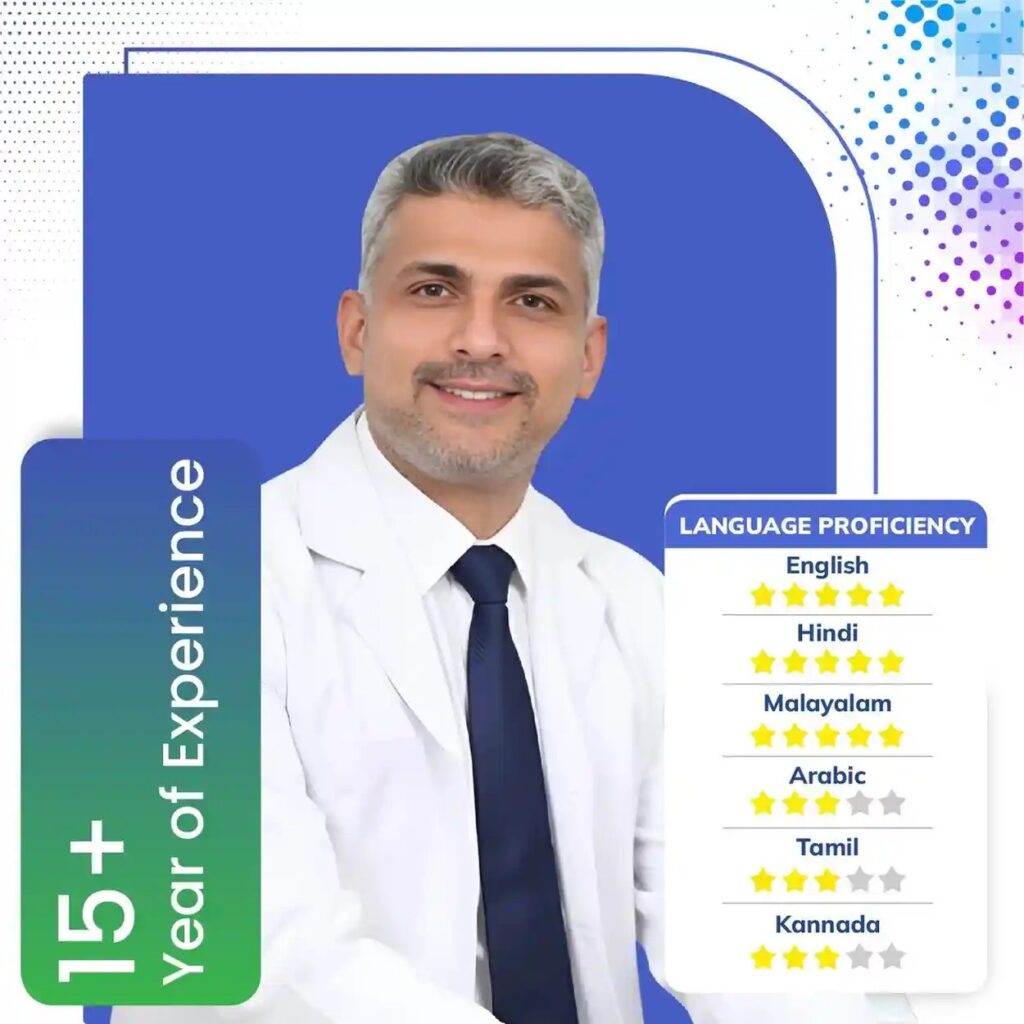
Dr. Muddazir Ali Ibrahim is an ENT specialist at NMC Specialty Hospital, Dubai, with over 15 years of experience treating ear, nose and throat conditions in both adults and children. His work includes:
- Endoscopic septoplasty and septal correction
- Endoscopic sinus surgery
- Nasal obstruction and breathing problems
- Chronic sinusitis
- Microscopic and endoscopic ear surgery
- Adenoid and tonsil surgery
Every patient is evaluated individually, and surgery is only suggested when it’s likely to help. For some people, medical treatment is the better first step.
When to See an ENT Specialist
Book an appointment if you have a nose that stays blocked, trouble breathing through it, repeated sinus infections, or sleep that’s being disrupted by poor nasal airflow.
A deviated septum isn’t the only possible cause. Enlarged turbinates, nasal polyps and allergies can produce similar symptoms, so getting the right diagnosis comes before any decision about surgery.
In Short
Endoscopic septoplasty can make a real difference for people whose blocked nose comes from a deviated septum. It’s done through the nostrils, usually leaves no visible scar, and lets the surgeon correct the problem precisely.
If your breathing is affecting your sleep or your day-to-day life, you can book a consultation with Dr. Muddazir Ali Ibrahim at NMC Specialty Hospital, Dubai, to find out what would work for you.