
The two small tissue pads at the back of your throat are called tonsils. They help your body spot germs that come in through the mouth and nose. For some people, though, they become a problem. They get infected again and again, grow too large, or start getting in the way of breathing and swallowing. If that keeps happening even after proper treatment, an ENT specialist may suggest taking them out.
Tonsillectomy is one of the most common ENT operations, and it’s done in Dubai every day. Whether you need it depends on your symptoms, your medical history, what the doctor finds on examination, and how often or how badly your tonsils trouble you.
Knowing what happens before, during and after surgery makes the whole thing less stressful. Dr. Muddazir Ali Ibrahim at NMC Specialty Hospital treats adults and children with a wide range of ENT conditions, including tonsil problems.
What Is a Tonsillectomy?
A tonsillectomy is an operation to remove the palatine tonsils, the ones you can see at the back of your throat. Doctors usually consider it when the tonsils cause ongoing problems that affect your health or get in the way of daily life.
It might be a choice if you have:
- Tonsillitis that keeps coming back
- Long-lasting tonsil infections
- Large tonsils that make breathing difficult
- Sleep apnea or other sleep breathing problems linked to enlarged tonsils
- Trouble swallowing because of tonsil size
- A peritonsillar abscess, or abscesses that return
- Tonsil stones that cause ongoing symptoms
- Tonsils so large they affect your quality of life
Not everyone with tonsillitis needs surgery. An ENT examination is the only way to know if it’s right for you.
When Is Surgery Recommended?
Repeated tonsillitis brings sore throats, fever, swollen glands and painful swallowing. If the infections come often or hit hard, your ENT specialist will look at whether removing the tonsils could help.
Large tonsils can also disturb sleep. In children, swollen tonsils and adenoids often show up as snoring, mouth breathing, restless nights or sleep apnea.
There’s no one-size-fits-all rule here. Your doctor will look at your symptoms, the examination, treatments you’ve already tried, your medical history and your general health before suggesting anything.
1. Before the Surgery
It starts with a proper consultation. Dr. Muddazir Ali Ibrahim will go through your symptoms and history and examine your mouth and throat.
Also include:
- A review of past tonsil infections
- An examination of the mouth and throat
- A check of tonsil size
- Questions about breathing and swallowing
- A look at medicines and treatments you’ve tried before
- A check for other ENT problems
- Tests, if they’re needed
- A medical and anesthesia assessment before the operation
Tell your team about every medicine and supplement you take, any allergies, past operations and other health conditions. The team will also give you clear instructions on eating, drinking and medicines before anesthesia. Follow them closely, because it lowers the risk of avoidable problems.
2. During the Surgery
Tonsillectomy is usually done under general anesthesia, so you’re asleep throughout.
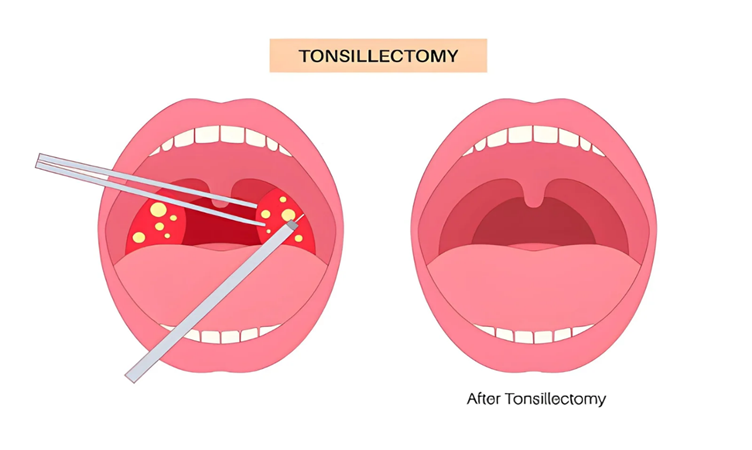
The surgeon reaches the tonsils through your mouth, separates them from the tissue around them and removes them. The area is then checked to make sure any bleeding is controlled. Since everything is done through the mouth, there’s no cut on the skin and no scar on the neck.
How long it takes depends on your age, your anatomy, your health, and whether another procedure is done at the same time.
Afterward you’ll rest in a recovery area while the anesthesia wears off. Based on your age, health and how things went, the team will decide whether you can go home the same day or should stay for observation.
3. Recovery
Everyone recovers a little differently. A sore throat is normal, and swallowing can be uncomfortable for a while.
You may also notice:
- Pain when swallowing
- Ear pain (it comes from the throat, not the ear itself)
- A slight change in your voice
- Less appetite
- Bad breath while you heal
- White or yellowish patches where the tonsils were
Those patches look worrying but usually aren’t infection. They’re just part of healing.
Drinking enough is the most important thing. Follow your doctor’s advice on food and medicines, and go back to normal foods slowly as you feel able. Children can recover differently from adults, so parents should stick closely to the instructions the team gives them.
4. Managing Pain
Pain is the hardest part of tonsillectomy recovery for most people. Your doctor will set out a pain plan to suit your age, health and needs. Taking your medicine as directed keeps you comfortable enough to drink and eat, which in turn helps you heal.
Check before taking anything extra, including over-the-counter painkillers and supplements. Some aren’t suitable after this kind of surgery. If swallowing hurts, small, frequent sips are often easier in the first few days.
5. Eating and Drinking After Surgery
Fluids matter a lot. Water and other suitable drinks keep dehydration away. Choose foods that are easy to swallow and avoid anything that irritates your throat. Soft foods are usually the most comfortable, and your ENT specialist will give you advice that fits your situation.
Watch children closely. A sore throat can make them reluctant to drink, and dehydration can set in quickly.
How Long Does Recovery Take?
It depends on your age and your circumstances. Most people have significant throat pain for the first several days, and it then eases gradually. Adults often find recovery harder than young children do.
Plan some time off work, school, exercise and heavy activity, as your doctor advises. Your ENT specialist will tell you when it’s safe to get back to normal.
A. Risks and Complications
Tonsillectomy is common and generally safe, but like any operation it carries some risks:
- Bleeding
- Pain
- Dehydration
- Nausea or vomiting
- A reaction to anesthesia
- Infection
- A temporary change in your voice
- Trouble swallowing during recovery
Bleeding deserves special attention. If you have heavy or ongoing bleeding after surgery, get urgent medical help right away. Don’t wait to see if it stops. Always follow the emergency and follow-up instructions from your surgical team.
B. Tonsillectomy in Children
Tonsil problems are very common in children. Recurring tonsillitis or very large tonsils can affect eating, sleeping, breathing, school attendance and play.
When surgery is on the table for a child, the ENT specialist looks at symptoms, tonsil size, infection history, sleep and breathing problems, and overall health. Parents should talk through the benefits, the recovery, the risks and the alternatives before deciding.
Why See a Specialist?
A thorough assessment by an experienced ENT doctor tells you whether surgery is really needed or whether another treatment would work better.
At NMC Specialty Hospital, Dr. Muddazir Ali Ibrahim sees adults and children with all kinds of ear, nose and throat conditions. He looks at the underlying problem, explains your options, and follows up with you after surgery. The aim is simple: give you and your family clear information so you can make the decision with confidence.
When Should You See an ENT Specialist?
Book a consultation if you or your child has:
- Frequent tonsillitis
- A sore throat that is severe or won’t go away
- Enlarged tonsils
- Difficulty swallowing
- Regular snoring
- Mouth breathing during sleep
- Pauses in breathing while asleep
- Tonsil abscesses that keep coming back
- Tonsil stones with ongoing symptoms
- Disturbed sleep or daily life because of tonsil problems
The sooner the cause is found, the sooner you’ll know whether you need medication, monitoring or surgery.
Frequently Asked Questions
Q1. Is tonsillectomy major surgery?
It’s a routine ENT operation, but it still needs proper surgical and anesthesia assessment. Recovery can be painful, especially in the early days.
Q2. How long does the operation take?
That depends on your age, anatomy, health and whether anything else is being done at the same time. Your surgeon can give you a clearer idea at your consultation.
Q3. Is it painful?
A sore throat is normal after surgery, especially when swallowing. Good pain control, plenty of fluids and following your aftercare instructions all help.
Q4. Can adults have a tonsillectomy?
Yes, when there’s a medical reason. The reasons for surgery and the recovery can be different from those in children.
Q5. When can I get back to normal activities?
It varies from person to person. Your ENT specialist will tell you when you can return to work, school and exercise.
Take the Next Step
Tonsillitis that keeps returning, enlarged tonsils and breathing problems during sleep shouldn’t be ignored. A detailed ENT evaluation can find the cause and show whether a tonsillectomy or another treatment is the right choice.
If you’re looking for tonsillectomy surgery in Dubai, Dr. Muddazir Ali Ibrahim at NMC Specialty Hospital offers specialist ENT care for adults and children. Talk through your symptoms, your history and your options with an experienced ENT doctor, and work out a plan that suits you.
Book an ENT consultation to discuss your symptoms and treatment options.