
Did you know that nearly 80% of adults have some degree of nasal septal deviation, yet many suffer through the symptoms without realizing that a septoplasty might be the appropriate clinical solution? It’s exhausting to live with a nose that always feels blocked, especially when nasal sprays only offer temporary relief and your sleep quality continues to decline. You’ve likely spent many nights struggling to catch your breath or waking up feeling unrefreshed. This persistent congestion can make even simple daily activities feel like a chore, leaving you searching for a more permanent way to breathe freely.
Understanding how this specialized surgical care can resolve chronic nasal obstruction is the first step toward reclaiming your respiratory health. This procedure isn’t about changing your appearance, it’s about improving how you breathe and sleep. In this guide, we’ll explain how Dr. Muddazir Ali Ibrahim at NMC Specialty Hospital Al Nahda 2, Dubai, addresses the structural causes of breathing difficulties. We’ll also clarify the differences between functional and cosmetic surgery, helping you determine if a professional consultation is the right path forward for your long-term comfort.
Key Takeaways
- Learn how an off-center or deviated septum physically obstructs airflow and why conservative treatments like nasal sprays often fail to provide lasting relief.
- Understand the clinical objectives of septoplasty, a specialized surgical procedure designed to straighten the internal nasal midline and restore optimal respiratory function.
- Clarify the distinction between functional airway correction and cosmetic surgery, ensuring you understand the focus on internal structural health rather than aesthetic changes.
- Identify the specific clinical indicators, such as chronic unilateral congestion and sleep disruption, that suggest a professional ENT evaluation in Dubai may be appropriate.
- Gain a clear perspective on the recovery phase and what to expect during the initial healing period following an endoscopic surgical intervention.
Understanding the Deviated Septum and Nasal Obstruction
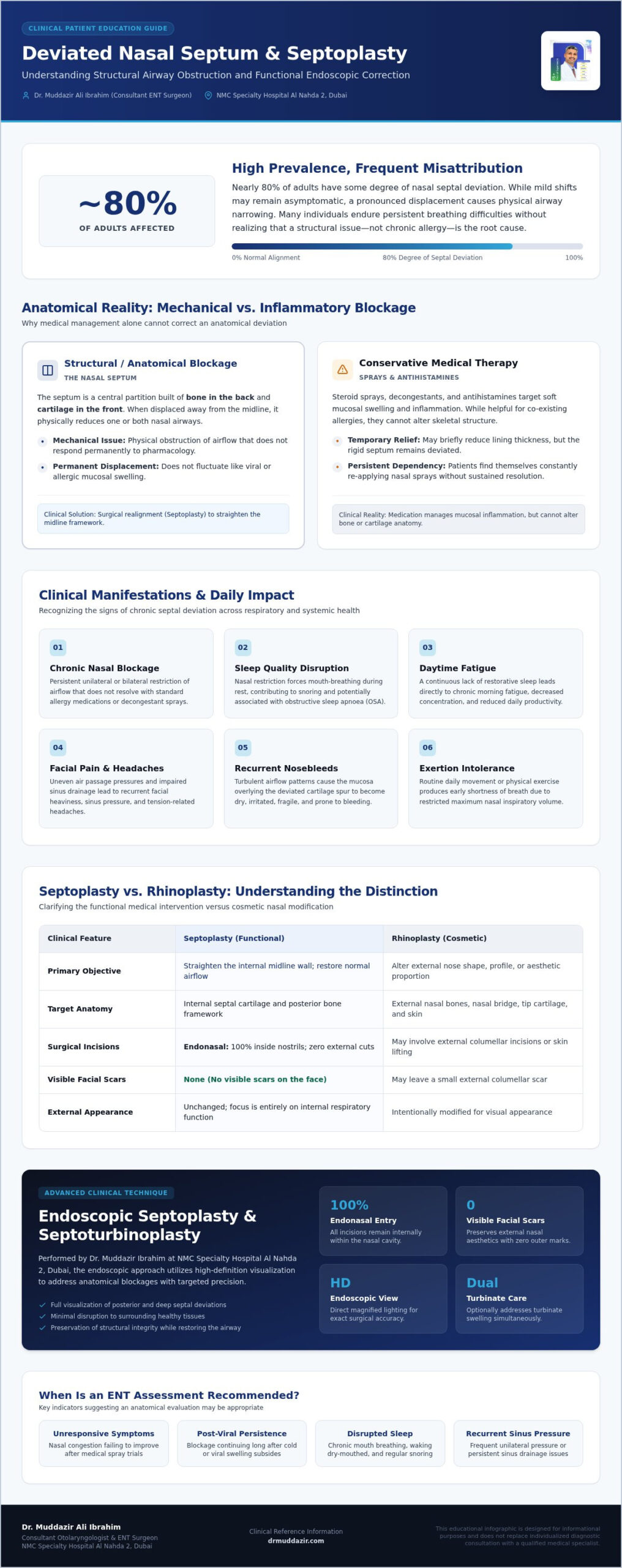
The nasal septum is the central wall that divides your nostrils into two separate passages. It’s composed of a delicate framework of bone in the back and cartilage in the front. When this wall is positioned straight, air flows evenly through both sides of the nose. However, when the septum is “deviated,” it’s shifted away from the midline. This displacement makes one nasal passage smaller than the other, which can significantly restrict airflow. While many people have a slight deviation that causes no issues, a more pronounced shift often necessitates a surgical septoplasty overview to restore balance and function.
A deviated septum isn’t an allergy or an infection; it’s a physical, structural blockage. This is why antihistamines or allergy sprays often fail to provide long-term relief. Common indicators of this structural concern include:
- Chronic unilateral or bilateral nasal blockage.
- Frequent headaches or facial pain caused by uneven pressure.
- Recurrent nosebleeds, as the surface of a deviated septum can become dry and irritated.
It’s vital to recognize that these symptoms are the result of anatomical misalignment. Because the issue is mechanical, medical management alone rarely provides a permanent solution for those with severe deviations.
How a Deviated Septum Affects Your Daily Life
Living with a structural nasal obstruction impacts more than just your breathing. It often degrades your sleep quality. When you can’t breathe through your nose, you’re forced to mouth-breathe. This is a primary cause of snoring and may be associated with obstructive sleep apnoea (OSA). This lack of restorative rest leads to daytime fatigue and reduced productivity. Physical exertion also becomes more difficult. Whether you’re walking through Al Qusais or exercising in a gym in Deira, you might find yourself winded much faster than expected. Additionally, poor airflow prevents sinuses from draining properly. This can lead to chronic sinus pressure and a heavy feeling in the face.
Common Signs You May Need a Professional Evaluation
If you find yourself constantly reaching for nasal sprays without seeing improvement, it’s time to consider an ENT evaluation. Persistent congestion that doesn’t respond to standard medication is a hallmark sign of an anatomical issue. You might also notice that you develop frequent sinus infections. Sometimes, what feels like nasal obstruction after a cold is actually an underlying deviation that becomes more apparent once the initial viral swelling subsides. A professional assessment by Dr. Muddazir Ibrahim at NMC Specialty Hospital Al Nahda 2 can help determine if septoplasty is the appropriate next step for your respiratory health.
What is Septoplasty? The Surgical Path to Better Breathing
Septoplasty is the definitive surgical correction for a deviated nasal septum. While medical treatments like steroid sprays or antihistamines can manage inflammation, they cannot alter the physical structure of your nose. The primary objective of this procedure is to straighten the midline wall of cartilage and bone, thereby optimizing the nasal airway and restoring balanced breathing. For patients at NMC Specialty Hospital Al Nahda 2, one of the most reassuring aspects of this intervention is that it’s performed entirely through the nostrils. This endonasal approach means there are no external incisions and no visible scars on the face following the procedure.
Dr. Muddazir Ibrahim often utilizes Endoscopic Septoplasty and Septoturbinoplasty surgery to achieve the most accurate results. This modern surgical technique focuses on restoring the internal architecture of the nose with minimal disruption to the surrounding healthy tissue. By addressing the specific anatomical blockage, the surgery aims to provide a long-term solution for chronic nasal obstruction. Clinical resources offer extensive details regarding the indications and aftercare for septoplasty, highlighting its role as a standard functional treatment in otolaryngology.
The Endoscopic Approach: Precision and Visualization
Traditional septoplasty methods sometimes limited the surgeon’s view of obstructions located deeper in the nasal cavity. The endoscopic approach changes this by using a high-definition camera and a dedicated light source. This technology provides a magnified, crystal-clear view of the internal structures, allowing for a more targeted and conservative correction. Because the surgeon can see exactly which portions of the bone or cartilage are causing the blockage, they can preserve more of the natural nasal support. This level of precision is a significant advancement in the field, as you can explore further in this Endoscopic Septoplasty A Complete Guide. Targeted correction often leads to a more efficient surgical process and a focused recovery period.
Septoturbinoplasty: Addressing the Turbinates
Turbinates are small, shelf-like structures inside the nose that play a vital role in cleansing and humidifying the air we breathe. When a septum is severely deviated to one side, the turbinates on the opposite, “roomier” side often grow larger to compensate for the extra space. This is known as compensatory hypertrophy. If a surgeon only straightens the septum without addressing these enlarged turbinates, the patient may still experience significant blockage on the other side. This is why a septoplasty is frequently combined with turbinate reduction, a combined procedure known as septoturbinoplasty. By resizing the turbinates alongside the septal correction, the surgery provides a much more comprehensive improvement in airflow. If you’re struggling with persistent breathing issues, scheduling a professional consultation in Dubai can help determine if this dual approach is suitable for your needs.
Septoplasty vs. Rhinoplasty: Understanding the Differences
Many patients who visit Dr. Muddazir Ibrahim in Al Nahda Dubai often confuse functional nasal surgery with cosmetic procedures. While both involve the nose, their objectives are fundamentally different. This specific intervention is a functional surgical procedure focused entirely on the internal structures to improve breathing. In contrast, rhinoplasty is an elective cosmetic procedure intended to reshape the external appearance of the nose. It’s vital to understand that a functional correction will not change your external profile, remove a nasal hump, or alter the shape of your nasal tip. Its sole purpose is to straighten the midline wall to restore a clear airway.
As a Consultant Otolaryngologist and ENT Surgeon, Dr. Muddazir Ibrahim focuses his expertise on the clinical and functional aspects of nasal health. He does not provide aesthetic rhinoplasty. This distinction is important for patients in Sharjah and Deira who are seeking medical relief from structural blockages rather than cosmetic enhancements. According to the Mayo Clinic guide to septoplasty, the procedure is often recommended when a deviated septum is so severe that it blocks one side of the nose and interferes with quality of life. While cosmetic work is often elective, functional surgery is usually considered a medical necessity when conservative treatments fail to resolve chronic obstruction.
Functional Goals of Corrective Surgery
The primary aim of this intervention is to restore the natural flow of air and ensure proper sinus ventilation. By straightening the internal cartilage and bone, the surgeon can reduce the turbulence that often leads to chronic inflammation. This structural correction helps in reducing the frequency of secondary ENT conditions, such as recurrent sinus infections or persistent pressure. Septoplasty is a medically necessary intervention specifically designed to correct structural nasal obstructions that impede normal respiratory function. It ensures that the internal pathways are wide enough to facilitate effortless breathing during both rest and physical activity.
When Functional Correction is the Priority
For most individuals seeking care at NMC Specialty Hospital Al Nahda 2, the priority is finding relief from a persistently blocked nose. These patients aren’t looking for a “new look” but rather the ability to sleep through the night without waking up gasping for air. An ENT surgeon’s role is to prioritize internal nasal health, ensuring that the mucosal lining and structural framework work in harmony. If your primary concern is a physical inability to breathe comfortably, understanding when do you need endoscopic septoplasty surgery can help you make an informed decision. This functional focus ensures that the surgical plan is tailored to resolve your specific anatomical symptoms rather than aesthetic preferences.
Indications: When Should You Consider Septoplasty?
Deciding when to transition from conservative medical management to surgical intervention is a significant step for any patient. While many people manage mild symptoms with temporary home care, septoplasty becomes a clinical consideration when chronic nasal obstruction begins to interfere with your daily activities. This isn’t just about a minor annoyance; it’s about the persistent inability to breathe through your nose, which affects your focus, energy levels, and overall well-being. When the internal structure of the nose is physically blocked, even the most effective medications may fail to provide the relief you need.
There are several clinical indicators that a structural correction may be appropriate for your condition:
- Nasal obstruction that fails to respond to a documented 4 to 12 week trial of medical therapy, such as steroid sprays or antihistamines.
- Difficulty sleeping or symptoms of obstructive sleep apnoea (OSA) that are exacerbated by restricted nasal airflow.
- Recurrent or chronic sinus infections that result from the septum preventing natural drainage.
- Persistent mouth breathing that leads to a chronic dry throat, snoring, and daytime fatigue.
The Impact of Dubai’s Climate on Nasal Health
The environment in the UAE often exacerbates underlying structural nasal issues. Constant exposure to air conditioning can dry the nasal lining, while high levels of seasonal dust and humidity increase the workload of the nose. When the septum is deviated, the nose cannot effectively filter these local allergens or humidify the dry AC air. This structural disadvantage means that residents in Dubai often feel the impact of a deviation more acutely than they might in other regions. Understanding how Dubai’s climate affects sinus health and what you can do about it is essential for anyone living in the Northern Emirates who struggles with persistent congestion.
Evaluation at NMC Specialty Hospital Al Nahda 2
If you’re experiencing these symptoms, a thorough evaluation at NMC Specialty Hospital Al Nahda 2 is the next clinical step. Dr. Muddazir Ibrahim provides specialized care for patients across Al Nahda Dubai, Sharjah, Muhaisnah, and Al Qusais. During your first ENT appointment, a diagnostic nasal endoscopy is typically performed. This procedure uses a high-definition camera to provide a clear view of the internal anatomy, allowing the surgeon to confirm if the blockage is caused by a deviated septum, enlarged turbinates, or other factors. If you’re ready to find a permanent solution for your breathing issues, book a consultation with Dr. Muddazir Ibrahim today to discuss your personalized treatment plan.
Recovery and Results: What to Expect Post-Surgery
Most patients are pleased to learn that a septoplasty is usually performed as an outpatient or short-stay procedure. This means you can typically return to the comfort of your home in Dubai or Sharjah on the same day as your surgery. During the first 24 to 48 hours, it’s normal to experience some nasal congestion and a minor amount of reddish drainage. This sensation is a result of temporary internal swelling rather than a return of the original anatomical blockage. A major clinical advantage of this functional approach is the absence of external bruising. Because Dr. Muddazir Ibrahim works entirely through the nostrils, you won’t see the visible facial swelling or “black eyes” that are common with cosmetic rhinoplasty. You can generally return to a standard office environment within five to seven days. However, you must avoid strenuous exercise or heavy lifting for at least two to three weeks to protect the healing tissues.
Managing the Healing Process
Managing the healing process effectively requires patience and diligent care. Following the post-operative instructions provided at NMC Specialty Hospital Al Nahda 2 is critical for the long-term success of your procedure. Dr. Muddazir Ibrahim will guide you on proper nasal hygiene, which usually centers on the regular use of saline rinses. These rinses are vital; they gently clear out mucus and prevent crusting while ensuring the nasal lining remains hydrated in Dubai’s dry, air-conditioned environments. Using these sprays as directed helps to minimize the risk of infection and promotes faster mucosal healing. Adhering to these simple steps ensures that the internal cartilage and bone stabilize in their new, straightened position. For a more detailed breakdown of the milestones you’ll encounter, you can refer to our Septoplasty Recovery Timeline A Comprehensive Day By Day Guide.
Long-Term Benefits of Successful Septoplasty
The long-term benefits of a successful septoplasty extend far beyond just “clearer nostrils.” Once the internal architecture is straightened and the initial healing phase is complete, most patients report a transformative improvement in their respiratory health. You can expect a significant reduction in your reliance on temporary nasal medications and a noticeable decrease in chronic sinus pressure. This restored airflow often leads to more restful sleep patterns, which in turn increases your overall energy and focus during the day. For many individuals in Al Nahda and the surrounding areas, the resolution of chronic mouth breathing also helps to alleviate a persistent dry throat and morning fatigue. Most patients experience significant relief from their primary symptoms within just a few weeks of the surgical intervention.
Taking the Next Step Toward Clearer Breathing
Living with a persistent nasal obstruction doesn’t have to be your permanent reality. By recognizing that a deviated septum is a structural concern rather than a simple allergy, you’ve already taken the first step toward finding a lasting solution. A septoplasty offers a targeted way to restore the internal architecture of your nose; it focuses entirely on functional health and respiratory ease. This procedure isn’t about cosmetic change, it’s about reclaiming the quality of your sleep and your daily energy levels through precise, specialized care.
If you’re tired of relying on temporary sprays and are ready for a professional assessment, expert help is available. Dr. Muddazir Ibrahim is a Consultant ENT Surgeon and a specialist in endoscopic nasal surgery. His practice at NMC Specialty Hospital Al Nahda 2 is conveniently located for residents across Dubai and Sharjah, providing a compassionate environment for your clinical evaluation. It’s time to prioritize your comfort and breathe with confidence again. Schedule a consultation with Dr. Muddazir Ibrahim to discuss how a functional correction can improve your quality of life.
Frequently Asked Questions
Is septoplasty a painful procedure?
Most patients experience a sense of congestion and pressure rather than sharp pain. The procedure is performed under general anesthesia at NMC Specialty Hospital Al Nahda 2, ensuring you’re comfortable throughout. After surgery, Dr. Muddazir Ibrahim provides a personalized pain management plan to address any minor aches. Most individuals find that the stuffy sensation is the most significant part of the recovery process, which typically subsides as the internal swelling decreases over the first few days.
How long does the septoplasty surgery take?
A standard septoplasty usually takes between 30 to 90 minutes to complete. The exact duration depends on the complexity of the anatomical deviation and whether additional procedures, such as turbinate reduction, are performed simultaneously. Dr. Muddazir Ibrahim prioritizes surgical precision to ensure the best functional outcome for patients from Dubai and Sharjah. Since it’s often an outpatient procedure, you can usually expect to return home the same day once the anesthesia has fully worn off.
Will septoplasty change the shape of my nose?
No, a standard functional septoplasty is designed to straighten the internal midline wall without changing the external shape of your nose. It’s important to distinguish this from rhinoplasty, which is a cosmetic procedure. Dr. Muddazir Ibrahim focuses exclusively on restoring nasal function and airflow. While the internal structure is corrected, your outward profile and nasal tip will remain the same, as the surgery is performed entirely through internal incisions within the nostrils.
When can I return to work after septoplasty?
Most patients find they can return to light office duties or school within 5 to 7 days after the procedure. If your job involves physical labor or heavy lifting, you may need to wait at least two weeks before returning. Dr. Muddazir Ibrahim advises all patients to avoid strenuous exercise for approximately three weeks to prevent complications like nosebleeds. Your specific recovery timeline will be discussed during your follow-up appointment at NMC Specialty Hospital Al Nahda 2.
Does insurance in Dubai typically cover septoplasty?
Yes, most medical insurance providers in Dubai and Sharjah cover this procedure when it’s performed to resolve a documented structural obstruction. Because it’s a functional surgery rather than a cosmetic one, insurance companies typically approve it if conservative treatments like sprays haven’t worked. The administrative team at NMC Specialty Hospital Al Nahda 2 can assist you in navigating the pre-authorization process. Coverage depends on your specific policy and the clinical findings during your ENT evaluation.
Can septoplasty help with my snoring?
Septoplasty can help reduce snoring if the primary cause is a physical blockage in the nasal passage. By straightening the septum, airflow becomes less turbulent, which may decrease the vibrations that cause snoring. However, snoring can also be linked to other issues like throat anatomy or obstructive sleep apnoea. Dr. Muddazir Ibrahim provides comprehensive evaluations for patients in Al Nahda to determine if nasal surgery or other interventions are the most appropriate solution for your snoring.
What is the difference between septoplasty and turbinate surgery?
Septoplasty focuses on straightening the central wall of cartilage and bone that divides your nostrils. Turbinate surgery involves reducing the size of the bony structures on the side walls of the nose that can become enlarged due to allergies or chronic irritation. These two issues often occur together, which is why Dr. Muddazir Ibrahim frequently performs a combined procedure. This dual approach ensures that both the midline and the side passages are clear for optimal breathing.
Is endoscopic septoplasty better than the traditional method?
Endoscopic septoplasty is often considered superior for its precision and high-definition visualization. Unlike traditional methods that rely on a surgical headlight, the endoscopic approach uses a small camera to provide a magnified view of the entire nasal cavity. This allows Dr. Muddazir Ibrahim to target specific obstructions, even those located deep in the nose, with minimal disruption to healthy tissue. Patients in Dubai often benefit from this more conservative and highly accurate surgical technique.