
What if the persistent muffled sound in your ear isn’t just a temporary blockage, but a sign that your ear’s natural barrier needs professional restoration? Many patients across Dubai and Sharjah experience the frustration of chronic ear discharge and the anxiety that comes with a perforated eardrum. If you’ve noticed these symptoms, undergoing ear drum repair surgery may be the most effective way to prevent further complications and protect your long-term hearing health.
It’s natural to feel concerned about the invasive nature of medical procedures, yet modern ENT advancements have made these interventions more precise than ever. This guide provides a clear understanding of your surgical options at NMC Specialty Hospital Al Nahda 2, Dubai. We’ll compare the traditional microscopic approach with modern, endoscopic scarless ear surgery to help you feel confident in your treatment path. Dr. Muddazir Ali Ibrahim focuses on techniques that promote a dry, infection-free ear and improved hearing. By the end of this article, you’ll know exactly what to expect during the recovery process and how specialized care can restore your quality of life.
Key Takeaways
- Understand how a tympanic membrane repair protects the ear from chronic infection while improving overall hearing clarity.
- Explore the differences between traditional micro ear surgery and modern endoscopic scarless ear surgery to determine the most suitable approach for your condition.
- Gain insights into the advanced materials used during ear drum repair surgery, such as fascia or cartilage grafts, to ensure long-term structural integrity.
- Learn the essential post-operative care steps and recovery milestones required to achieve a dry, healthy ear following your procedure.
- Access specialized ENT expertise at NMC Specialty Hospital Al Nahda 2, conveniently located for residents of Dubai and Sharjah.
Understanding Ear Drum Perforation and the Need for Repair
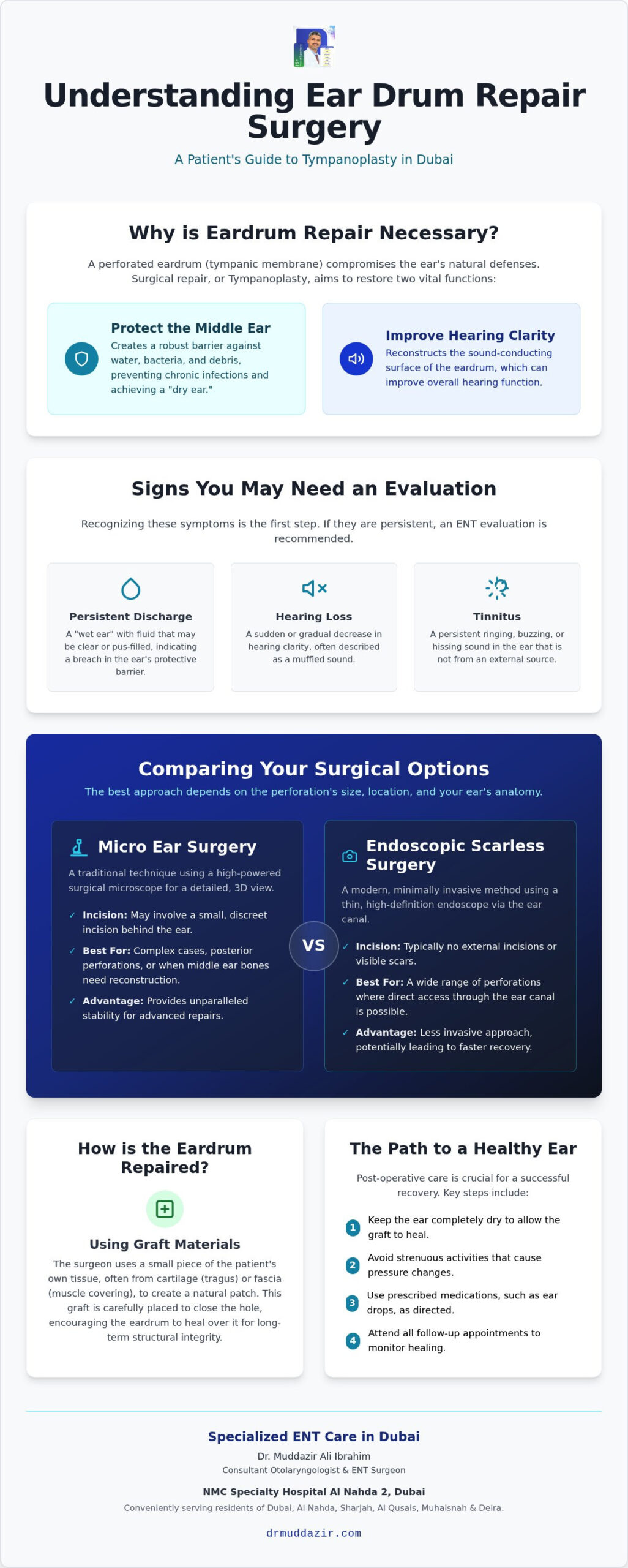
The tympanic membrane, commonly known as the eardrum, is a delicate, translucent tissue that serves two vital functions. It acts as a primary transducer for sound, converting acoustic energy into mechanical vibrations that the middle ear bones can process. Simultaneously, it provides a robust physical barrier that protects the sterile middle ear environment from water, bacteria, and debris. When this membrane is breached, these functions are compromised, often necessitating ear drum repair surgery to restore the ear’s natural defenses.
Perforations often stem from several factors prevalent in the UAE. Chronic middle ear infections are a frequent cause; persistent fluid buildup can create enough pressure to rupture the membrane. Physical trauma is another common factor, often occurring from the improper use of cotton buds or sudden changes in air pressure during flights or diving. While some small tears may resolve on their own with conservative management, others persist as chronic holes that leave the ear vulnerable to the environment.
Symptoms of a Perforated Eardrum
Recognizing the signs of a tear is the first step toward recovery. Many patients report a “wet ear” or persistent discharge, which can range from clear fluid to pus-filled drainage. This occurs because the protective barrier is gone, allowing infections to take hold easily. You might also notice a sudden loss of hearing clarity or a persistent ringing known as tinnitus. If you experience these issues, understanding the Signs you might need micro ear surgery can help you decide when a professional evaluation at NMC Specialty Hospital Al Nahda 2, Dubai is appropriate.
When is Tympanoplasty Required?
While an acute perforation from a minor injury might heal with observation, a chronic non-healing hole usually needs ear drum repair surgery. If a perforation is left untreated, it can lead to recurrent infections and even a cholesteatoma. This is a non-cancerous skin growth that can slowly damage the delicate structures of the middle ear and mastoid bone.
Dr. Muddazir Ibrahim recommends surgical repair when the goal is to achieve a “dry ear” that is no longer susceptible to infection from water exposure. The procedure, known as Tympanoplasty, aims to close the gap, stabilize hearing, and prevent long-term complications. For residents in Al Nahda Dubai, Sharjah, or Deira, addressing these symptoms early ensures a more straightforward path to restoring your ear health.
Tympanoplasty: Modern Surgical Approaches in Dubai
Tympanoplasty is the established clinical term for ear drum repair surgery. It’s a sophisticated procedure designed to reconstruct the tympanic membrane and, when necessary, the small bones of the middle ear. In previous decades, patients often faced significant downtime and visible scarring following ear interventions. Today, modern ENT surgery in Dubai has evolved to prioritize minimally invasive techniques. At NMC Specialty Hospital Al Nahda 2, Dubai, Dr. Muddazir Ibrahim utilizes advanced optical technology to ensure the highest level of precision during these delicate repairs.
Choosing the right surgical path isn’t a one-size-fits-all decision. The selection between microscopic and endoscopic approaches depends on several clinical factors. These include the size of the perforation, its specific location on the drum, and the unique anatomy of your ear canal. A thorough evaluation helps determine which method will provide the most stable, long-term result for your specific condition. This tailored approach ensures that patients from Al Nahda Sharjah to Deira receive care suited to their unique physiological needs.
Micro Ear Surgery (Basic and Advanced)
Microscopic repair remains a foundational technique for many complex cases. By using a high-powered surgical microscope, the surgeon gains a detailed, three-dimensional view of the middle ear structures. This approach is particularly effective for posterior perforations or cases where the middle ear bones also require reconstruction. While it may involve a small incision behind the ear to access the area, it provides unparalleled stability for advanced reconstructions. If you’re scheduled for this method, reviewing the Guide to Micro Ear Surgery can help you prepare for the healing phase.
Endoscopic Scarless Ear Surgery
For many patients, the most significant advancement in ENT care is the transition to endoscopic techniques. This method involves inserting a thin, high-definition endoscope directly through the ear canal. It allows the surgeon to see “around the corners” of the ear canal without needing large external incisions. Because the entire procedure is performed trans-canal, there are no visible scars or external stitches. This is the modern scarless option for ear surgery that many residents in Al Nahda Dubai prefer for its cosmetic benefits and efficient recovery. If you are experiencing persistent ear issues, consulting with a specialist can provide the clarity you need to move forward.
Comparing Surgical Options: Which Procedure is Right for You?
Choosing between surgical techniques requires a precise clinical evaluation. Every ear is different. Dr. Muddazir Ibrahim considers the canal’s shape, the hole’s location, and the patient’s medical history before making a recommendation. The ultimate goal of ear drum repair surgery is to create a stable, vibrating membrane that remains infection-free for years to come. Achieving this requires a combination of the right surgical approach and the most suitable graft material.
Graft materials are the “building blocks” used to patch the perforation. In Dubai, surgeons typically use the patient’s own tissue to ensure biocompatibility. Temporal fascia, which is the thin lining of the muscle above the ear, is a common choice due to its similar thickness to a natural eardrum. For larger holes or cases where the ear has failed to heal previously, cartilage may be used instead. Cartilage offers superior structural support and is more resistant to pressure changes, making it a reliable choice for long-term stability.
Endoscopic vs. Microscopic Approach
The primary difference between these methods lies in how the surgeon accesses the middle ear. The endoscopic approach is transcanal, meaning the instruments go through the ear’s natural opening. This eliminates the need for external incisions and significantly reduces post-operative discomfort. It’s particularly useful for patients with narrow or curvy ear canals where traditional line-of-sight visibility is limited.
The microscopic approach, while more traditional, remains the standard for complex reconstructions. It typically requires a post-auricular incision behind the ear. This gives the surgeon a wide, three-dimensional view, which is essential when the perforation is very large or located in the far corners of the ear. While the recovery might involve a bit more initial swelling compared to the endoscopic method, the success of ear drum repair surgery using a microscope is well-documented for advanced cases.
Hearing Restoration and Auditory Reconstruction
Repairing the drum is often just the first step in a larger journey toward better hearing. Once the membrane is sealed, sound waves can effectively vibrate the middle ear structures again. However, if chronic infections have eroded the tiny hearing bones, a simple patch isn’t enough. In these instances, Dr. Muddazir Ibrahim may perform an ossiculoplasty to bridge the gap between the drum and the inner ear. You can learn more about these advanced techniques in this Guide to modern auditory reconstruction. Patients at NMC Specialty Hospital Al Nahda 2, Dubai, receive a comprehensive plan that addresses both the physical integrity of the ear and the functional restoration of their hearing.
The Patient Journey: Recovery and Post-Operative Care
The success of ear drum repair surgery relies heavily on the weeks following the procedure. While the surgical phase is complete, the graft requires a stable environment to integrate with your natural tissue. Most patients in Dubai return home the same day or after a short observation period at NMC Specialty Hospital Al Nahda 2. The initial healing phase usually lasts about six to eight weeks, during which the middle ear must remain completely dry and free from sudden pressure changes.
Adhering to a structured recovery plan is the best way to ensure the long-term integrity of the repair. During your initial consultations, Dr. Muddazir Ibrahim will provide a detailed roadmap tailored to your specific surgical approach. Whether you’re coming from Al Nahda Sharjah or Deira, staying committed to these instructions helps prevent graft displacement and minimizes the risk of post-operative infection.
Immediate Aftercare Following Surgery
Your immediate focus should be on protecting the delicate surgical site. You’ll likely have a small piece of cotton or a specialized dressing in the ear canal. It’s vital to keep this area dry at all times. Many patients find the “cotton ball” method effective; place a clean cotton ball coated with a small amount of petroleum jelly in the outer ear during showers to create a waterproof seal.
Avoiding internal pressure is equally critical for graft stability. You must refrain from:
- Blowing your nose forcefully; if you must sneeze, do so with your mouth open to vent pressure.
- Heavy lifting or intense physical straining that increases cranial pressure.
- Air travel during the first few weeks, as rapid altitude changes can compromise the repair.
For those who underwent a minimally invasive procedure, following the Post-operative instructions for scarless ear surgery is essential for a smooth and efficient recovery.
Long-term Healing and Regional Considerations
Living in the UAE presents specific challenges during recovery. The high humidity and occasional dust in areas like Muhaisnah or Al Qusais can irritate the ear if it isn’t protected. It’s wise to stay in climate-controlled environments during the first week to keep the ear canal cool and prevent excessive moisture buildup.
Swimming is a popular activity in Dubai, but you must wait for explicit clearance before diving back in. This typically happens after the six-week follow-up appointment, once the graft is fully healed and stable. During your visits to NMC Specialty Hospital, we’ll monitor your hearing progress and the physical “take” of the graft. Watch for “red flags” such as bright red bleeding, foul-smelling discharge, or sudden dizziness. If you have concerns about your healing progress, book a follow-up consultation to ensure your recovery remains on track.
Specialized ENT Care at NMC Specialty Hospital Al Nahda 2
Choosing to undergo ear drum repair surgery is a significant decision for your long-term health. Dr. Muddazir Ibrahim brings over 15 years of clinical experience to every consultation, ensuring that patients receive a blend of technical precision and compassionate care. At NMC Specialty Hospital Al Nahda 2, the focus isn’t just on closing a perforation; it’s about restoring the functional harmony of your hearing. This patient-centered approach ensures that you aren’t just another case, but a partner in your own recovery journey.
The hospital’s infrastructure supports the most advanced ENT interventions, from basic micro ear surgery to complex endoscopic reconstructions. By combining specialized expertise with state-of-the-art diagnostic tools, Dr. Muddazir Ibrahim provides a clear path forward for those struggling with chronic ear issues. Whether you’ve dealt with symptoms for months or years, a professional clinical evaluation is the only way to determine the most effective surgical solution for your needs.
Consulting an ENT Surgeon in Dubai
Your journey begins with a comprehensive diagnostic evaluation. During your visit, Dr. Muddazir Ibrahim uses high-definition endoscopy to visualize the eardrum and middle ear structures in real-time. This allows you to see the exact nature of the perforation on a monitor, making the medical explanation much easier to grasp. If you’re unsure about what to expect, reviewing a guide on your first ENT appointment can provide peace of mind.
Every treatment plan is personalized, accounting for your lifestyle, hearing requirements, and the specific anatomy of your ear. For complex cases or recurring infections, seeking a second opinion ensures you’re accessing the most advanced surgical options available today. Dr. Muddazir Ibrahim’s commitment to hearing restoration means that your plan will address both the physical closure of the hole and the functional improvement of your auditory system.
Serving the Dubai and Sharjah Communities
Accessibility is key when managing a chronic ear condition. NMC Specialty Hospital Al Nahda 2 is strategically located to serve residents across Al Nahda Dubai, Al Nahda Sharjah, and Deira. Patients from Al Qusais, Muhaisnah, and Ajman also find the facility convenient for both ear drum repair surgery and the necessary follow-up care. The hospital functions as a regional center for ENT excellence, equipped with the latest technology required for modern ear interventions.
Don’t let persistent ear discharge or muffled hearing limit your daily life. A professional evaluation is the first step toward a dry, healthy ear and improved auditory clarity. If you’re ready to explore your options, schedule a consultation with Dr. Muddazir Ibrahim to begin your path toward lasting ear health and hearing restoration.
Taking the Next Step Toward Ear Health and Auditory Clarity
Addressing a perforated eardrum is more than a clinical necessity; it’s a vital step toward reclaiming your quality of life. Modern techniques like endoscopic scarless ear surgery allow for precise repairs without external incisions, offering a streamlined path to a dry and infection-free ear. By understanding your options and the recovery process, you can approach ear drum repair surgery with confidence and peace of mind.
Dr. Muddazir Ibrahim is a Consultant ENT Surgeon with over 15 years of experience, providing specialized expertise in advanced auditory reconstruction. Our practice at NMC Specialty Hospital Al Nahda 2 is conveniently located for residents across Dubai and Sharjah, offering a trusted local hub for expert ear care. Personalized treatment plans ensure that your specific hearing needs are met with the highest standard of clinical precision.
Schedule a consultation with Dr. Muddazir Ibrahim at NMC Specialty Hospital Al Nahda 2 to begin your journey toward lasting ear health. Don’t let chronic ear issues linger when advanced, patient-focused solutions are within reach. We look forward to helping you restore your hearing and protect your ear health for the future.
Frequently Asked Questions
How long does ear drum repair surgery take?
The duration of the procedure typically ranges from 60 to 120 minutes. This timeframe depends on the size of the perforation and whether the middle ear bones also require reconstruction. Simple repairs using an endoscopic approach may be completed more quickly, while advanced microscopic cases involving complex grafting take longer. Patients are monitored in a recovery room immediately after the surgery before being discharged the same day in most instances.
Is tympanoplasty surgery painful?
Most patients report mild discomfort rather than significant pain during the recovery phase. The procedure is performed under general anesthesia, so you won’t feel anything during the surgery itself. Afterward, you might experience a dull ache or a sensation of fullness in the ear. Dr. Muddazir Ibrahim typically prescribes mild analgesics to manage any initial soreness. Many patients find that the endoscopic scarless ear surgery option results in minimal post-operative irritation.
When can I fly after ear drum repair surgery in Dubai?
You should generally avoid air travel for at least four to six weeks following the procedure. Flying involves significant atmospheric pressure changes that can displace the newly placed graft before it has fully integrated with your natural tissue. Traveling too soon risks the success of your ear drum repair surgery and could cause a re-perforation. Dr. Muddazir Ibrahim will provide specific clearance during your follow-up appointment at NMC Specialty Hospital Al Nahda 2.
What is the success rate of ear drum repair?
Tympanoplasty is widely recognized for having a high success rate in closing perforations and preventing recurrent infections. Success depends on factors like the size of the hole, the health of the middle ear, and how well you follow post-operative care instructions. While individual outcomes vary, most patients achieve a dry, stable ear. Dr. Muddazir Ibrahim uses advanced techniques and high-quality graft materials to optimize the chances of a permanent repair for residents across Dubai and Sharjah.
Can children undergo ear drum repair surgery?
Yes, children frequently undergo this procedure, especially if they have persistent perforations from chronic ear infections or previous grommet insertions. Pediatric ear drum repair surgery is often recommended once the child is slightly older to ensure the Eustachian tube is functioning correctly. Dr. Muddazir Ibrahim provides specialized pediatric ENT care, focusing on techniques that minimize discomfort. This helps prevent long-term hearing delays and protects the child’s middle ear during their developmental years.
Will my hearing improve immediately after the procedure?
Hearing improvement is rarely immediate because the ear canal is usually filled with packing material and surgical foam. You might even feel like your hearing is more muffled during the first few weeks of healing. As the packing is removed and the graft stabilizes, most patients notice a gradual restoration of auditory clarity. The final hearing results are typically assessed through an audiogram several months after the surgery once all internal swelling has subsided.
How do I keep my ear dry during the recovery period?
Keeping the ear dry is the most critical part of the recovery process. You can use a clean cotton ball coated with petroleum jelly to create a waterproof seal in the outer ear during showers. It’s important to avoid swimming or any activity where water might enter the ear canal until Dr. Muddazir Ibrahim gives you explicit clearance. Patients in high-humidity areas like Al Nahda or Deira should be especially careful to prevent moisture from compromising the healing graft.
What is the difference between myringoplasty and tympanoplasty?
Myringoplasty specifically refers to the surgical repair of a hole in the eardrum when there is no damage to the middle ear bones. Tympanoplasty is a broader term that includes repairing the eardrum and addressing issues within the middle ear space, such as bone reconstruction. Both are types of micro ear surgery aimed at restoring the ear’s protective barrier. Your surgical plan at NMC Specialty Hospital Al Nahda 2 will depend on the extent of the damage found during your diagnostic evaluation.