
What if the persistent facial pressure and debilitating headaches you’ve endured for years could be resolved through minimally invasive sinus surgery that requires no external incisions? For many residents across the UAE, chronic sinusitis isn’t just a physical ailment; it’s a constant barrier to productivity and quality of life. You’ve likely tried every nasal spray available, only to find that the inability to breathe through your nose remains a daily struggle. It’s natural to feel hesitant about intervention, especially if you fear a long, painful recovery that keeps you away from work and family.
The good news is that modern medical advancements have fundamentally changed the patient experience. This guide explores how advanced endoscopic techniques restore natural ventilation with extreme precision and minimal discomfort. We’ll outline the sophisticated methods used to provide permanent relief from congestion, explain why recovery is now measured in days rather than weeks, and provide a clear roadmap of the surgical process. By understanding these professional interventions, you can move past the anxiety of treatment and toward a future of clear, effortless breathing.
Key Takeaways
- Understand how minimally invasive sinus surgery utilizes high-definition camera guidance to address chronic blockages without the need for external incisions.
- Discover how advanced micro-debrider technology allows for precise tissue removal, preserving healthy nasal structures and reducing post-operative discomfort.
- Compare the advantages of modern outpatient interventions against traditional methods, focusing on the transition to same-day discharge and faster recovery times.
- Learn what to expect during the diagnostic phase, including the importance of detailed CT scan reviews and specialized preoperative preparation.
- Gain insights into selecting a qualified ENT surgeon by prioritizing board certification and expertise in both adult and pediatric respiratory health.
What is Minimally Invasive Sinus Surgery?
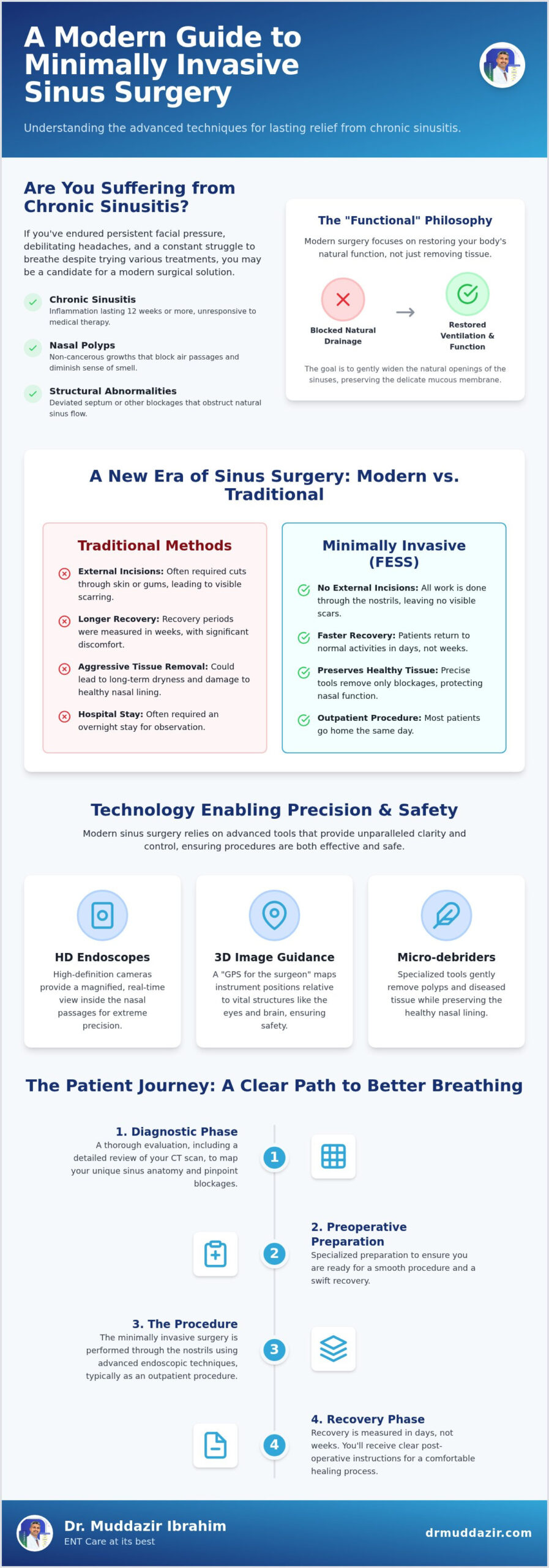
The evolution of otolaryngology has moved away from invasive, open procedures toward a philosophy of extreme precision. Modern minimally invasive sinus surgery represents this shift, utilizing high-definition endoscopes to access the paranasal sinuses directly through the nostrils. Unlike older techniques that often required external incisions through the skin or gums, this approach leaves no visible scarring and involves minimal trauma to the nasal structures. The current gold standard for this intervention is known as Functional Endoscopic Sinus Surgery (FESS). This technique allows surgeons to visualize the intricate anatomy of the nasal passages in real-time, focusing specifically on removing blockages while leaving healthy tissue untouched. The primary objective is vital for long-term relief: to restore the natural drainage pathways and ventilation of the sinuses, allowing the respiratory system to function as intended.
Who is a Candidate for This Procedure?
Determining if you require surgical intervention begins with a thorough evaluation of your clinical history and current symptoms. Most patients considered for this procedure have already explored conservative treatments, such as nasal sprays or oral medications, without achieving lasting results. Common candidates typically include:
- Patients with chronic sinusitis: Those who experience persistent inflammation for 12 weeks or longer, despite multiple courses of medical therapy.
- Individuals with nasal polyps: These non-cancerous growths can block air passages and significantly diminish the sense of smell; surgery is often the most effective way to clear these obstructions. Patients seeking a comprehensive understanding of this process can benefit from reading a specialist guide to nasal polyps removal, which outlines the surgical and recovery process in detail.
- Structural abnormalities: A deviated septum or enlarged turbinates can physically obstruct sinus flow, necessitating surgical correction to ensure healthy airflow.
The “Functional” Philosophy in Modern ENT
The term “functional” is critical in the context of sinus health. It signifies a commitment to preserving the delicate mucous membrane, or mucosa, that lines your nasal passages. This lining is responsible for humidifying the air you breathe and filtering out environmental pathogens. Older surgical methods were occasionally too aggressive, removing large amounts of tissue and potentially causing long-term dryness or internal scarring.
Modern minimally invasive sinus surgery mimics your natural anatomy. Instead of clearing out the entire sinus cavity, the surgeon focuses on the “ostia,” which are the natural openings of the sinuses. By widening these specific points, we encourage proper drainage while maintaining the integrity of the surrounding healthy structures. Achieving this delicate balance requires a high degree of specialized surgical expertise, ensuring the intervention is as gentle as it is effective for the patient.
The Technology Behind Modern Sinus Intervention
High-definition endoscopes have fundamentally transformed minimally invasive sinus surgery by providing surgeons with an unprecedented level of visual clarity. These specialized cameras transmit live, magnified images to a surgical monitor, allowing for a detailed inspection of the internal sinus architecture. This visual precision ensures that every maneuver is deliberate and controlled. While FESS remains the primary approach, some patients benefit from Balloon Sinuplasty. This ultra-minimally invasive option uses a small, flexible catheter to gently dilate the sinus openings, restoring drainage without the need for tissue removal.
The Role of 3D Navigation Systems
Safety is paramount when operating in the delicate areas surrounding the nasal cavity. 3D Image Guidance Systems serve as a critical safety layer by mapping the patient’s unique anatomy in real-time. This system utilizes a preoperative CT scan to create a digital roadmap, allowing the surgeon to visualize the exact position of instruments within millimeters of vital structures like the eyes and brain.
The benefits of this technology are particularly evident during revision surgeries where previous procedures might have altered natural landmarks. 3D navigation provides a GPS-like map that allows the surgeon to track the exact position of their instruments relative to vital structures. By integrating this real-time mapping, we ensure a higher level of safety and predictability throughout the intervention during minimally invasive sinus surgery.
Advanced Instrumentation and Tissue Preservation
The tools used in modern sinus care are designed to be as gentle as they are effective. Micro-debrider technology has largely replaced traditional “stripping” tools that often caused unnecessary trauma to the nasal lining. These powered instruments allow for the precise shaving of polyps or obstructive tissue while simultaneously suctioning the area to maintain a clear field of vision. This precise action is often referred to as a “GPS for the nose” when combined with navigation, ensuring only the necessary tissue is addressed.
Maintaining the “ciliary” function of the sinus lining is a primary goal of modern intervention. These microscopic, hair-like structures are responsible for the natural clearance of mucus; if they’re damaged, chronic issues can return. Specialized ENT surgical interventions leverage these precise tools to promote faster healing and reduce post-operative inflammation. If you’ve been struggling with persistent facial pressure, scheduling a consultation to discuss an endoscopic sinus surgery plan can be the first step toward lasting respiratory health.
Traditional vs. Minimally Invasive Sinus Surgery
Comparing traditional sinus surgery to modern endoscopic methods reveals a significant shift in both technique and patient experience. In the past, “open” surgical approaches often required incisions under the upper lip or through the skin of the face to reach the affected areas. These methods were frequently associated with significant swelling, visible scarring, and a multi-day inpatient hospital stay. Conversely, minimally invasive sinus surgery utilizes the nostrils as natural entry points. Because there are no external incisions, the risk of visible scarring is eliminated. Most patients now benefit from same-day, outpatient procedures, allowing them to begin their recovery in the comfort of their own homes shortly after the intervention.
Pain management has also seen a dramatic transformation. One of the most significant advancements is the near-total elimination of traditional nasal packing. Older methods relied on meters of gauze stuffed into the nasal passages to control bleeding, which was often described by patients as the most distressing part of the process. Today, we use specialized techniques and occasionally dissolvable materials that don’t require painful removal. This evolution, combined with higher long-term success rates, has substantially reduced the need for revision surgeries, providing a more permanent solution for chronic respiratory issues.
Recovery Time and Post-Operative Comfort
The timeline for returning to daily life has shortened considerably. While traditional surgery often required several weeks of downtime and careful management of facial bruising, modern FESS recovery is typically measured in days. Most individuals find they can return to light work or school within 48 to 72 hours. Because the surgeon isn’t cutting through facial bone or skin, post-operative swelling is minimal. This rapid healing process is a direct result of the tissue-preserving nature of minimally invasive sinus surgery, which causes far less trauma to the nasal environment than older, more aggressive techniques.
Surgical Precision and Safety Profiles
Enhanced visualization through the endoscope has fundamentally improved the safety profile of sinus interventions. Surgeons can now navigate with pinpoint accuracy to target specific cavities, including the maxillary, ethmoid, frontal, and sphenoid sinuses. This granular level of detail allows for the removal of specific obstructions without disturbing the delicate surrounding anatomy. Specialized ENT surgeons prefer the endoscopic approach because it provides a clear, magnified view of the skull base and surrounding vital structures. This clarity reduces the risk of complications and ensures that the “functional” goal of the surgery-restoring natural drainage-is achieved with the highest possible degree of precision.
The Patient Journey: What to Expect
Understanding the roadmap of your care can significantly reduce the anxiety associated with surgical intervention. Your journey begins with a comprehensive initial consultation, where a diagnostic endoscopy and a review of your CT scans are performed to map your specific sinus anatomy. This diagnostic phase ensures that the surgical plan is tailored to your unique blockages. Before your minimally invasive sinus surgery, you’ll receive specific instructions regarding medications to avoid, such as aspirin or certain herbal supplements that can increase bleeding risks. Fasting is required for at least six to eight hours prior to the procedure to ensure your safety during general anesthesia.
On the day of the surgery, you’ll be admitted to a modern surgical center where the procedure typically lasts between one and three hours. Because the approach is entirely internal, you’ll wake up in the recovery room without the burden of external bandages. Most patients are ready to be discharged within a few hours once the clinical team confirms you’re stable and comfortable. If you’re ready to begin this journey toward lasting relief, you can book a consultation for endoscopic sinus surgery to discuss your specific needs with an expert.
Immediate Post-Operative Care
The first 24 to 48 hours following the procedure are characterized by a feeling of “stuffiness” similar to a heavy cold. Managing this congestion effectively is the key to a smooth recovery. You’ll be instructed to begin nasal saline rinses almost immediately to keep the nasal passages moist and clear of debris. Nasal douching, or the regular flushing of the nasal passages with a saline solution, is the single most critical factor in ensuring a successful post-operative outcome. These rinses prevent crusting and promote the rapid healing of the delicate sinus lining while minimizing the risk of infection.
Long-Term Follow-Up and Results
Healing continues well beyond the first week. You’ll return to the clinic for scheduled endoscopic debridement, a gentle cleaning process where the surgeon removes any residual crusting or early scar tissue to ensure the sinus pathways remain open. While many patients notice an improvement in airflow within the first few days, the total restoration of breathing and the resolution of facial pressure typically occur by the end of the first month. To ensure the longevity of your results, it’s vital to follow a long-term maintenance plan, which may include managing underlying allergies to prevent the recurrence of inflammation or polyps.
Choosing an ENT Surgeon for Your Sinus Health
Selecting the right specialist is the most critical decision in your journey toward respiratory health. It’s not just about finding a doctor; it’s about finding a consultant with specialized surgical training and valid board certifications. In the UAE, patients should look for practitioners who operate within established, high-standard hospital networks. This ensures adherence to international safety standards and access to the latest technology. Sinus issues don’t discriminate by age, so a surgeon who understands both adult and pediatric ENT anatomy offers a more holistic approach to family care. Pediatric sinus structures are smaller and more delicate, requiring a refined touch that often translates into even greater precision when treating adults. A professional who prioritizes patient education can significantly lower surgical anxiety by taking the time to explain CT scan findings or demonstrating how an endoscope works.
The Expertise of Dr. Muddazir Ibrahim
Dr. Muddazir Ibrahim brings over 15 years of clinical experience to the field of otolaryngology. As a consultant practicing within reputable, high-standard hospital networks, he has dedicated his career to mastering sophisticated, minimally invasive techniques. His expertise extends beyond simple blockages to complex cases involving nasal polyps and structural issues. By operating within a high-standard hospital network, he ensures that every minimally invasive sinus surgery is backed by a full team of anesthesiologists and support staff, prioritizing patient safety at every stage. His focus remains on achieving successful, patient-centered results that restore both hearing and breathing through precise, modern interventions. This seasoned, authoritative approach functions as a trusted guide for patients who may be experiencing health-related anxiety.
Next Steps to Clearer Breathing
The path to lasting respiratory relief begins with a single, thorough evaluation. During your initial visit, we focus on identifying the root cause of your congestion and addressing the most common patient anxieties. We understand that the prospect of surgery can be daunting, so we provide clear, declarative explanations of what to expect. This consultation is the ideal time to discuss the nuances of minimally invasive sinus surgery and how it can be tailored to your specific lifestyle needs. If you’re tired of living with persistent facial pressure and want to regain your quality of life, the solution is within reach. Schedule a specialist consultation for your sinus health today to discover how modern ENT expertise can transform your daily breathing experience.
Reclaim Your Quality of Life Through Clearer Breathing
Living with chronic sinus inflammation is a burden that affects every facet of your daily life, from your productivity at work to the quality of your sleep. Modern minimally invasive sinus surgery offers a sophisticated path forward by prioritizing tissue preservation and anatomical precision. By utilizing advanced endoscopic guidance, surgeons can now resolve complex blockages and polyps without the need for external incisions or prolonged hospital stays. This evolution in care ensures that your recovery is rapid, allowing you to return to your routine with a restored sense of well-being and clear nasal passages.
Choosing a specialist with a deep understanding of these innovative techniques is the final step in your journey. Dr. Muddazir Ibrahim is a consultant at NMC Specialty Hospital with over 15 years of clinical experience specializing in Functional Endoscopic Sinus Surgery (FESS). His commitment to patient-centered results ensures that your treatment is both safe and effective within a leading medical network. If you’re ready to move past persistent facial pressure and congestion, Consult Dr. Muddazir Ibrahim for Advanced Sinus Care. You don’t have to navigate respiratory struggles alone; expert help is available to help you breathe freely again.
Frequently Asked Questions
Is minimally invasive sinus surgery painful?
Most patients describe the post-operative sensation as a dull pressure or a heavy cold rather than acute, sharp pain. Because minimally invasive sinus surgery avoids external incisions and traditional nasal packing, the distressing throbbing associated with older methods is largely absent. You’ll typically manage any discomfort with mild, over-the-counter analgesics or prescribed medications. This modern approach ensures that the surgical experience is as gentle as possible, prioritizing your comfort throughout the entire healing process.
How long is the recovery period after FESS?
The initial recovery phase is remarkably swift, with most patients returning to their normal routine within three to five days. While full internal healing of the sinus mucosa takes approximately four to six weeks, the physical downtime is minimal. During the first few days, you’ll focus on saline rinses to keep the passages clear and moist. This efficient timeline is a primary benefit of endoscopic techniques, allowing for a rapid return to daily life without long-term disruption.
Will my insurance cover minimally invasive sinus surgery in the UAE?
Sinus surgery is generally considered a medical necessity in the UAE when conservative treatments have failed to provide relief. Most major insurance providers within the national network cover the procedure, though your specific coverage depends on your policy’s deductible and co-payment terms. It’s advisable to obtain a pre-authorization from your insurer after your initial consultation. Our clinical team works closely with providers to ensure all necessary diagnostic evidence, such as CT scans, is submitted for approval.
Are there any external scars after endoscopic sinus surgery?
There are no external scars following this procedure because the entire surgery is performed through the nostrils. By using high-definition endoscopes, the surgeon accesses the sinus cavities internally, eliminating the need for skin incisions on the face or under the lip. This preserves your natural appearance while resolving the underlying respiratory issue. This scarless benefit is one of the most reassuring aspects for patients concerned about the aesthetic impact of surgical intervention.
Can sinus surgery help with my snoring or sleep apnea?
Surgery can significantly improve snoring if the primary cause is a nasal obstruction, such as polyps or a deviated septum. While it isn’t a cure-all for every type of sleep apnea, clearing the nasal airway often enhances the effectiveness of other treatments like CPAP therapy. By reducing the effort required to breathe through the nose, patients frequently report quieter sleep and improved daytime energy levels. A thorough evaluation is necessary to determine if your issues are nasal in origin.
How soon can I return to work or exercise after the procedure?
Most individuals return to office-based work within three to five days of the procedure. However, you should avoid strenuous exercise, heavy lifting, or any activity that increases your heart rate for at least two weeks. Increasing blood pressure too early can trigger nasal bleeding or unwanted swelling. We provide a personalized timeline during your follow-up visits, ensuring you resume your fitness routine only when the delicate internal tissues have sufficiently stabilized.
What happens if chronic sinusitis is left untreated?
Leaving chronic sinusitis untreated can lead to worsening symptoms and rare but serious complications. Persistent inflammation may cause permanent damage to the sinus lining or lead to the spread of infection to surrounding areas, including the eyes or brain. Over time, untreated blockages can also result in a total loss of the sense of smell and chronic fatigue. Addressing these issues early through minimally invasive sinus surgery prevents these risks and restores your long-term respiratory health.
Is sinus surgery safe for children?
Sinus surgery is safe and effective for children when performed by a specialist with dedicated pediatric ENT experience. We often recommend surgical intervention for children who suffer from chronic infections that don’t respond to antibiotics or those with obstructive polyps. The procedure is tailored to the smaller anatomy of a child’s nasal passages, focusing on safety and long-term developmental health. Providing relief early helps ensure that childhood respiratory issues don’t become lifelong chronic conditions.