
What if the relentless pressure behind your eyes isn’t actually a migraine, but a structural roadblock hidden deep within your nasal passages? For many, the cycle of daily facial pain and exhaustion becomes a permanent fixture of life, often leading to a frustrating reliance on temporary nasal sprays or high-dose painkillers. If you’ve felt the confusion of misdiagnosed pain, you’re not alone. Understanding the role of sinus surgery for chronic headaches is the first step toward reclaiming your quality of life. When conservative treatments fail, advanced surgical intervention offers a path to address the persistent inflammation and anatomical obstructions that trigger these debilitating episodes.
You deserve a solution that moves beyond symptom management toward lasting relief. In this guide, we’ll explore how modern endoscopic techniques allow for precise corrections that can permanently reduce headache frequency and intensity. We’ll examine the clinical criteria for determining if your pain is truly sinus-related and how a specialized surgical approach can finally clear your breathing and your mind. By the end of this article, you’ll have a clear understanding of the diagnostic process and the innovative methods used to achieve patient-centered results in the UAE.
Key Takeaways
- Learn to distinguish true rhinogenic headaches from migraines by identifying specific indicators like thick nasal discharge versus light sensitivity.
- Understand how advanced endoscopic sinus surgery for chronic headaches addresses structural contact points and persistent inflammation to provide lasting relief.
- Discover the mechanics of Functional Endoscopic Sinus Surgery (FESS) and its role in restoring natural drainage and relieving trigeminal nerve pressure.
- Identify the clinical criteria for candidacy, focusing on cases where conservative medical treatments have failed to provide meaningful results.
- Gain insights into why a specialized, patient-centered diagnostic approach is essential for ensuring successful and precise surgical outcomes.
Understanding the Link Between Chronic Sinusitis and Headaches
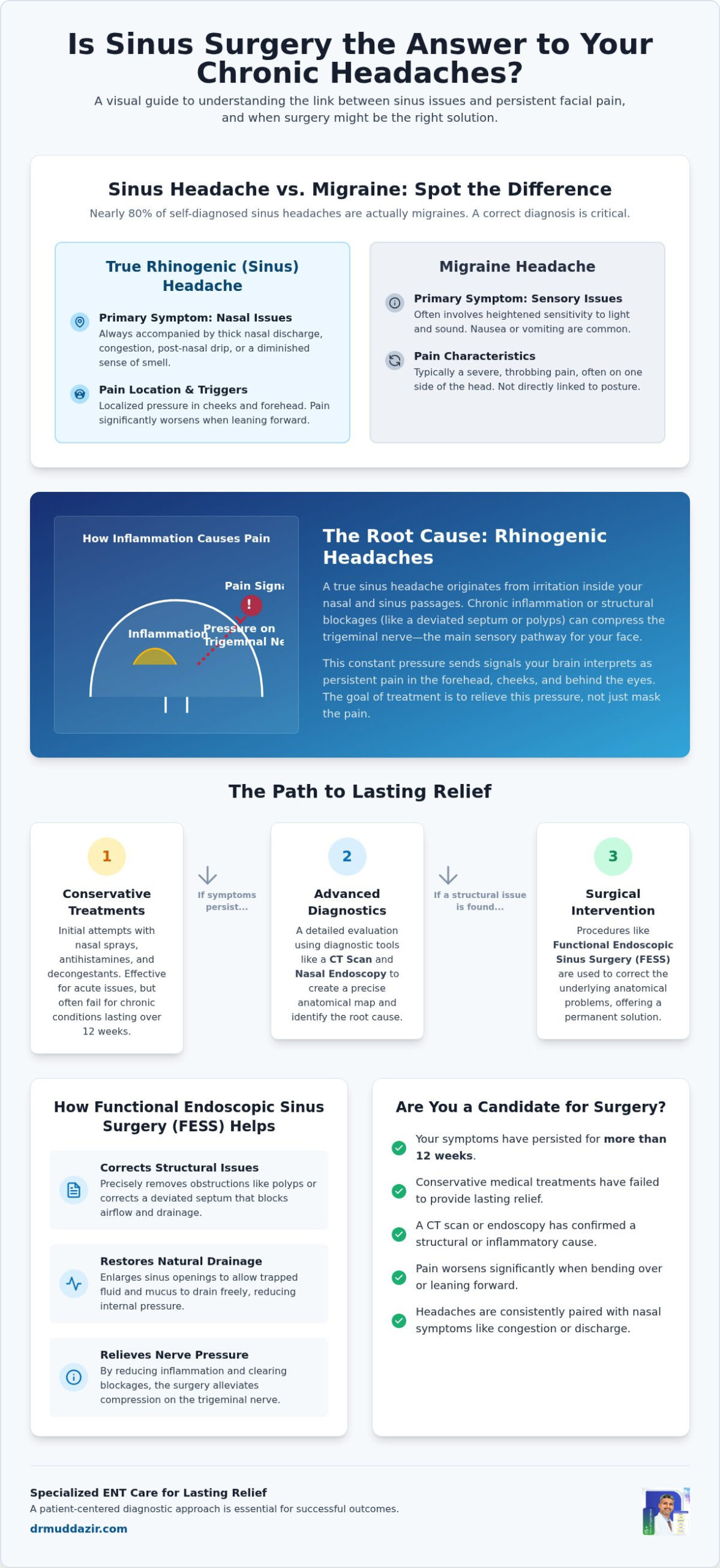
Do you often feel a heavy, throbbing pressure behind your eyes that simply won’t subside? This discomfort is frequently a sign of a rhinogenic headache, which is defined as pain originating from nasal or sinus mucosal irritation. Unlike general tension headaches, these episodes are rooted in the physical environment of your nasal passages. When the delicate linings of your sinuses become chronically inflamed, they can compress the trigeminal nerve. This nerve is the primary sensory pathway for your face. When it’s irritated by swelling or structural obstructions, it transmits signals that your brain interprets as referred pain across the forehead and eyes.
This physiological connection explains why many people seek Functional endoscopic sinus surgery (FESS) when traditional medications fail. Chronic inflammation doesn’t just cause congestion; it alters the internal pressure of the sinus cavities. Air and fluid must circulate freely. When they don’t, the resulting vacuum or pressure creates a constant source of neuralgic distress. For those considering sinus surgery for chronic headaches, understanding this nerve-related link is vital. It shifts the focus from masking the pain to addressing the anatomical triggers that cause it.
Symptoms of a True Sinus Headache
Identifying a true sinus headache requires looking beyond the pain itself. You might notice that the pressure intensifies significantly when you lean forward or bend over. This is a classic sign of fluid shifts within the cavities. This pain is typically localized to the malar regions of your cheeks or the frontal area of your forehead. Unlike other headache types, these are almost always accompanied by persistent nasal symptoms. You may experience thick post-nasal drip, a diminished sense of smell, or a feeling of facial fullness that persists regardless of the time of day.
When Conservative Treatments Fail
Most patients begin their journey with antihistamines, nasal steroid sprays, or decongestants. While these tools are effective for acute allergies, they have clear limitations when used long-term. Over-reliance on these medications can sometimes lead to rebound congestion. Often, they simply fail to reach the deep-seated inflammation causing your distress. If your symptoms have persisted for more than 12 weeks, the condition is officially classified as chronic.
At this stage, medical management often reaches a plateau. When nasal sprays and painkillers provide only fleeting relief, it’s a signal that the underlying issue may be structural. Transitioning to a surgical evaluation allows for a detailed look at your sinus anatomy. This shift is often the turning point. Choosing sinus surgery for chronic headaches becomes a targeted intervention designed to restore natural drainage and permanently quiet irritated nerve pathways.
Differentiating Sinus Headaches from Migraines
Many patients spend years treating the wrong condition because the symptoms of sinus pressure and migraines overlap so significantly. Nearly 80% of self-diagnosed sinus headaches are clinically classified as migraines. This “migraine trap” occurs because both conditions can trigger pain in the forehead, cheeks, and behind the eyes. However, the treatment protocols for each are vastly different. If you’re considering sinus surgery for chronic headaches, a precise diagnosis is the first and most critical step. Misidentifying the source of your pain often leads to a cycle of ineffective treatments and continued frustration.
True sinus-related pain is almost always accompanied by objective clinical markers. While migraines often involve nausea, vomiting, or a heightened sensitivity to light and sound, sinus headaches are typically linked to thick nasal discharge, congestion, and a reduced sense of smell. A diagnostic nasal endoscopy allows for a direct visual examination of the nasal passages to identify inflammation or polyps that might be missed during a standard physical exam. Distinguishing between these two conditions ensures that surgical intervention is only recommended when a structural or inflammatory cause is verified.
The Role of Diagnostic Imaging
CT scans provide a detailed anatomical roadmap that is essential for a thorough evaluation. These images reveal hidden obstructions, such as a Concha Bullosa, which is an air-filled turbinate that can crowd the nasal cavity and cause significant pressure. By correlating these imaging findings with your specific pain map, we can confirm if the discomfort matches the physical blockages. This level of clinical rigour helps determine which patients are the most suitable candidates for sinus surgery.
Diagnostic Nerve Blocks
One of the most effective ways to predict the success of sinus surgery for chronic headaches is through a diagnostic nerve block. This involves applying a topical anaesthesia to the specific mucosal areas suspected of causing the pain. If the headache subsides or disappears while the area is numbed, it provides strong evidence that the pain is indeed rhinogenic. This test acts as a “trial run” for surgery, helping to ensure that the procedure will target the correct triggers and provide lasting relief. A thorough diagnostic consultation can clarify these findings and help you avoid unnecessary treatments that fail to address the root cause.
How Endoscopic Sinus Surgery Resolves Chronic Pain
How does a surgical procedure actually stop a headache? It isn’t just about clearing a “stuffy nose.” It’s about restoring a functional environment where the nervous system can rest. Functional Endoscopic Sinus Surgery (FESS) targets the specific pathways where drainage is blocked. When these pathways are clear, the inflammatory load on your nervous system drops significantly. Removing nasal polyps, for instance, doesn’t just improve breathing; it removes a constant source of biochemical irritation that keeps your nerves on high alert. This reduction in inflammation is a key reason why patients experience such a dramatic shift in their pain levels after the procedure.
Restoring the natural flow of air and mucus is essential for equalizing pressure within the skull. Think of your sinuses like a series of interconnected rooms. If one door is jammed, the pressure changes. This “vacuum” effect is a primary driver of frontal pain. FESS ensures every “door” remains open, allowing pressure to stay balanced even during weather changes or minor colds. When the pressure is equalized, the chronic, heavy sensation that many mistake for a tension headache often disappears.
The “Contact Point” Theory Explained
Sometimes, the pain isn’t about infection at all. It’s about physics. Sluder’s Neuralgia occurs when two internal nasal surfaces, such as a deviated septum and a turbinate, touch one another. This mechanical contact puts direct pressure on the trigeminal nerve branches. Your brain interprets this localized pressure as a radiating headache. By performing sinus surgery for chronic headaches, we can surgically separate these surfaces. This correction often provides immediate relief from the chronic cycles of pain that medications simply cannot touch. Addressing these contact points is a specialized aspect of surgery that requires a deep understanding of nasal anatomy.
Advanced Surgical Techniques
Modern ENT surgery has moved far beyond the invasive methods of the past. We now utilize high-definition endoscopic visualization to navigate the complex anatomy of the nasal cavity. This precision allows for a tissue-sparing approach. We only remove what is necessary to restore function, leaving healthy mucosal tissue intact. This meticulous technique minimizes trauma and leads to a faster recovery for the patient. It’s about achieving a permanent result through innovation and clinical mastery. Choosing sinus surgery for chronic headaches involves a commitment to these sophisticated methods, ensuring that the source of your pain is resolved without unnecessary disruption to your daily life.
Evaluating Your Candidacy: Is Surgery the Right Path?
Deciding to undergo a surgical procedure is a significant step that requires a shared understanding between the patient and the specialist. It is not a decision made lightly. Clinical guidelines emphasize that sinus surgery for chronic headaches should only be considered after a patient has completed a course of maximal medical therapy. This isn’t a “one-size-fits-all” duration. Instead, it’s a supervised period where targeted medications fail to resolve the structural or inflammatory issues identified during your initial consultation. When these conservative measures no longer provide a bridge to a pain-free life, we look toward more definitive interventions.
The psychological impact of living with daily facial pressure cannot be overlooked. Chronic pain often leads to a state of constant exhaustion and anxiety. It’s vital to have realistic expectations before moving forward. While clinical data shows success rates for Functional Endoscopic Sinus Surgery (FESS) ranging from 76% to 97.5%, the goal is typically a significant reduction in headache frequency and intensity. For many, this means moving from daily debilitating pain to manageable, infrequent episodes. Understanding this distinction ensures that you are mentally and physically prepared for the recovery process.
Who is a Good Candidate for Sinus Surgery?
The most successful outcomes occur when there is a clear correlation between your pain map and objective clinical findings. Ideal candidates typically include:
- Patients with documented chronic sinusitis that is visible on high-resolution CT scans.
- Individuals with clear anatomical obstructions, such as a severely deviated septum or nasal polyps, that physically block drainage.
- Those whose headache cycles align perfectly with periods of nasal congestion or seasonal sinus flares.
If your pain worsens specifically when your sinuses are congested, you’re more likely to benefit from surgical intervention.
Who Should Avoid Surgery for Headaches?
Surgery is a precision tool, not a universal cure for all head pain. It’s essential to identify those who may not find relief through ENT procedures. Patients with pure neurological migraines that show no evidence of sinus pathology on imaging are generally not suitable candidates. Similarly, if your headaches are primarily triggered by stress, tension, or lack of sleep without any accompanying nasal symptoms, surgery is unlikely to be the answer. We advocate for a multi-disciplinary approach, often coordinating with neurology experts to ensure your pain isn’t mischaracterized. If you’re ready to determine the true source of your discomfort, you can schedule a specialized surgical evaluation to discuss your options in detail.
Expert ENT Surgical Care for Chronic Sinus Conditions
Selecting the right specialist is perhaps the most consequential decision a patient makes when pursuing sinus surgery for chronic headaches. It requires more than just technical skill; it demands a surgeon who understands the intricate relationship between nasal anatomy and neurological pain pathways. With over 15 years of clinical experience, Dr. Muddazir Ibrahim brings a high level of specialized expertise to his practice, operating within reputable and advanced medical facilities. By adhering to modern surgical protocols often found in British-trained clinical environments, he ensures that every intervention is grounded in evidence and precision. Navigating the UAE healthcare system for specialized ENT care can feel overwhelming, but focusing on trusted practitioners and their affiliated facilities provides a sense of security and continuity that is vital for your peace of mind.
The personality of your care should be that of a trusted guide. You don’t have to manage this pain alone or settle for temporary fixes. Expert care involves a methodical progression from identifying the health concern to explaining the sophisticated methods used to resolve it. This clinical rigor ensures that you aren’t just another case, but a patient receiving a tailored solution for a complex problem. When you choose a practitioner at the forefront of modern medical advancements, you’re choosing a path toward a permanent reduction in headache frequency and intensity.
The Patient Journey with Dr. Muddazir Ibrahim
Your path to relief begins with a comprehensive clinical evaluation. This isn’t a cursory look; it involves a detailed diagnostic endoscopy to visualize the internal structures of your nasal passages. Dr. Muddazir focuses on functional outcomes rather than aesthetic changes, ensuring that every recommendation is tailored to your specific symptoms. This evidence-based approach means surgery is only suggested when there is a clear, documented need. Patients benefit from access to advanced surgical facilities designed for high-precision endoscopic sinus surgery (FESS), where the focus remains entirely on restoring your quality of life through masterful technique.
Post-Operative Support and Long-Term Relief
Successful surgery is only one part of the journey. The recovery phase is equally critical for ensuring long-term success and preventing the recurrence of symptoms. Detailed post-operative protocols are designed to support mucosal healing and prevent the formation of scar tissue that could lead to future blockages. Beyond the procedure itself, managing underlying conditions like chronic allergies is essential for maintaining your results. This holistic view of sinus health helps ensure that the relief you feel after surgery remains a permanent fixture of your life. If you’re tired of the frustration caused by temporary relief, you can Schedule a consultation with Dr. Muddazir Ibrahim to evaluate your sinus health.
Reclaiming Your Quality of Life Through Precision ENT Care
Chronic headaches don’t have to be a permanent obstacle to your daily happiness. By distinguishing between neurological migraines and true rhinogenic pain, we can target the structural triggers that medications often miss. Advanced endoscopic techniques now allow for the precise removal of obstructions and the restoration of natural drainage with minimal disruption to your life. Choosing sinus surgery for chronic headaches is a decisive step toward resolving the persistent pressure and inflammation that has held you back. You deserve a clear path to recovery that is based on clinical accuracy and a deep understanding of your unique anatomy.
As a Consultant ENT Surgeon with over 15 years of experience, Dr. Muddazir Ibrahim specializes in Functional Endoscopic Sinus Surgery (FESS) within the established NMC Healthcare network. This specialized expertise ensures that your treatment plan is both clinically rigorous and deeply compassionate. You don’t have to navigate this journey alone. Consult Dr. Muddazir Ibrahim for a Comprehensive Sinus Evaluation and take the first step toward lasting relief today. Your future of clearer breathing and pain-free days is within reach.
Frequently Asked Questions
Can sinus surgery help with daily chronic headaches?
Sinus surgery for chronic headaches is highly effective when the pain stems from structural obstructions or persistent inflammation. By clearing blocked passages and reducing the inflammatory load, the procedure addresses the root cause of facial pressure. It’s particularly beneficial for patients who haven’t found relief through traditional medical management. Clinical success depends on a precise diagnosis to ensure the headache is indeed rhinogenic rather than purely neurological.
How do I know if my headache is from my sinuses or a migraine?
True sinus headaches are almost always accompanied by thick nasal discharge, congestion, or a diminished sense of smell. In contrast, migraines often trigger nausea and extreme sensitivity to light or sound. While the pain locations overlap, a diagnostic nasal endoscopy and CT scan are essential for confirmation. Identifying these objective clinical markers ensures you receive the correct treatment path rather than cycling through ineffective migraine medications.
What is the recovery time for endoscopic sinus surgery (FESS)?
Most patients return to light activities and work within seven to ten days following functional endoscopic sinus surgery. While the initial recovery is relatively quick, the internal nasal tissues continue to heal for four to six weeks. During this period, it’s vital to follow specific saline irrigation protocols to prevent scar tissue formation. Avoiding strenuous exercise for the first two weeks helps ensure a smooth and successful recovery process.
Is sinus surgery painful, and will I have bruising?
Modern endoscopic techniques are minimally invasive, so there is typically no external bruising or swelling of the face. Most patients describe the post-operative sensation as a feeling of heavy pressure or fullness rather than sharp pain. This discomfort is usually well-managed with standard prescribed analgesics. Since the procedure is performed entirely through the nostrils, there are no external incisions, allowing for a more comfortable and discreet recovery experience.
Are there risks associated with sinus surgery for headaches?
Like any surgical intervention, sinus surgery carries minor risks such as localized bleeding, infection, or the potential for symptom recurrence. However, the use of high-definition endoscopic visualization significantly reduces these possibilities by allowing for extreme precision. Choosing a consultant with over 15 years of experience ensures that these risks are minimized through expert technique. We prioritize a thorough diagnostic process to confirm that surgery is the safest and most effective option.
Will my insurance cover sinus surgery for chronic pain in the UAE?
Most private insurance providers in the UAE cover endoscopic sinus surgery when it’s deemed medically necessary. This necessity is typically documented through a failed trial of medical therapy and objective findings on a CT scan. It’s important to obtain prior authorization from your insurance company before the procedure. Our clinical team works within the NMC network to provide the required documentation to support your claim for functional surgical intervention.
How soon after surgery will I feel relief from my headaches?
Many patients notice an improvement in facial pressure and breathing almost immediately after the initial post-operative swelling subsides. Significant relief from chronic headache cycles usually becomes apparent within two to four weeks as the nasal passages heal and drainage is restored. Long-term results continue to improve as inflammation decreases. It’s essential to attend all follow-up appointments to ensure the pathways remain clear and the healing process stays on track.
What happens if I don’t treat my chronic sinusitis?
Leaving chronic sinusitis untreated can lead to worsening pain and the development of nasal polyps, which further obstruct breathing. Persistent inflammation may also spread to surrounding structures, potentially causing more severe infections in the eyes or even the skull base. Over time, the constant inflammatory state can significantly diminish your quality of life and lead to permanent damage to the sinus linings. Early intervention helps prevent these complications and restores normal function.