
Endoscopic Scarless Ear Surgery in Dubai – Performed by Dr. Muddazir Ibrahim
Introduction to Endoscopic Scarless Ear Surgery in Dubai
Endoscopic scarless ear surgery is one of the most advanced techniques available today for treating chronic ear infections, hearing loss, eardrum perforations, and middle ear disorders—all without creating any external incision. Instead of cutting behind the ear, surgeons use a high-definition endoscope through the natural ear canal to perform delicate and precise repairs.
At the forefront of this modern approach in the UAE is Dr. Muddazir Ibrahim, a highly experienced ENT specialist in dubai known for performing scarless endoscopic tympanoplasty, ossiculoplasty, stapedotomy, and cholesteatoma surgery. His approach blends precision, safety, and minimally invasive techniques to help patients regain hearing and improve long-term ear health.
Patients across Dubai and the UAE choose this procedure because it offers faster recovery, improved visualization, and no visible scars—making it ideal for adults, children, and individuals seeking modern, minimally invasive ENT care.
If you’re struggling with ear infections, hearing loss, dizziness, or eardrum damage, endoscopic ear surgery in Dubai may be the safest and most effective treatment for you.


Book an Appointment
What Is Endoscopic Scarless Ear Surgery?
Endoscopic scarless ear surgery is a minimally invasive surgical technique performed entirely through the ear canal. A slim, high-resolution endoscope provides surgeons with enhanced visualization of the middle ear, allowing precise treatment of damaged tissues while preserving natural structures.
What Conditions Can It Treat?
This technique is effective for:
- Chronic otitis media (repeated or persistent middle ear infections)
- Eardrum perforation requiring tympanoplasty
- Conductive hearing loss due to ossicle problems (requires ossiculoplasty)
- Otosclerosis, treated with stapedotomy
- Ear trauma leading to structural damage
- Balance issues resulting from middle ear problems
Key Clinical Benefits
- No external scar
- Greater precision and visibility of delicate structures
- Less tissue disruption
- Shorter procedure time
- Faster healing and reduced pain
- Suitable for both adults and pediatric patients
This technique follows global safety protocols endorsed by international ENT bodies such as the American Academy of Otolaryngology–Head and Neck Surgery (AAO-HNS).
Conditions & Symptoms That May Require Endoscopic Ear Surgery
You may benefit from endoscopic ear surgery if you experience:
1. Chronic Ear Infections (Otitis Media)
Symptoms include:
- Ear pain
- Fluid or pus discharge
- Hearing loss
- Fever
- A feeling of fullness in the ear
Untreated infections may damage the eardrum or ossicles.
2. Perforated Eardrum (Tympanic Membrane Perforation)
Symptoms:
- Sudden or gradual hearing loss
- Buzzing or ringing sounds
- Recurrent infections
- Fluid leaking from the ear
If the eardrum does not heal naturally, endoscopic tympanoplasty is recommended.


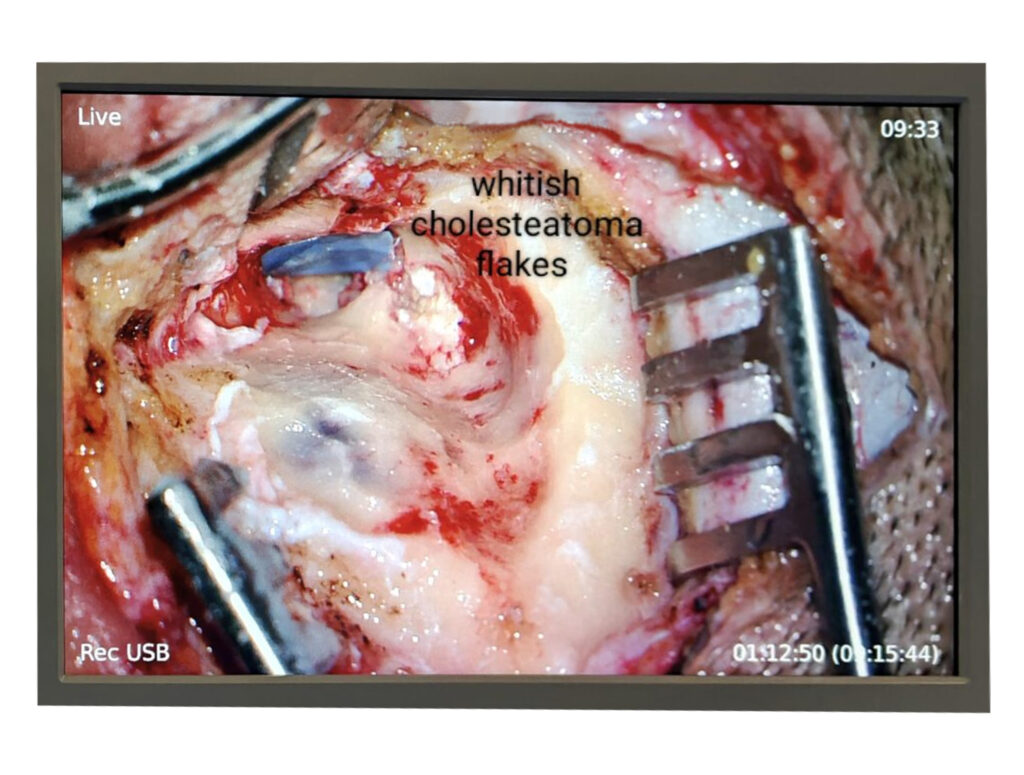
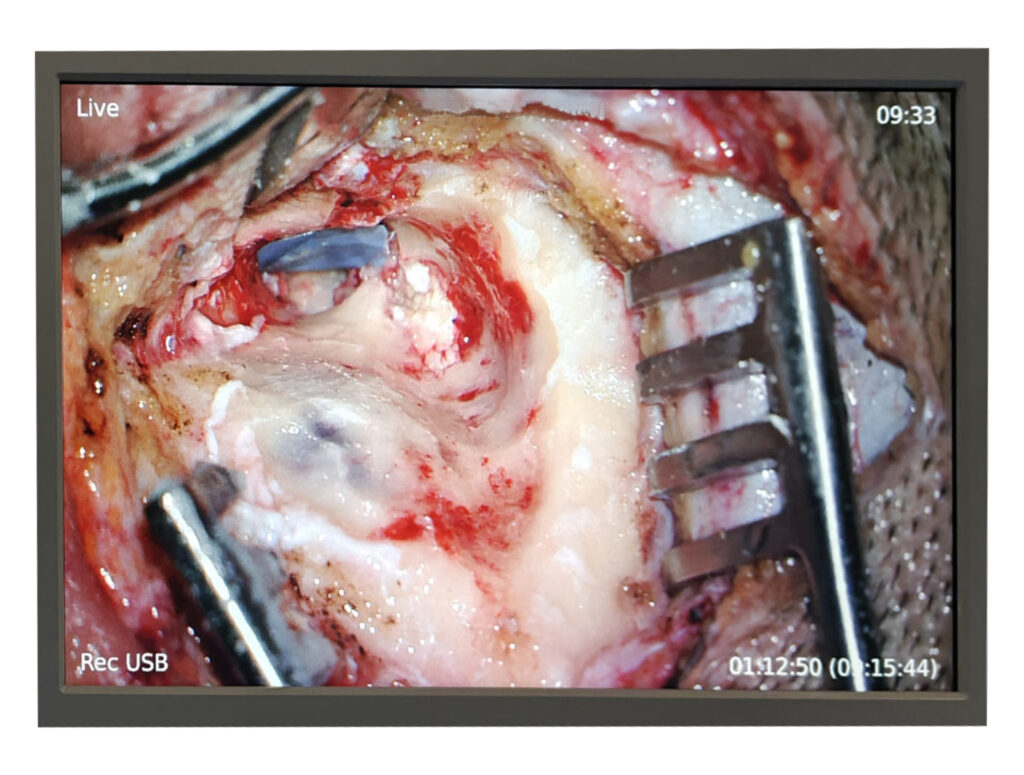
3. Cholesteatoma (Abnormal Skin Growth in the Ear)
A destructive skin growth inside the middle ear.
Symptoms include:
- Persistent discharge
- Foul smell from the ear
- Balance issues
- Dizziness
- Hearing loss
Cholesteatoma must be removed surgically to prevent complications.
4. Conductive Hearing Loss (Middle Ear Problems)
Often caused by damage or stiffness in the ossicles.
Signs include:
- Muffled hearing
- Difficulty understanding conversations
- Imbalance
- Sound appearing distant
Treatment often requires ossiculoplasty.
5. Otosclerosis (Abnormal Bone Growth in the Middle Ear)
A condition where extra bone forms around the stapes bone.
Symptoms:
- Gradual hearing loss
- Tinnitus
- Balance disturbances
Corrected surgically through stapedotomy, replacing the fixed stapes with a prosthesis.
When to Seek Medical Help
You should see an ENT specialist immediately if you have:
- Persistent pain lasting more than 2–3 days
- Ongoing ear discharge
- Frequent dizziness
- Sudden or worsening hearing loss
- Any ear trauma
Pre-Procedure Preparation & Instructions
Before your endoscopic ear surgery in Dubai, you will undergo a complete evaluation with Dr. Muddazir Ibrahim.
Pre-Procedure Consultation Includes:
- Detailed medical history
- Ear examination
- Endoscopic assessment
- Hearing tests (audiometry, tympanometry)
- Imaging if needed (CT temporal bone)
Important Pre-Surgery Instructions
- Inform the doctor of all medications
- Stop blood thinners if instructedv
- Avoid smoking (slows healing)
- Follow fasting guidelines (6–8 hours before surgery)
- Arrange transportation home
- Sign consent forms
- Come with a companion if advised
Bring:
- ID or Emirates ID
- Insurance card
- List of medications
1. Initial Consultation
Your symptoms and ear health are evaluated with advanced diagnostics.
2. Diagnostic Evaluation
Tests may include:
- Audiogram
- Tympanogram
- Endoscopic examination
- CT scan if structural problems suspected
3. Day of Surgery
- Arrive early
- Pre-operative checks
- Anesthesia administered (local or general, depending on the procedure)
4. During the Procedure
The surgeon:
- Inserts the endoscope through the ear canal
- Identifies diseased tissues
- Repairs or reconstructs structures as needed
- Endoscopic Tympanoplasty – repairs perforated eardrum
- Endoscopic Ossiculoplasty – reconstructs ossicles
- Endoscopic Stapedotomy – treats otosclerosis
- Endoscopic Cholesteatoma Removal
- Endoscopic Myringotomy for fluid drainage
Most procedures take 45–90 minutes, depending on complexity.
You may go home the same day unless otherwise required.
Expected Recovery Timeline
- Mild discomfort or fullness: 3–5 days
- Return to normal routine: 1 week
- Full hearing stabilization: 4–8 weeks
Normal Symptoms After Surgery
- Low-grade discomfort
- Mild ear fullness
- Slight imbalance
- Temporary hearing change
Warning Signs – Contact the Doctor Immediately
- Increasing pain
- Fever
- Persistent dizzinesssues.
- Fluid or blood discharge
- Sudden hearing loss
Medication Guidelines
- Use prescribed antibiotics
- Avoid cotton swabs inside the ear.
- Use ear drops if recommended
Activity Restrictions
- Avoid swimming for 4–6 weeks
- Do not blow your nose forcefully
- Avoid heavy gym activity temporarily
- Keep water out of the ears
Follow-Up Appointments
Typically scheduled:
- 7 days after surgery
- 3 weeks after
- 6–8 weeks for final evaluation
- No external scars
- Shorter recovery time
- Less pain after surgery
- High-definition view for precision repair
- Outpatient procedure
- Reduced risk of complications
- Preserves natural anatomysues.
- Safe for children and adults
- ENT surgeon specializing in advanced endoscopic ear procedures
- Expert in tympanoplasty, stapedotomy, cholesteatoma surgery, and ossiculoplasty
- Uses modern HD endoscopes and minimally invasive tools
- High success rate in eardrum and ossicle reconstruction
- Patient-centered care with personalized treatment plans
- Patient-centered care with personalized treatment plans
- Skilled in managing complex and recurrent ear conditions
Learn why patients trust our ENT doctor in dubai Dr. Muddazir Ibrahim
Frequently Asked Questions (FAQs)
Endoscopic Ear Surgery
No. The procedure is done under anesthesia. You may have mild discomfort afterward, which resolves in a few days.
Most patients return to normal activities within a week. Hearing stabilizes over 4–8 weeks.
No. The entire surgery is performed through the ear canal.
Anyone with chronic infections, eardrum perforation, hearing loss, otosclerosis, or cholesteatoma may be eligible.
Yes. It is preferred for pediatric ear repair because it avoids external incisions.
Cost varies by condition and complexity; a consultation is required.
Yes—especially in cases involving eardrum repair, ossicle reconstruction, or stapedotomy.