
If you’ve had a blocked nose for months, snore every night, or wake up feeling like you barely slept, a deviated septum could be behind it. When medication doesn’t help, septoplasty is often the next conversation. And that’s usually when people ask: should I go for endoscopic septoplasty or the traditional kind?
Both procedures straighten the septum. They differ in how the surgeon sees inside your nose, how they reach the problem area, and which kinds of deviation each suits best. Dr. Muddazir Ali Ibrahim, ENT specialist at NMC Specialty Hospital, Dubai, looks at each patient’s nasal anatomy and symptoms before recommending an approach.
What Is Septoplasty?
The septum is the wall of cartilage and bone that divides your nose into two passages. When it sits significantly off-centre, it can restrict airflow and leave you permanently blocked on one or both sides. Septoplasty corrects that.
A deviated septum can show up as:
- Trouble breathing through one or both nostrils
- Constant congestion
- Nosebleeds
- Snoring or restless sleep
- Repeated sinus problems from poor drainage
- Feeling short of breath through the nose during exercise
Not everyone with a deviated septum needs surgery. Plenty of people have a slight bend and never notice it. The decision depends on how much it bothers you, what the examination shows, and whether something else, like allergic rhinitis or enlarged turbinates, is adding to the problem.
What Is Endoscopic Septoplasty?
In endoscopic septoplasty, the surgeon uses a thin endoscope with a light and camera. It gives a magnified view inside the nose, so the surgeon can see exactly which part of the septum is causing the blockage and correct that area specifically.
It tends to work well for deviations that sit in one spot, for problems at the back of the septum that are hard to see directly, and for more complex anatomy where a better view helps.
Where it can help:
- A clearer view. The surgeon can see the whole area in detail.
- Targeted correction. Only the cartilage or bone causing the obstruction needs attention.
- Less disruption in some cases. A more limited approach is sometimes possible.
- A look at the rest of the nose. The endoscope lets the surgeon check for other issues while inside.
- Better breathing. Once the obstruction is fixed, airflow usually improves.
How much you benefit depends on your anatomy, how severe the deviation is, and the surgeon’s technique. Endoscopic surgery isn’t automatically gentler or more effective for everyone.
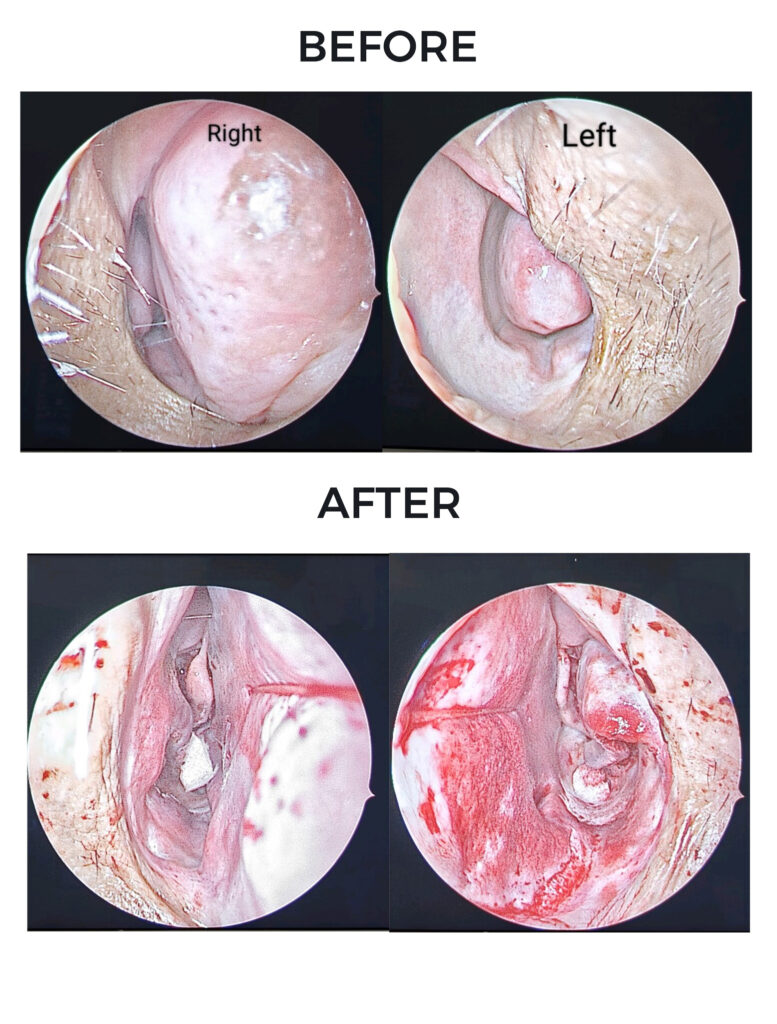
What Is Traditional Septoplasty?
Traditional septoplasty has been used for a long time. The surgeon makes an incision inside the nose, which leaves no visible scar, and then reaches the septum to reposition or remove the parts causing trouble. Depending on the case and the surgeon’s preference, this is done with direct vision or with some added visualisation.
It remains a very effective option, especially when the deviation is extensive and the surgeon needs wider access to the septum.
Where it can help:
- It suits most common types of septal deviation
- It gives access to a wide range of septal problems
- It can correct significant cartilage and bone deformities
- It has a long track record in functional nasal surgery
- It can be combined with other procedures when needed
What matters most is where the deviation is and how severe it is, not what the technique is called.
Endoscopic vs Traditional Septoplasty: Key Differences
| Endoscopic Septoplasty | Traditional Septoplasty | |
| Visualisation | Endoscope and camera | Usually direct vision, depending on technique |
| Access | Often allows targeted access to specific areas | Can offer broader access for extensive deformities |
| Precision | Magnification helps with localised problems | Works well with good exposure and technique |
| Tissue handling | May limit dissection in some cases | Depends on the deviation and the surgical plan |
| Recovery | Can be more comfortable, with quicker recovery in some patients | Varies with how much correction is needed |
| Best suited for | Localised or posterior deviations | A wide range of deviations, including extensive ones |
Neither is better across the board. Results depend on choosing the right patient for the right technique, how complex the deviation is, the surgeon’s experience, and how well you look after yourself afterwards.
Which Procedure Is Better for a Deviated Septum?
It comes down to your nose. Endoscopic septoplasty is worth considering when the deviation is localised or hard to see with a conventional approach. Traditional septoplasty often makes more sense when the deformity is extensive and needs broader access.
During your assessment, the ENT surgeon will usually look at:
- Where the deviation is and how severe it is
- How well air moves through your nose
- The condition of your turbinates
- Any signs of sinus disease or inflammation
- Past nasal injuries or surgeries
- Whether other procedures could help
A nasal examination is the starting point. Sometimes nasal endoscopy or imaging is added to decide the best plan.
Recovery After Septoplasty
Recovery differs from person to person, depending on the technique, how much was corrected, and how you heal.
In the first days, expect some congestion, mild discomfort, swelling, and perhaps a little bleeding. Breathing usually gets better as the swelling goes down, though it can take several weeks before you notice the full improvement.
What helps:
- Follow your surgeon’s instructions for nasal care
- Don’t blow your nose forcefully until you’re told it’s safe
- Skip strenuous exercise and heavy lifting for the period your surgeon recommends
- Go to your follow-up appointments
- Use prescribed medication and saline sprays or rinses as directed
Call your doctor if you have heavy bleeding, pain that keeps getting worse, a fever, or anything else that worries you.
When Should You See an ENT Specialist in Dubai?
A blocked nose isn’t always a deviated septum. Allergies, chronic sinus inflammation, nasal polyps, and enlarged turbinates can feel much the same and need different treatment.
An experienced ENT specialist in Dubai can find the real cause and tell you whether medication, lifestyle changes, or surgery makes sense for you.
Dr. Muddazir Ali Ibrahim at NMC Specialty Hospital, Dubai, sees patients with nasal obstruction and suspected deviated septum. A consultation also gives you the chance to ask about benefits, risks, and recovery for both endoscopic and traditional septoplasty before deciding anything.
Frequently Asked Questions
1. Is endoscopic septoplasty better than traditional septoplasty?
Not in every case. The endoscope gives a magnified view and can be very useful for certain deviations, but traditional techniques still work well for many nasal deformities. The right choice depends on your anatomy and what needs correcting.
2. Is endoscopic septoplasty less painful?
It varies. Some procedures involve less tissue disruption, but how you feel afterwards depends on how much work was done and how you heal.
3. How long does recovery take?
Many people are back to light activities within a few days, depending on their surgeon’s advice. Congestion and swelling can take several weeks to settle, and full healing may take longer.
4. Can septoplasty help with snoring?
It can, if a blocked nose is part of the cause. But snoring has many causes, and septoplasty can’t promise that snoring or obstructive sleep apnoea will go away.
5. Will septoplasty change how my nose looks?
Septoplasty is meant to improve how your nose works, not how it looks. The outside shape usually stays the same unless a separate procedure on the nasal structure is planned.
In Last
Endoscopic and traditional septoplasty are both well-established ways to correct a deviated septum. Endoscopic surgery gives the surgeon a closer view and allows targeted correction where it suits. Traditional surgery handles a broad range of septal problems well.
The right choice depends on your symptoms, your nasal anatomy, and what you want from treatment. If a blocked nose keeps getting in the way of your breathing or sleep, an assessment with Dr. Muddazir Ali Ibrahim at NMC Specialty Hospital, Dubai, can help you understand the cause and your options.