
Most ear trouble clears up on its own an infection runs its course, wax gets removed, symptoms fade. But some conditions don’t resolve with medication alone, and for those, Micro Ear Surgery offers a way to treat the underlying disease using microscopic techniques while protecting or restoring hearing.
Dr. Muddazir Ibrahim, an ENT specialist at NMC Specialty Hospital, evaluates patients with these conditions and helps determine whether surgery is the right next step.
Here’s what tends to signal that it’s worth getting checked out:
1. Hearing Loss That Won’t Go Away
If hearing loss sticks around despite treatment, something structural may be going on. A damaged eardrum, worn-down middle-ear bones, chronic middle-ear disease, or otosclerosis can all block sound from getting through and surgical reconstruction can often help, depending on the cause. An audiometry test is usually the starting point for figuring out what type of hearing loss you’re dealing with and how severe it is.
2. A Perforated Eardrum That Won’t Heal
Small tears in the eardrum, especially from an infection or injury, often heal on their own. When one doesn’t, tympanoplasty surgical repair of the eardrum, and sometimes the middle-ear bones as well is the standard fix. The National Institute on Deafness and Other Communication Disorders describes it exactly that way: repair of the eardrum or the middle-ear bones.
3. Ear Discharge That Keeps Coming Back
Recurring drainage, particularly alongside a perforated eardrum, often points to chronic middle-ear disease rather than a passing infection. Drops and medication can control it temporarily in some patients, but repeated drainage usually means there’s a structural issue underneath. An ENT exam can sort out whether surgery is needed to clear the disease and get the ear dry for good.
4. Frequent or Chronic Ear Infections
Repeated middle-ear infections take a toll on the eardrum and other hearing structures over time, and chronic otitis media can cause progressive damage if it’s left alone. The American Academy of Otolaryngology–Head and Neck Surgery lists chronic or recurrent otitis media, along with progressive hearing loss tied to chronic middle-ear disease, as indications for tympanoplasty in the right patients. When medication isn’t enough or there’s structural damage to fix, this is where Micro Ear Surgery comes in.
5. Damage to the Tiny Bones in the Middle Ear
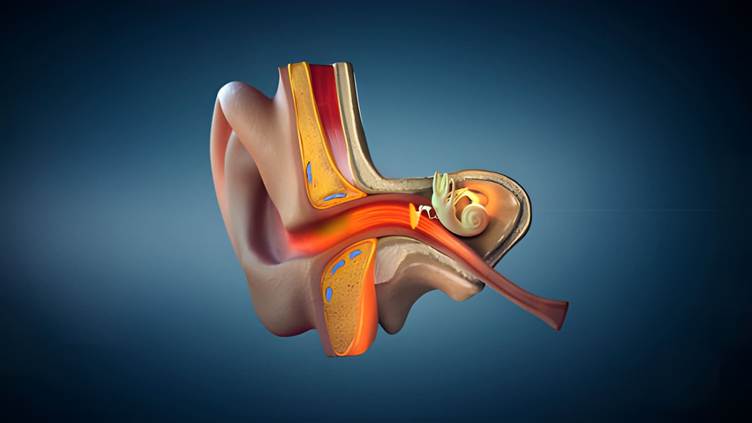
Three small bones the malleus, incus, and stapes carry sound vibrations into the inner ear. Infection, injury, prior surgery, or long-term ear disease can knock this chain out of alignment. When that happens, an ENT surgeon may recommend ossicular reconstruction, often done alongside tympanoplasty, to remove the disease and rebuild the mechanics of hearing at the same time.
6. A Suspected Cholesteatoma
A cholesteatoma is an abnormal buildup of skin cells in the middle ear or nearby areas, usually linked to chronic ear disease. It tends to show up as persistent discharge, hearing loss, a feeling of fullness, or repeated infections and because it can eat away at surrounding tissue and bone, it needs a surgical evaluation. If the disease has spread into the mastoid, or conservative treatment simply isn’t controlling it, mastoid surgery may be necessary.
7. Hearing Problems After a Previous Ear Surgery
Not every ear procedure resolves the issue completely, and some patients are left with ongoing hearing problems afterward. Revision surgery is sometimes an option, but only after the ENT specialist figures out exactly why the hearing loss is persisting reviewing the eardrum, the middle-ear structures, hearing levels, and what was done in the earlier surgery. It’s a highly individual decision, not a default next step.
8. Struggling to Keep a Perforated Ear Dry
A persistent hole in the eardrum usually comes with instructions to keep water out, since water getting into the middle ear raises infection risk. If that’s making it hard to bathe safely or join in water activities or if it keeps triggering infections and hearing trouble surgical repair becomes worth considering. AAO-HNS specifically names an inability to safely bathe or participate in water activities as one of the circumstances that can support a tympanoplasty evaluation.
9. Ongoing Fullness, Pain, or Pressure in the Ear
These symptoms have plenty of possible causes and don’t automatically mean you need surgery. But when they stick around especially paired with hearing loss or discharge it’s worth having an ENT take a look. AAO-HNS flags ear pain, active drainage, unexplained conductive hearing loss, abnormal tympanogram results, and certain hearing-loss patterns as signs that call for proper evaluation.
10. Your ENT Finds Something on Examination
Sometimes there are barely any symptoms at all, and it’s the exam itself that turns up a structural problem. Microscopic ear examination, hearing tests, tympanometry, or imaging can reveal issues a patient wouldn’t otherwise notice. Even then, surgery only gets recommended when the likely benefit clearly outweighs the risk and conservative treatment isn’t going to cut it.
What an Evaluation Actually Involves
It starts with a full workup symptom, medical history, an ear exam, and hearing test results before Dr. Ibrahim discusses any treatment path. Based on what is discovered, that could indicate:
- Tympanoplasty to repair the eardrum and middle ear
- Ossicular reconstruction for damaged middle-ear bones
- Mastoid surgery for select chronic conditions
- Cholesteatoma removal
- Revision surgery when an earlier procedure didn’t get the job done
Which one applies depends on the disease itself where it is, how it’s affecting hearing, and the anatomy involved. Plenty of people with hearing loss or chronic symptoms never need an operation at all.
Why the Surgeon You Choose Matters
The structures involved here are small and unforgiving they govern hearing, balance, and facial nerve function, so there’s not much room for error in diagnosis or planning. NMC Specialty Hospital offers specialist evaluation for chronic ear disease, hearing loss, perforations, and the surgical options that go with them. Dr. Muddazir Ibrahim’s approach is to nail down the underlying problem first, then match the treatment to it both microscopic and endoscopic techniques are part of his practice.
When It’s Time to See an ENT
Persistent discharge, hearing that keeps getting worse, repeat infections, chronic pain, or a known perforation aren’t things to sit on. Catching a structural problem early usually means simpler treatment later. If you’re dealing with any of this or you’ve already been told surgery might be in your future an ENT consultation is the way to get clarity on the diagnosis, the options, and what each one actually involves.
FAQs
1. Does everyone with hearing loss need Micro Ear Surgery?
No. Hearing loss has a lot of possible causes, and surgery only makes sense for certain ones. An exam and hearing test come first.
2. How is this different from routine ear treatment?
It uses microscopic techniques to work on delicate ear structures directly repairing the eardrum, rebuilding middle-ear bones, or clearing out chronic disease.
3. Can a perforated eardrum need surgery?
Yes, if it doesn’t heal on its own. Whether tympanoplasty is needed depends on the size and location of the perforation, symptoms, hearing status, and any related disease.
4. Can this kind of surgery actually improve hearing?
In the right candidates, yes repairing the eardrum or reconstructing middle-ear structures can restore or improve conductive hearing. Results vary with the underlying condition and each person’s anatomy.
5. How do I know if I need it?
That call has to come from a specialist, based on your symptoms, exam findings, and hearing tests not from symptoms alone.
Get Expert Ear Care in Dubai
Chronic infections, perforations, ossicular damage, cholesteatoma none of these are things you have to just live with. If you’re considering micro ear surgery in Dubai, Dr. Muddazir Ibrahim at NMC Specialty Hospital can walk you through a full evaluation and a treatment plan built around your specific case.